
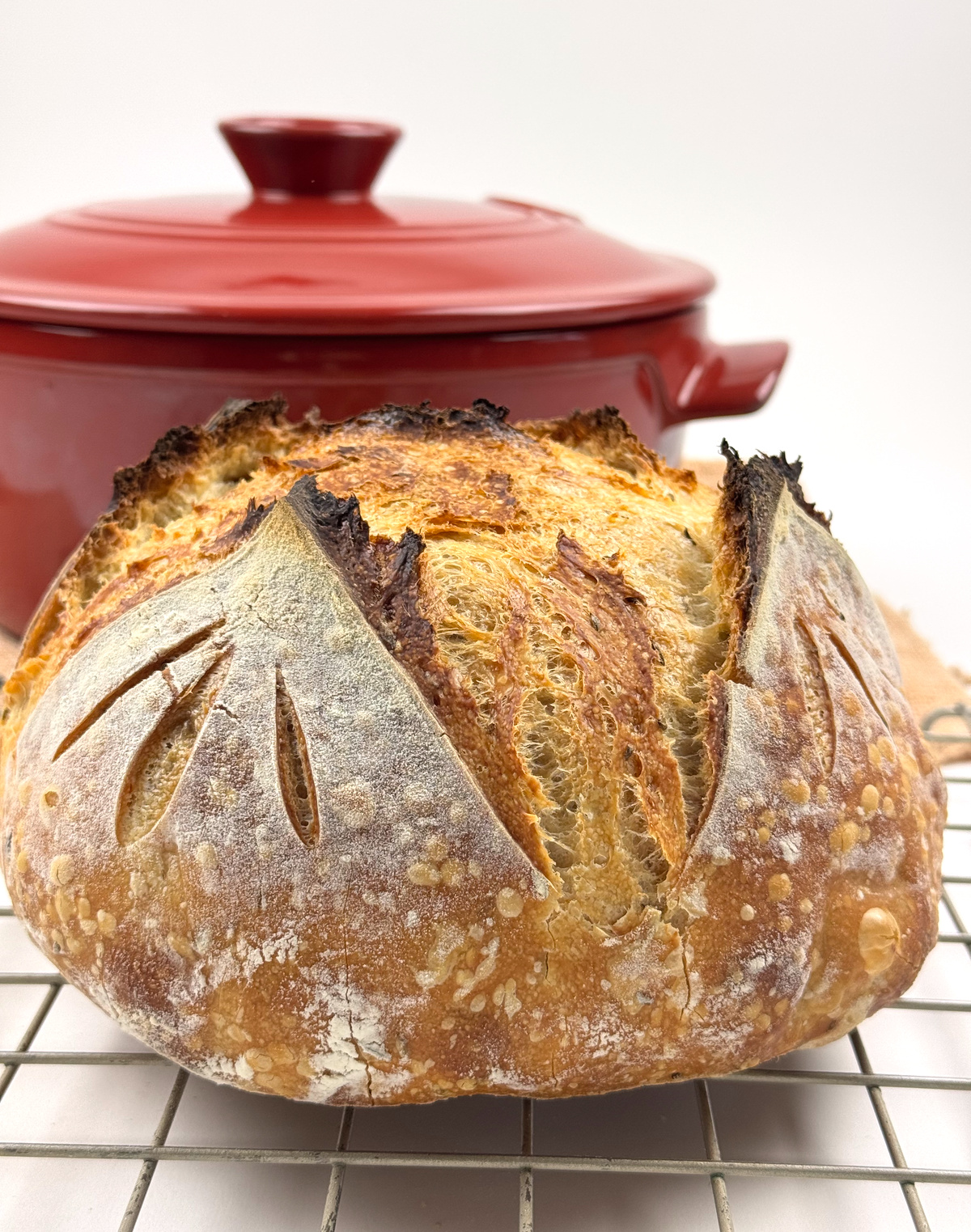
This orange zest sourdough boule with toasted caraway is a simple, flavorful variation on a classic sourdough boule. Bright citrus notes from the zest and subtle warmth from the seeds add interest, while the dough and method remain the same.
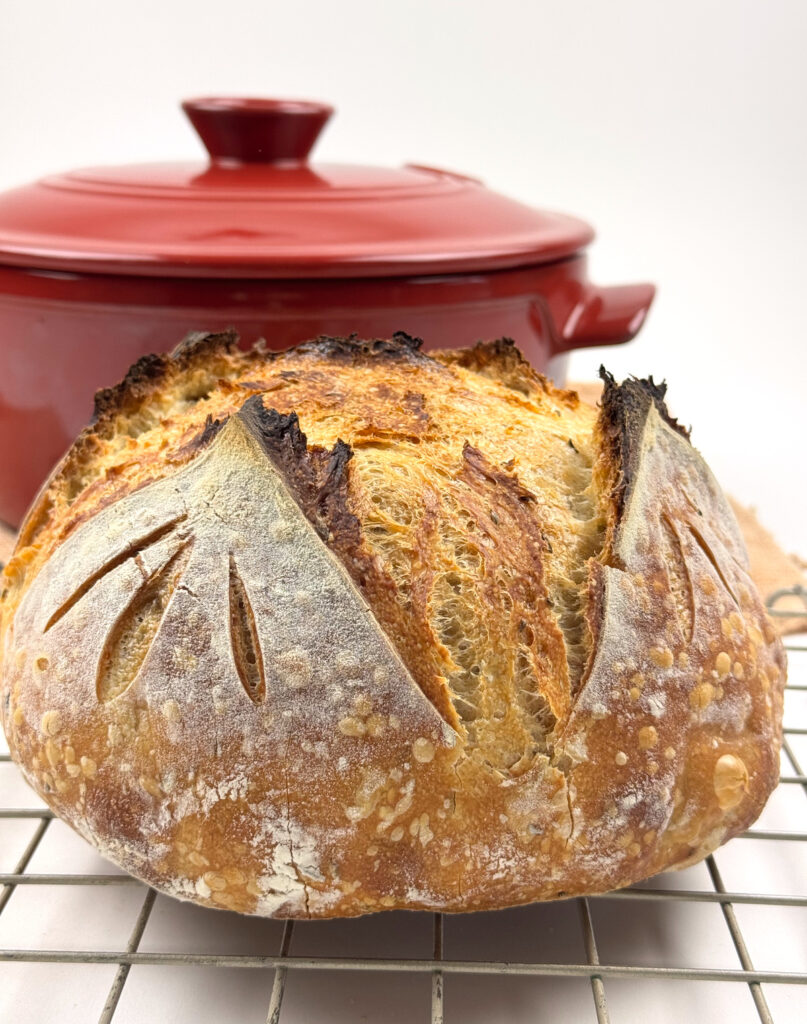
If you haven’t baked a simple sourdough boule before, you may want to start with the plain version first. Understanding how the dough behaves in your kitchen makes this variation easier to recognize and more rewarding to bake.
This isn’t about learning a new technique. It’s about making one small, intentional change and noticing how much stays the same.
Foundation Loaf Series
This Orange Zest Sourdough Boule with Toasted Caraway is part of a small series built around the Simple Sourdough Boule (Foundation Loaf). Each post explores one small change while keeping the same base dough, to make it easier to see how the dough behaves.
Start here:
Simple Sourdough Boule – A Foundation Loaf for Learning Dough Cues
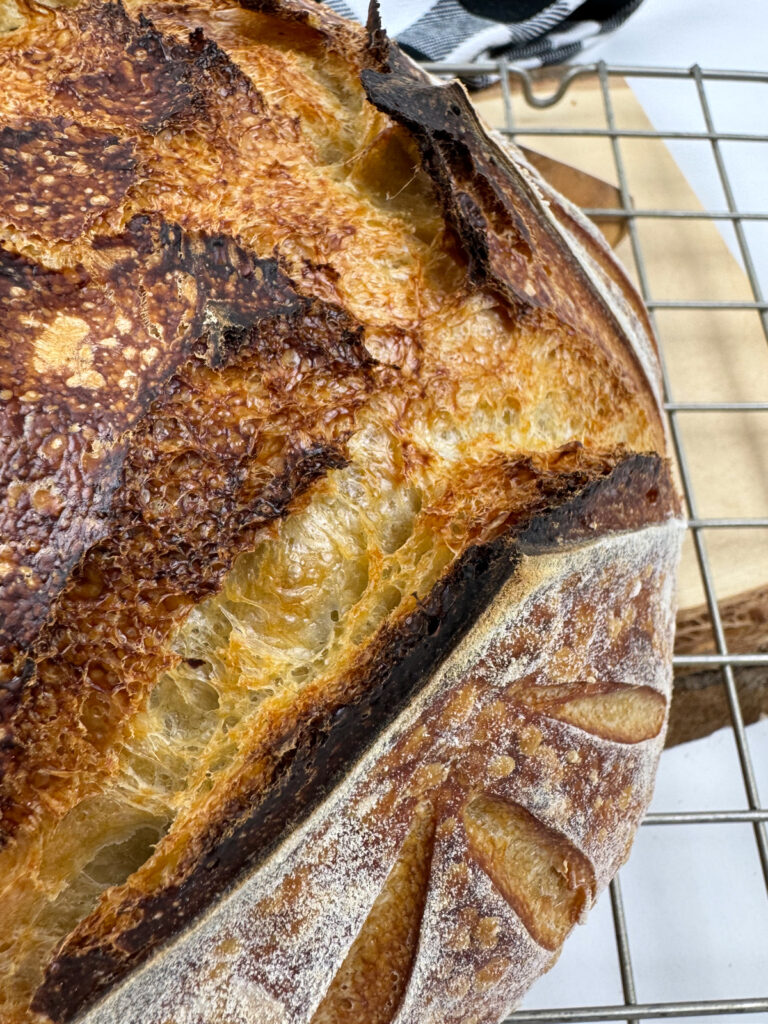
Variations:
• Orange Zest & Toasted Caraway Sourdough Boule (this post)
• Higher Hydration Sourdough Boule (coming soon)
• Whole Wheat Sourdough Boule (coming soon)
Each variation uses the same base dough, allowing you to focus on what changes and what stays the same.
Why Orange Zest and Caraway Work Together
At first glance, orange zest and caraway might seem like an unlikely duo, but they’re actually a natural match. Caraway’s warm, slightly licorice character has a quiet citrusy edge that orange zest brings into focus. Toasted, the seeds deepen in flavor and aroma, while the zest lifts everything without tipping the loaf into sweetness. The result is fragrant and complex, but never loud.
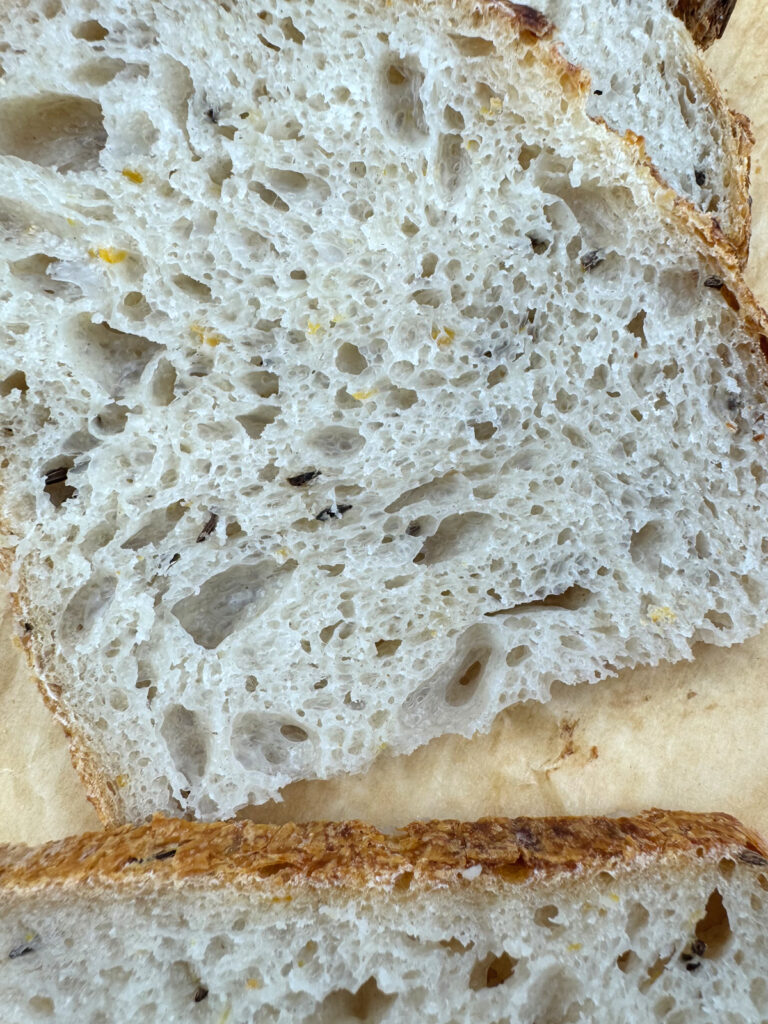
Caraway is best known as a rye bread staple and for good reason. It loves a sturdy, earthy crumb. But paired with citrus, it softens. The combination feels lighter and more nuanced, like a familiar ingredient seen in a new light.
The practical upside? Neither addition meaningfully affects your dough’s hydration or structure. While the flavor profile shifts, your fermentation cues remain the same as the foundation loaf. No adjustments needed, just a more aromatic result.
Mixing the Dough: Hand vs. Stand Mixer
In my first tests of this loaf, I mixed the dough by hand, just as I did with the foundation loaf.
Later, I briefly mixed the dough in a stand mixer fitted with the dough hook. The mixer version developed a smoother texture early in bulk fermentation and felt slightly easier to handle during shaping.
Both methods produced good bread, but the mixer creates a bit more early structure in the dough in my tests.
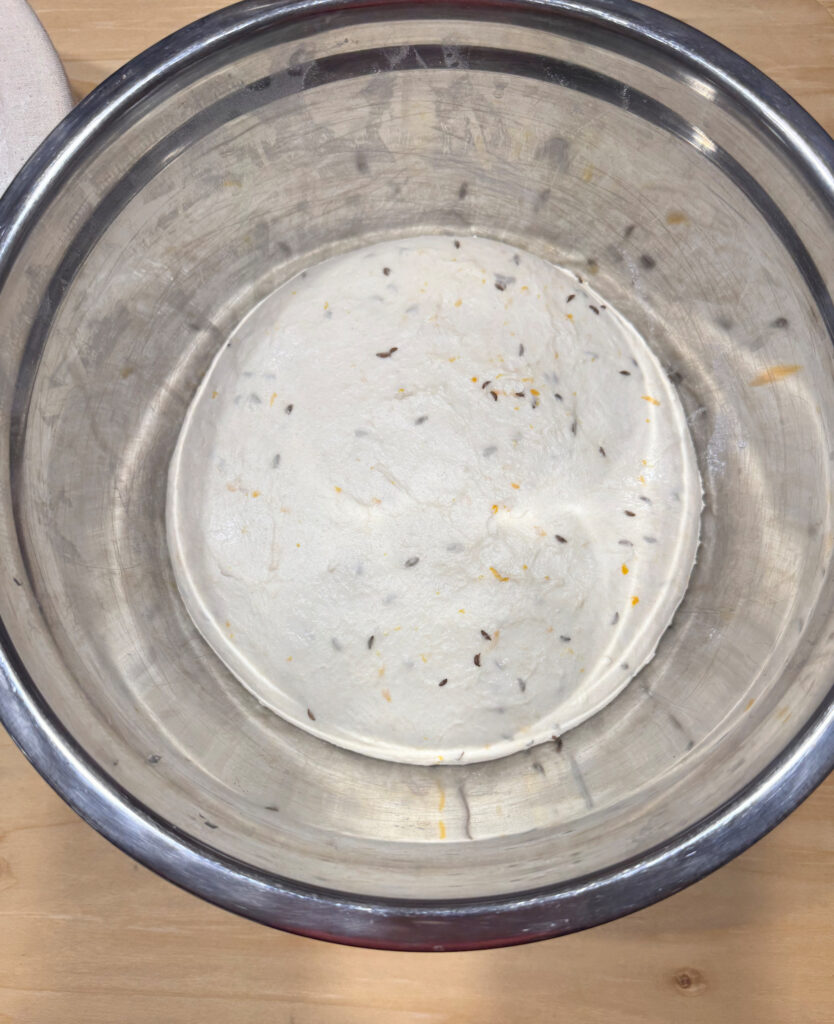
Hand Mixing a Sourdough Boule
You can follow the same mixing method used for the foundation loaf: combine the ingredients until no dry flour remains, allow the dough to rest, and then continue with folds during bulk fermentation.
Optional: Mixing with a Stand Mixer
If you prefer using a stand mixer:
- Combine the flour and water, and mix briefly until no dry flour remains.
- Let the dough rest for about 20–30 minutes.
- Add the sourdough starter and salt.
- Mix on low speed for 3–4 minutes until the dough begins to smooth out and pull together.
The dough should still feel soft and extensible rather than tight. After mixing, continue with the same bulk fermentation and folds described in the foundation loaf.
The cues for fermentation and shaping remain the same regardless of mixing method.
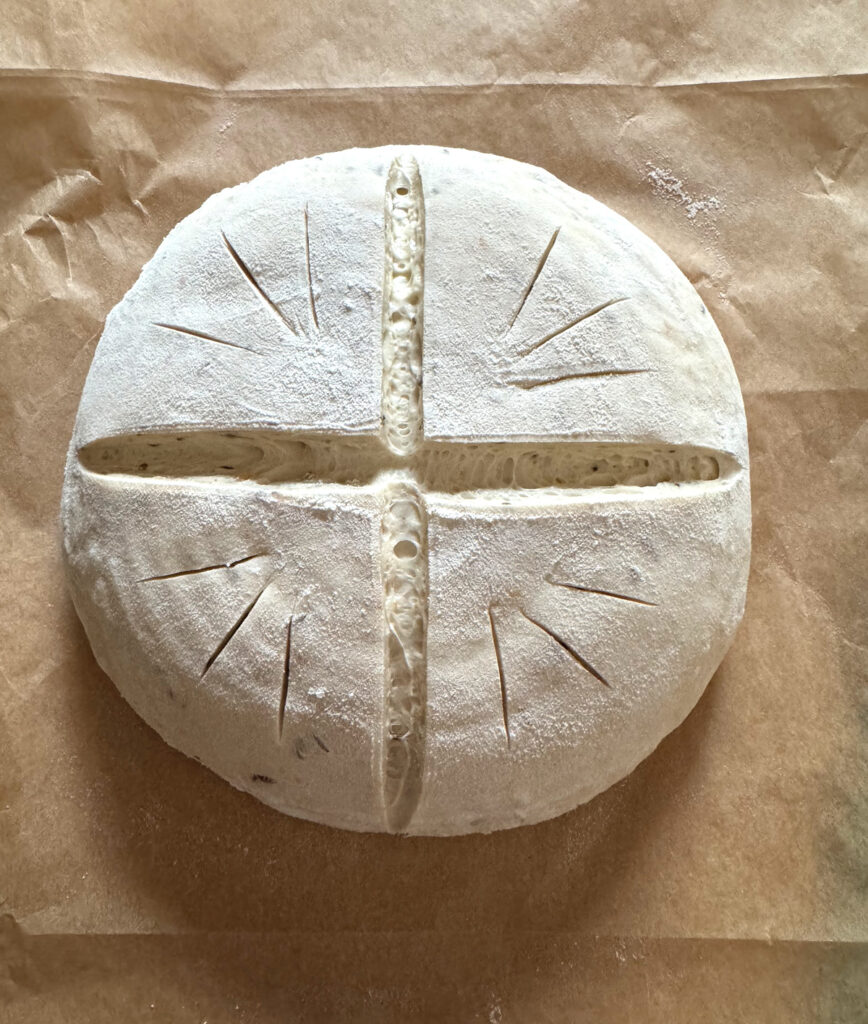
Adding the Flavor
For one boule, add:
- 1 teaspoon toasted caraway seeds, lightly crushed
- Zest of ½ to 1 small orange, avoiding the white pith
Toasting the Caraway
Place the seeds in a dry skillet over medium heat for about 1–2 minutes, just until fragrant. Let them cool before adding them to the dough.
When to Add the Zest and Seeds
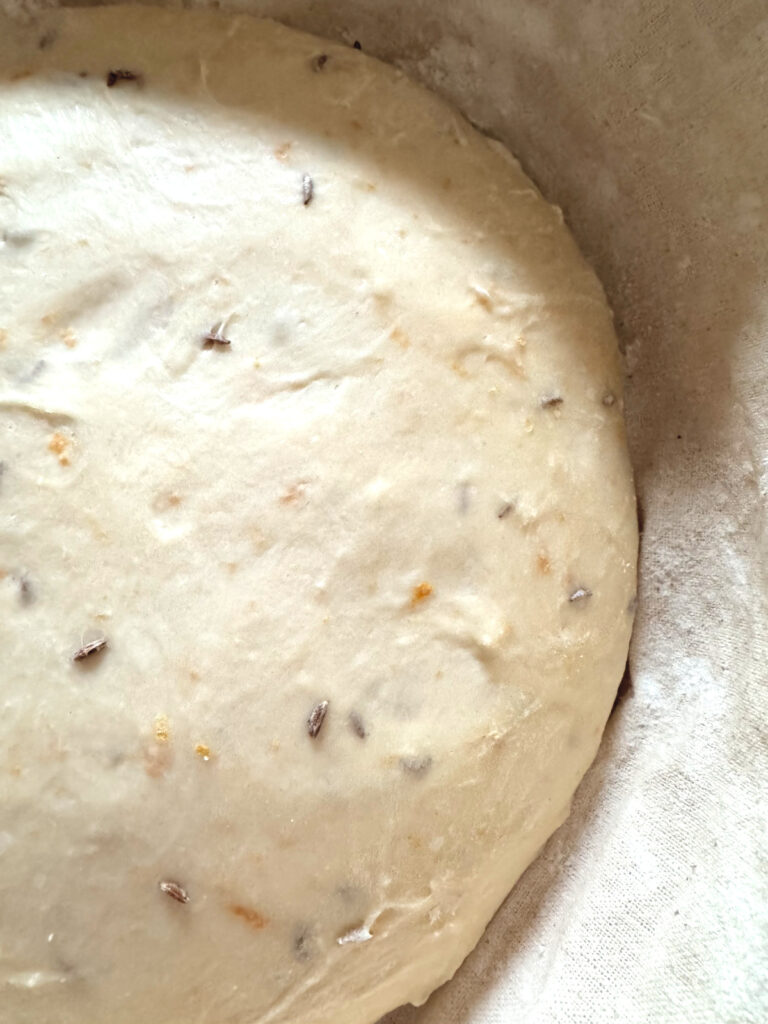
Add the orange zest and caraway during the first fold of bulk fermentation. Sprinkle them over the dough and fold as usual so they distribute evenly.
Everything else about the dough remains the same.
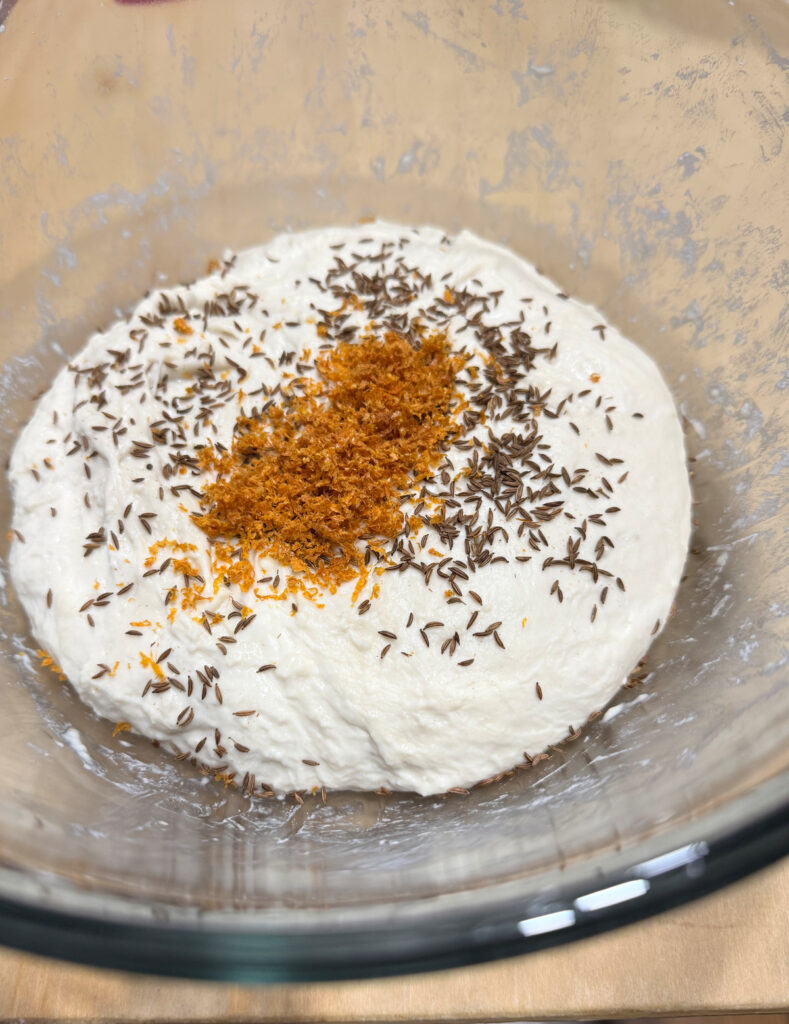
What to Watch for During Fermentation
Because the base dough hasn’t changed, the same cues apply:
- During bulk fermentation, the dough should look domed and bubbly and wobble gently when the bowl is shaken.
- Before shaping, it should hold a loose mound and feel elastic rather than pourable.
- During the final proof, the poke test should give a slow spring-back.
The added zest and seeds shouldn’t dramatically change how the dough behaves.
If you notice slightly larger pockets of crumb near the inclusions, that’s normal and simply part of how flavored loaves develop.
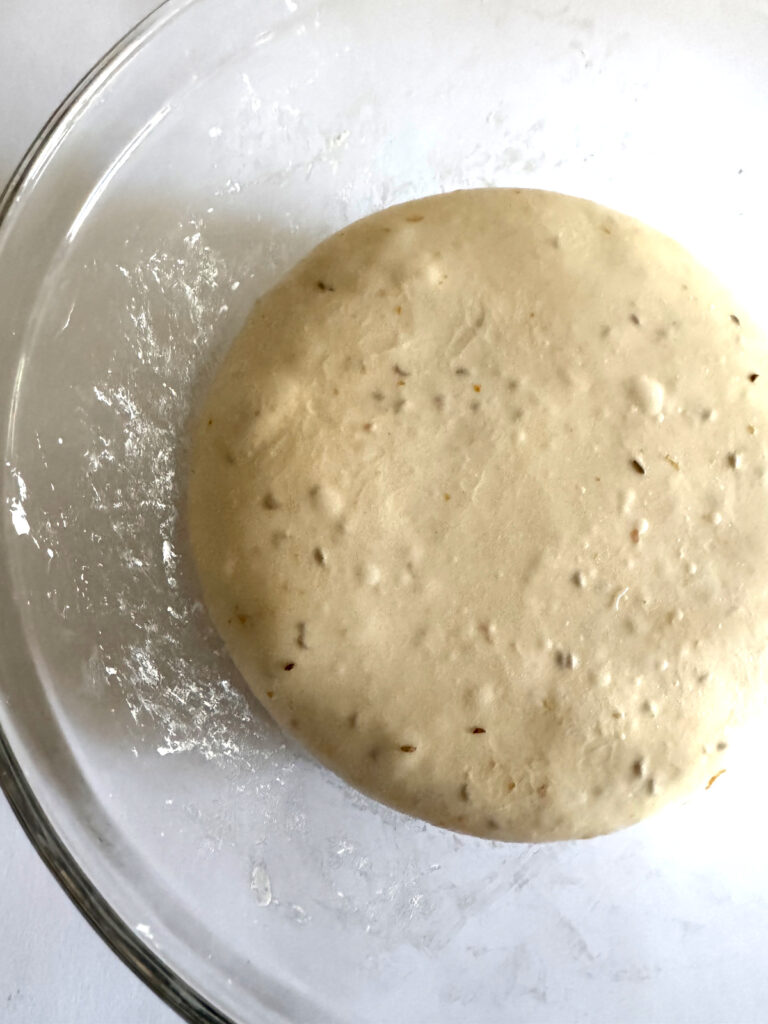
A Small Seasonal Variation
One of the advantages of having a foundation loaf is that it makes variations easier to understand.
When you change just one element at a time, like adding orange zest and toasted caraway, you can focus on what remains consistent in the dough.
If you bake this variation, pay attention to how similar the fermentation and shaping cues feel compared with the plain loaf. That familiarity is what builds confidence.
Sometimes the smallest changes teach the most.
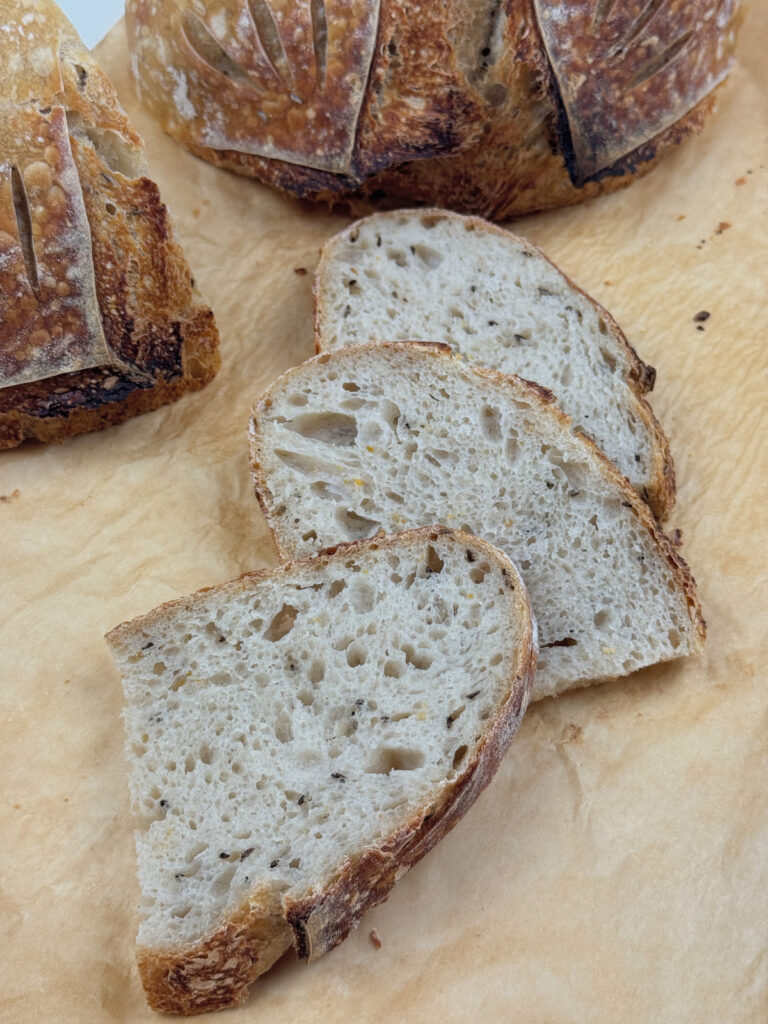
This recipe uses the same dough and method as the Simple Sourdough Boule (Foundation Loaf). The only change is the addition of orange zest and toasted caraway seeds during the first fold.
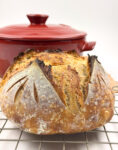
Orange Zest Sourdough Boule with Toasted Caraway (A Bright Spring Variation)
- Total Time: 7-9 hours
- Yield: 1 boule (8–10 slices) 1x
Description
This orange zest sourdough boule with toasted caraway is a bright, aromatic sourdough bread with citrus notes and subtle warmth from the seeds.
Ingredients
Foundation dough
500 g (4 cups + 2 Tbsp or ~17.6 oz) unbleached all-purpose flour
330–350 g (1 1/2 cups + 1–2 Tbsp or ~11.6–12.3 oz) water
80 g (1/3 cup or ~2.8 oz) active 100% hydration sourdough starter
10 g (2 tsp or ~0.35 oz) salt
Spring variation (added during the first fold)
1 tsp toasted caraway seeds, lightly crushed
Zest of 1/2–1 small orange
Instructions
Mix and rest
In a large bowl, mix the flour and 330 g of water until no dry flour remains.
Cover and rest 30-45 minutes. The dough should feel smoother and more extensible after resting.
Add the 80 g active starter and 10 g salt. Pinch and fold in the bowl for 3-5 minutes until everything is evenly combined and the dough tightens slightly but is still tacky.
If the dough feels very stiff, dribble in up to 20 g more water.
Bulk fermentation
Target dough temperature
Room temperature version: about 72°F
Proofer version: 75-78°F
Early bulk (first 2-2½ hours)
Keep the dough covered at your chosen temperature.
During the first 1½-2 hours of bulk, perform 3–4 sets of letter folds, spacing them about 30 minutes apart.
During the first fold, sprinkle the orange zest and toasted caraway seeds evenly over the dough before folding. This helps distribute the flavor throughout the dough without disrupting its structure.
To fold the dough, gently loosen it from the bowl, then lift it with one hand and drape it over your other hand so it hangs down under its own weight. Let the dough stretch naturally, then fold it back over itself above the bowl. Rotate the bowl and repeat once more, then place the dough back into the bowl.
These folds help organize the dough and build an even structure early in fermentation without forcing or flattening it.
The dough should stretch easily under its own weight during these folds. If it resists strongly, let it rest longer before folding again.
Undisturbed bulk (until ready)
After the final fold, let the dough rest undisturbed for the remainder of bulk fermentation.
At about 72°F, the total bulk is often around 6-8 hours from mixing. At 75-78°F, it may be closer to 4½-6½ hours.
End bulk when the dough shows these signs:
-
The surface is gently domed, smoother, and slightly inflated.
-
Bubbles are visible along the sides and just under the top skin.
-
A gentle side-to-side shake makes the dough wobble like soft jello as one cohesive mass, then settle back without collapsing.
Stop bulk as soon as those cues appear, even if the clock says you could go longer.
Preshape, rest, and final shape
Turn the dough out onto a lightly floured surface. It should hold a soft mound rather than spreading into a flat puddle.
Preshape into a loose round using a bench knife and gentle tucks. Rest 20-30 minutes, uncovered, until the surface relaxes but the dough still stands up.
Shape into a boule, building surface tension by dragging and rotating the dough against the bench. Aim for a smooth, tight outer skin while keeping the interior airy. Do not aggressively press out all the gas.
Place seam-side up in a lightly floured banneton or a bowl lined with a floured cloth.
Final proof
At room temperature (~72°F)
Proof 45-75 minutes.
The dough should feel lighter and slightly puffed. When gently poked with a floured finger, the indentation slowly springs back and leaves a shallow impression.
With a proofer (75-78°F)
Proof about 30-60 minutes.
Use the same poke-test cues. The dough will typically reach readiness toward the shorter end of the range.
Overnight option
For an overnight option, shorten the room-temperature proof to about 20-30 minutes, then refrigerate 8–14 hours.
Bake straight from the refrigerator when the dough looks airy and still gently domed.
Bake
Preheat the oven to 475°F (245°C) with a Dutch oven inside for at least 30-45 minutes to ensure the pot is fully heated.
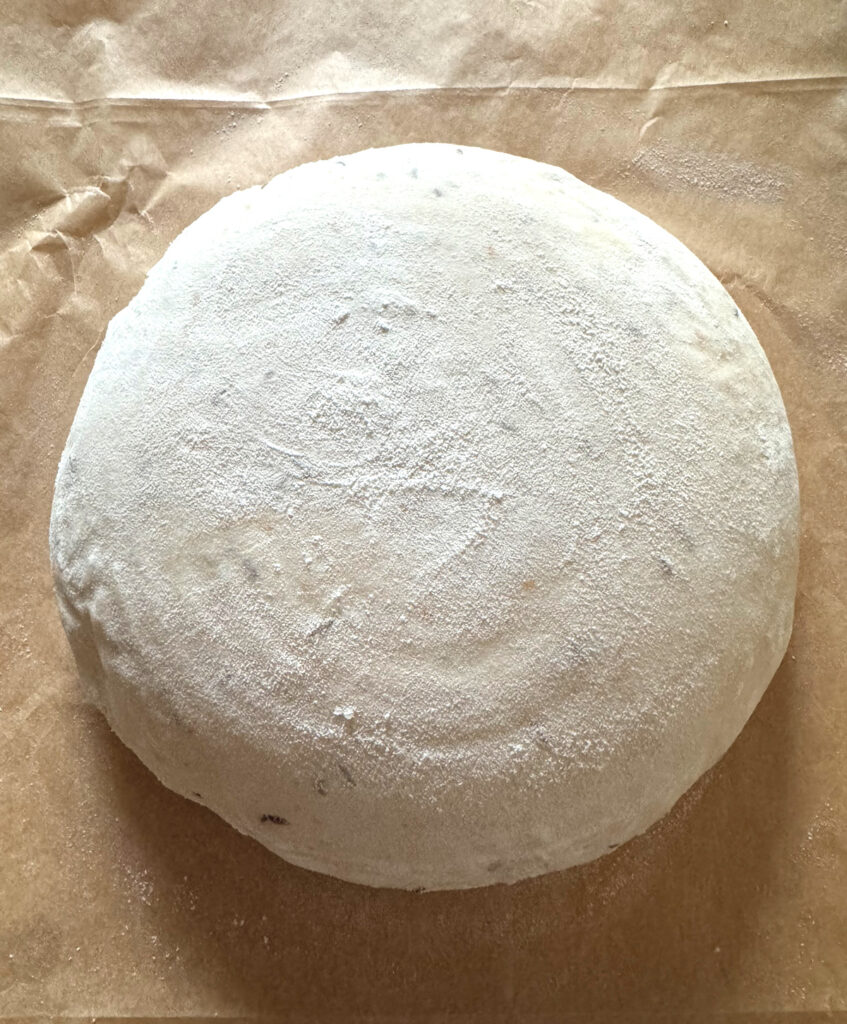
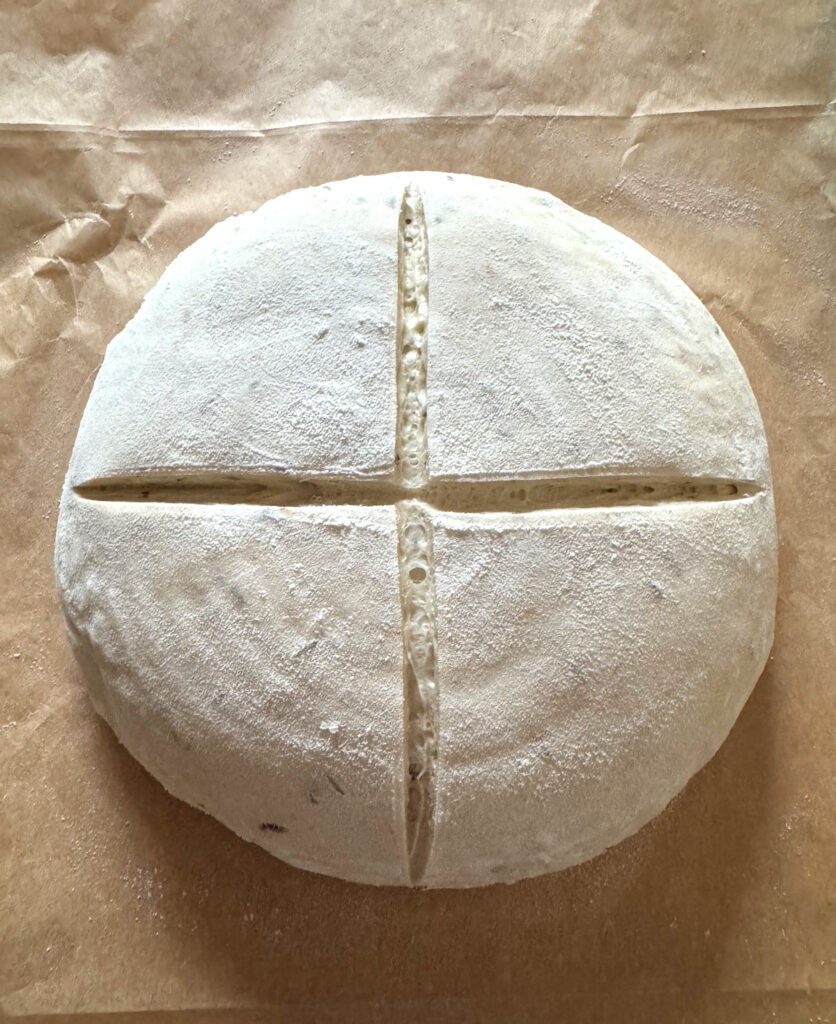
Turn the dough out onto parchment, score as desired with ¼-½ inch deep cuts, and transfer carefully to the hot pot.
Cover and bake for 20 minutes.
Reduce the oven to 450-460°F, remove the lid, and continue baking for 22–28 minutes, until the crust is a deep, even golden brown and the loaf feels light for its size.
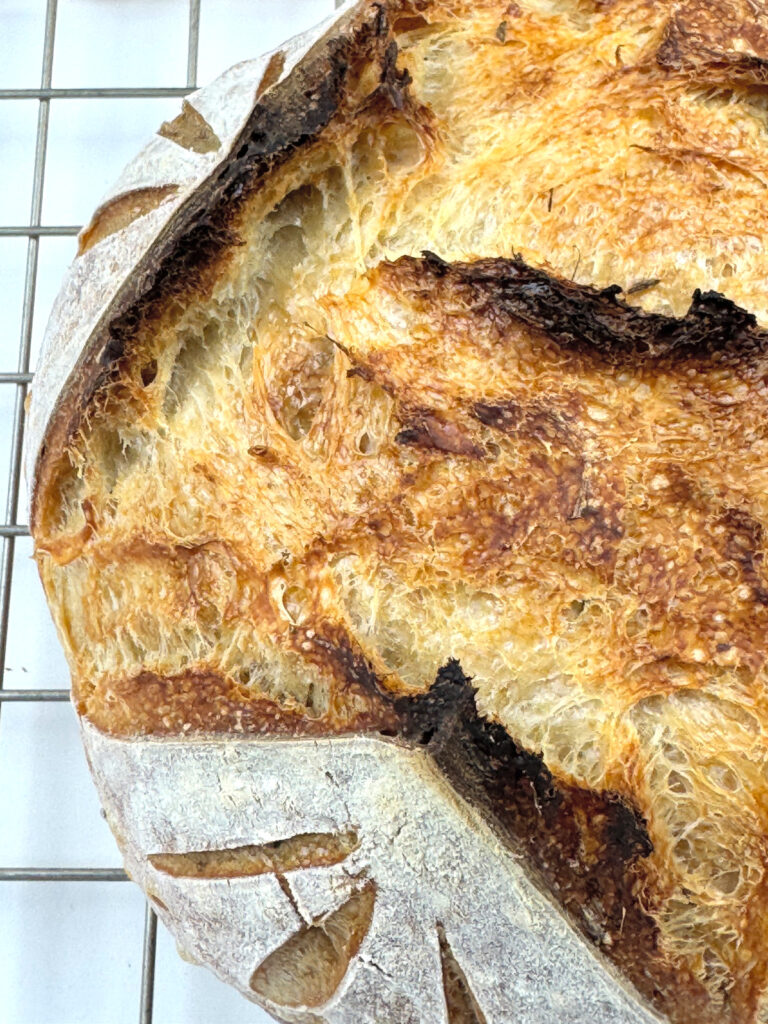
Cool completely on a rack before slicing to allow the crumb to set.
- Prep Time: 30 min
- Cook Time: 45 min
- Category: Bread
- Method: Sourdough, Dutch Oven
- Cuisine: American
Serving Notes for this Orange Zest Sourdough Boule
This loaf pairs beautifully with simple foods:
- Salted butter
- Mild cheeses
- Irish-style soups or stews
- Lightly toasted slices the next morning
The citrus brightens the loaf while the caraway adds warmth without heaviness.
Happy Baking!
Cathy
Leave a Reply