
This Dutch Oven Sourdough Sweet Potato Crunch Bread is ideal for Fall and Holiday dinner tables. It has the traditional ingredients found in Sweet Potato Crunch, a favorite Holiday dish, but also features flavors and textures you’ll only experience in the bread form. It has become one of my “goto” breads.
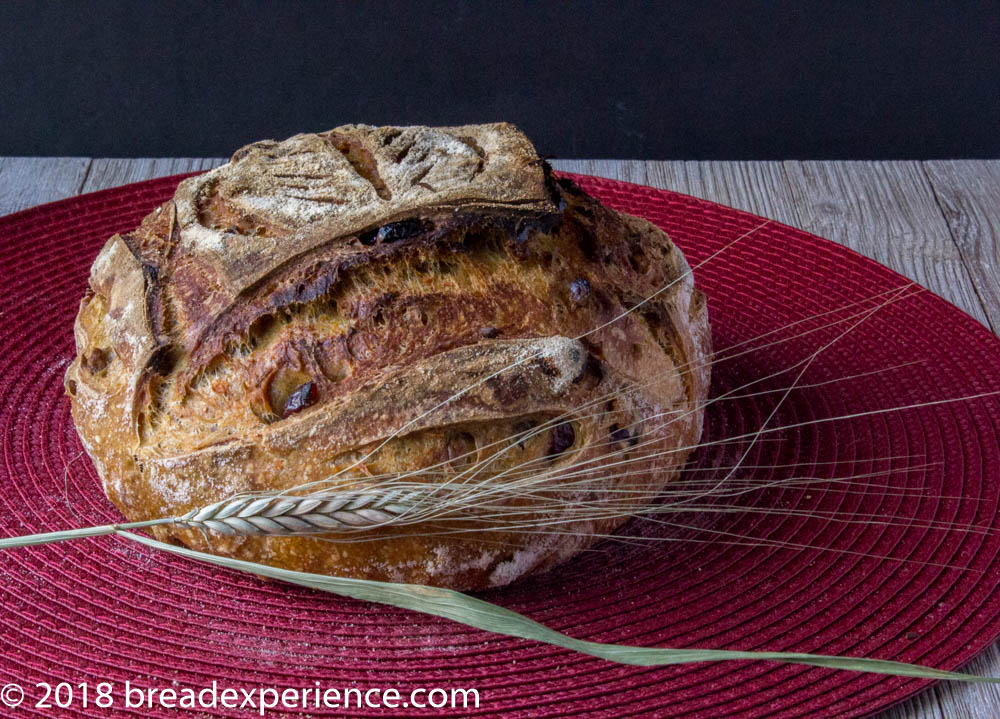
This bread tastes as the name suggests. It’s chewy on the outside and full of flavor on the inside.
It utilizes an overnight sourdough pate fermentee, a method I’ve been experimenting with for several weeks. The pate fermentee, which is similar to the consistency of dough, provides flavor and strength to the final dough. This type of preferment typically includes a pinch of yeast, and then more yeast is added to the final dough. However, with the method I’ve been using recently, you add 25 grams of sourdough in the overnight preferment, and it provides the lift to the final dough without needing any extra yeast.
I’ve made this bread several times to make sure I had the process down. The first time I made it, it was missing something. So I tweaked it a bit and brought the updated version to a dinner party without even testing the finished product. I did try the dough, just not the baked loaf.
The ladies in my dinner group were very gracious, and I think pleasantly surprised. “This bread is awesome!” was the most common exclamation, and “Bring this bread next month!” was another comment. It always makes me smile when the bread ideas swirling around in my head come to life, and people enjoy eating the results.
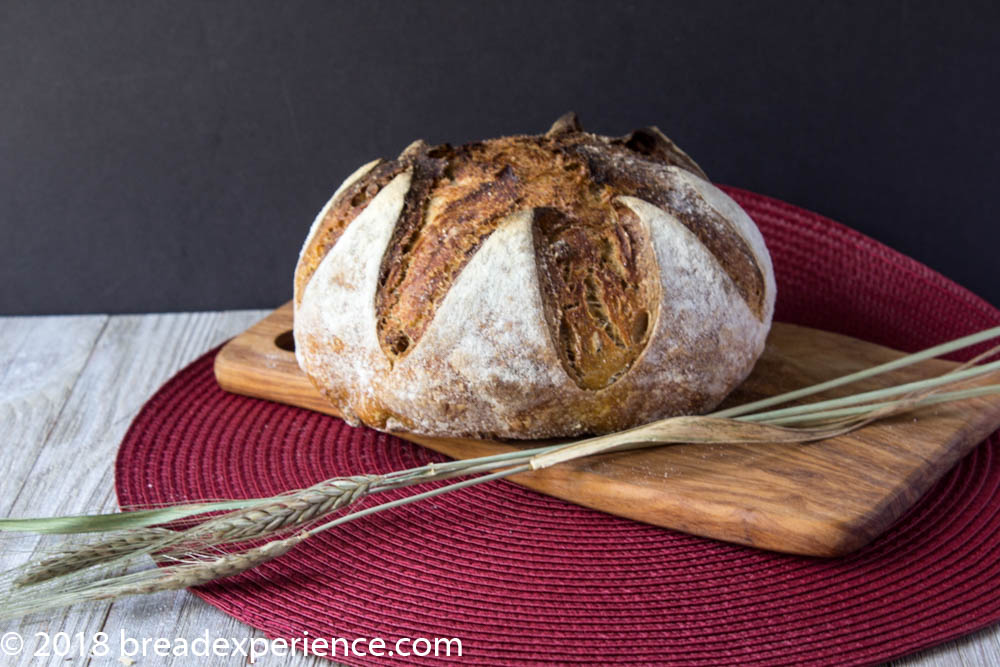
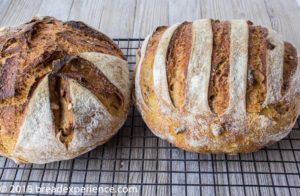
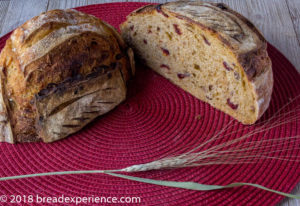
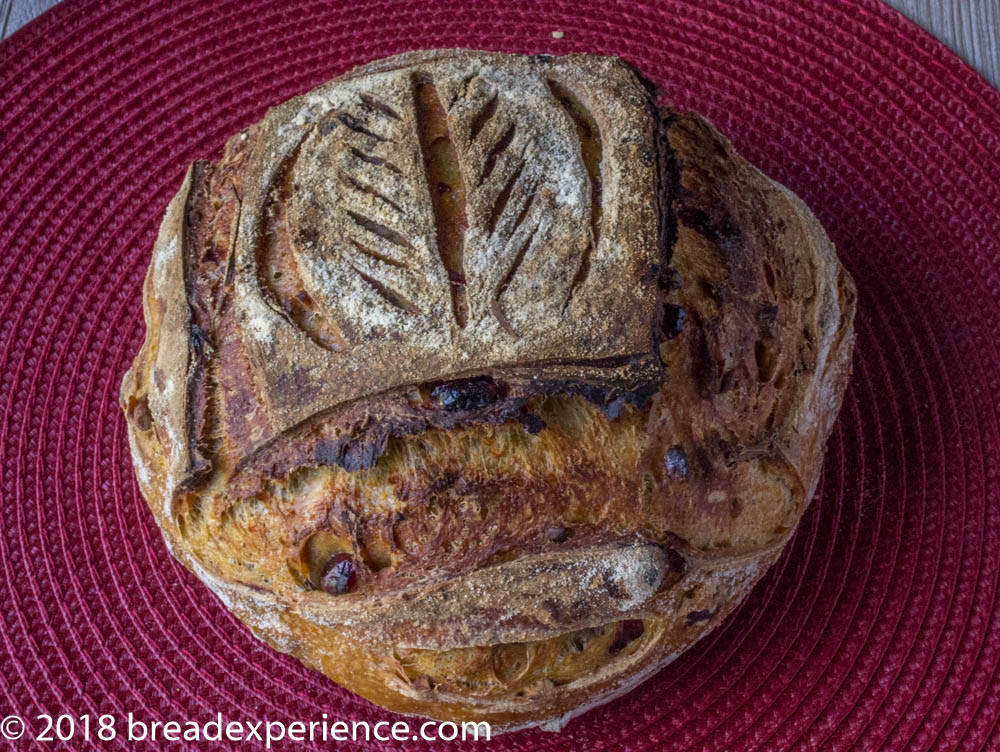
I’ve made different versions of this bread, using different flour combinations based on the type of wholegrain flour I had on hand. The emmer and rye version made its debut at the ladies’ dinner group several weeks ago, and the emmer and spelt version (pictured below) was the star of my family’s Thanksgiving dinner.
I like both versions equally well.
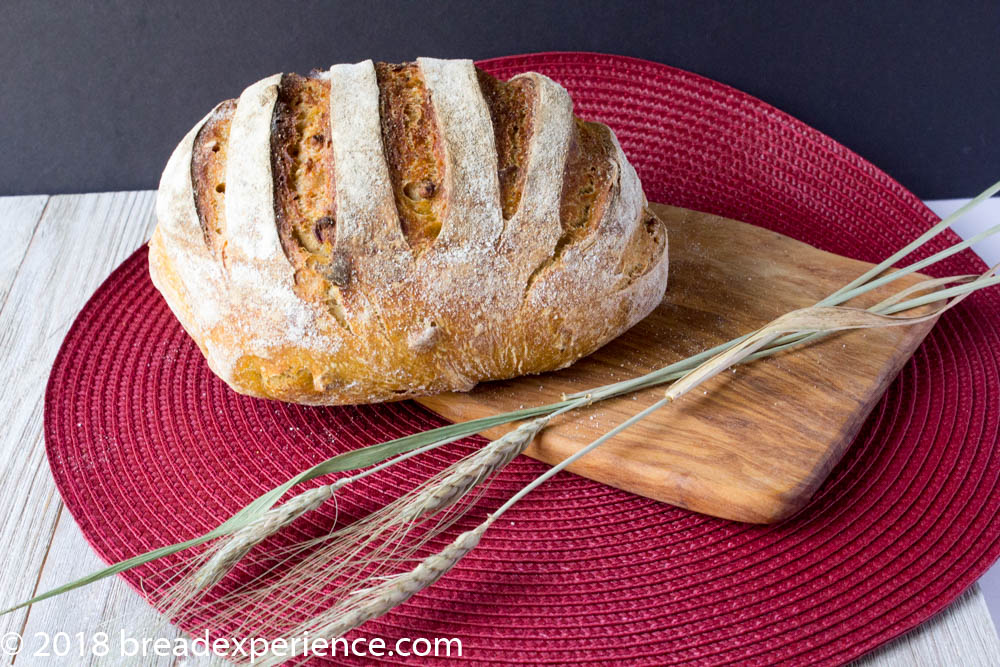
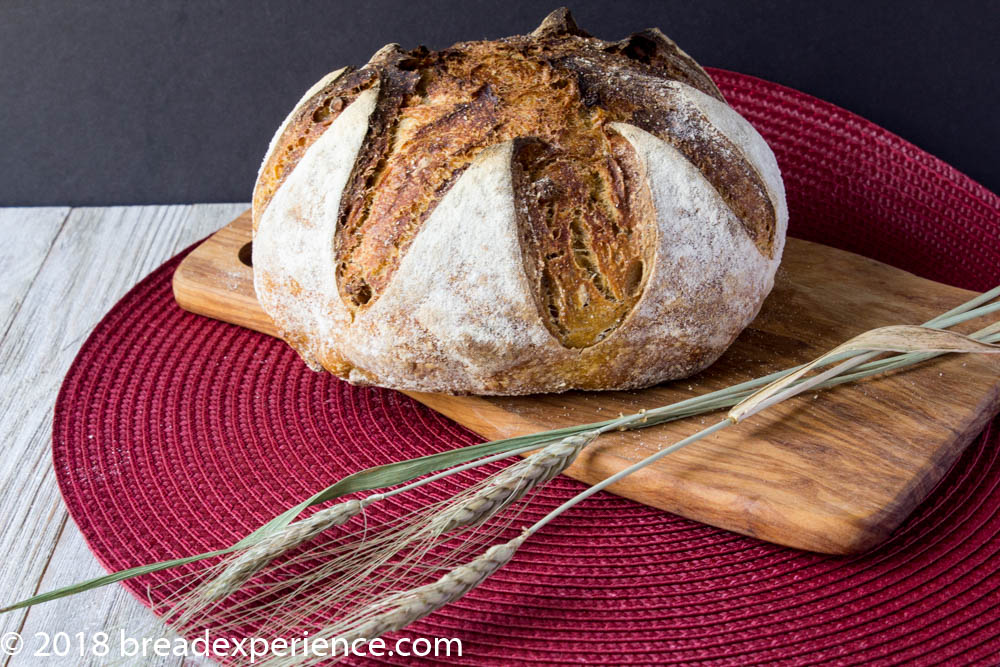
Here is the Thanksgiving bread pictured with some of the test emmer wheat I grew in my yard. Although I didn’t grow enough wheat for bread (because I was testing it to see if it would even grow in Georgia), the einkorn and emmer wheat stalks I used as centerpieces on my Thanksgiving tables made nice conversation pieces.
Make this Sourdough Sweet Potato Crunch Bread using a sourdough starter or yeast
Sourdough Method:
I used my favorite starter for this bread.
Yeast Method:
If you don’t have a sourdough starter, you can make this bread using yeast. Add a pinch of instant dry yeast to the Pate Fermentee and follow the same process for the fermentation. Then add 1 1/4 teaspoons of yeast to the final dough and follow the rest of the process.
What type of sweet potato should you use? updated Jan 2019
I used orange sweet potatoes in this loaf. They paired well with the pecans, dried cranberries, and brown sugar. Everyone enjoyed this bread so much, I don’t think I would change the type of potatoes I use for this particular loaf.
However, I used purple sweet potatoes for the Sourdough Sweet Potato Onion Loaf we made during the monthly challenge for the Bread Baking Babes. I loved the flavor and texture of that loaf. Purple sweet potatoes have a chestnut flavor and make the dough nice and fluffy.
How should you roast the sweet potato? updated Jan 2019
The method I used to roast the sweet potatoes for this loaf, was to cut the sweet potato up into chunks, drizzle olive oil over the chunks, and then roast them. That method works fine, but I have since learned a different method of roasting sweet potatoes that you might enjoy.
Cut off the ends of the potato, roast it whole (with the skin on) at 400F for about 45 minutes, then scoop out the flesh. It works like a charm! I added these instructions in the notes of the printable recipe below.
Refer to this Sourdough Sweet Potato Onion Loaf post to see the bread I made using the new roasting method, along with a photo of the roasted potato with the skin just peeling off.
Dec 2022 – slightly edited ingredients and instructions.
This sourdough sweet potato crunch bread is one of my favorite loaves to take to Holiday luncheons or dinners. It always gets rave reviews. It has a complex, yet pleasing flavor due to the whole grains.
Make Bread Pudding with this Sweet Potato Bread
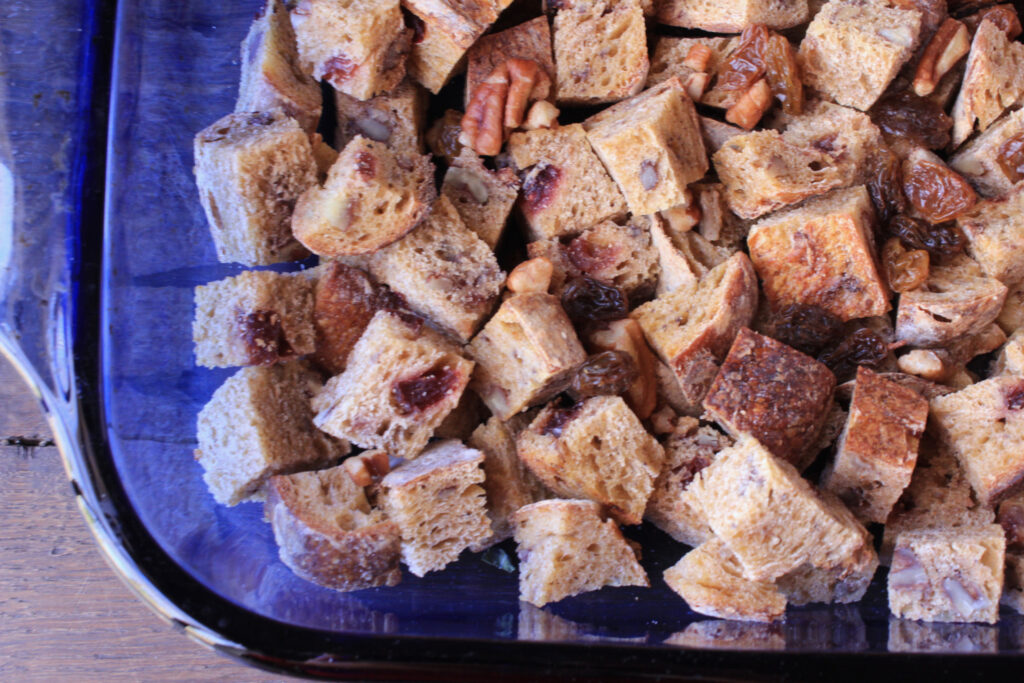
If you have leftover slices of this bread, don’t let them go to waste, cut them into bread cubes and make this rich and comforting bread pudding. Use day-old or slightly stale bread for optimal results.
Dutch Oven Sourdough Sweet Potato Crunch Bread
- Yield: 2 Loaves 1x
Description
This Dutch Oven Sourdough Sweet Potato Crunch Bread is ideal for Fall and Holiday dinner tables. It has the traditional ingredients found in Sweet Potato Crunch, a favorite Holiday dish, but also features flavors and textures you’ll only experience in the bread form.
Ingredients
Pate Fermentee:
- 272 grams (2 1/8 cups) all purpose flour
- 180 grams (3/4 cup) water
- 5 grams (1 tsp) salt
- 25 grams sourdough starter (See notes)
Final Dough:
- 450 grams (3 1/2 cups) all-purpose flour
- 75 grams (~1/2 cup) whole grain flour (ex. emmer, spelt, rye)
- 136 grams (1 1/8 cups) different type whole grain flour (rye, spelt, or other)
- 325 – 400 grams (1 3/8 – 1 3/4 cups) water
- 30 grams (3 Tbsp.) brown sugar, packed
- 225–250 grams roasted sweet potatoes
- 1/2 tsp cinnamon
- 15 grams (3 tsp) salt
- 85 grams (3/4 cup) chopped pecans
- 90 grams (3/4 cup) dried cranberries, optional
- Pate fermentee, all of the above
Instructions
Day 1 – Prepare the Pate Fermentee
- The day (or evening) before you plan to make the bread, add all of the pate fermentee ingredients in a medium bowl and mix using a wooden spoon or Danish dough whisk until just smooth.
- Cover tightly with plastic wrap or a tight-fitting lid. Allow the preferment to sit at room temperature for 12-16 hours, depending on temperature in your kitchen.
- After the pate fermentee has fermented on the counter, use it immediately in the final dough or place it in the refrigerator for a day or two before using. If you place it in the refrigerator, allow it to warm up to room temperature before adding to the dough.
Roast the sweet potato
- Refer to the notes for the roasting method. You may prepare the sweet potato ahead of time and place in the refrigerator or make it the same day as the final dough. Cool slightly then mash with a potato masher. Use 200-250 grams of the potato mash in the final dough.
Day 2 – Mix the Final Dough
- This dough can be mixed by hand, but it’s a workout! I recommend using a stand mixer, if you have one.
- Add all the ingredients to bowl of a stand mixer (except for the preferment and pecans) and mix at first speed for three minutes. While the dough comes together add the preferment in small chunks. Then mix on second speed for 4 minutes. The gluten will be moderately developed and the dough should be supple.
- Add in the pecans and dried cranberries, if using. Mix on low speed until incorporated or knead in the pecans by hand.
- Bulk Fermentation – Cover the bowl with plastic wrap, a kitchen towel, or plate. Allow dough to bulk ferment for 2 – 2 1/2 hours; complete 2 folds at 45 minute intervals.
- Shape -Turn the dough out onto a lightly floured surface. The dough should be firm and noticeably elastic. Cut the dough in half and shape each piece into an a round boule. Let the balls rest on the counter for 10 to 15 minutes.
- Final Proof – Dust two lined banneton baskets with a mixture of AP/rice flour. Reshape the dough into tight boules and place seam side up in the baskets. Cover with plastic wrap, a plate, or kitchen towel, and let rise at warm room temperature for 45-60 mintutes. Alternately, proof the loaves on the counter for an hour, then place in the refrigerator overnight.
- Preheat – Oven to 450°F (205°C) with a cloche, Dutch Oven or other baking pot on the bottom rack. Let it preheat for 30-45 minutes prior to baking the loaves.
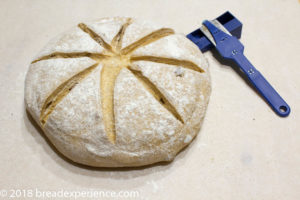
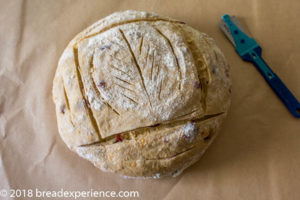
- Score Loaves – Carefully turn out the loaves from the proofing baskets onto parchment paper sprinkled with cornmeal. Score the loaves with a lame or serrated knife in the pattern of your choice.
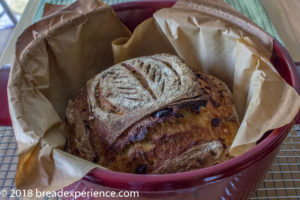
- Bake the Loaves – When the oven and bread pot have preheated sufficiently, remove the lid and transfer the scored loaf (on the parchment) to the bottom of the baker. Use the “parchment sling” to transfer the loaf in and out of the baker to keep from getting burned. Bake each loaf 25 minutes with the lid on and 15 minutes with the lid off, for a total of 40 minutes.
- Carefully remove the loaf from the oven and place it on a wire rack for cooling.
- Repeat the baking process with the remaining loaf. Preheat the oven again to 450 degrees F. before baking the 2nd loaf.
Notes
Sourdough Method:
Here is the link to my favorite starter if you want to go through the process of creating one https://www.breadexperience.com/you-are-apple-of-my-starter/
Yeast Method:
Don’t have a sourdough starter? Add a pinch of instant dry yeast to the Pate Fermentee and follow the rest of the process. Then add 1 1/4 teaspoons of yeast to the final dough and follow the rest of the process.
How should you roast the sweet potato?
Cut off the ends of the potato, roast it whole (with the skin on) at 400F for about 45 minutes, then scoop out the flesh.
Make Bread Pudding:
Don’t let leftover slices go to waste, cut them into bread cubes and make a rich and comforting bread pudding. Use day-old or slightly stale bread for optimal results.
- Category: Sourdough Bread
- Cuisine: Artisan Bread

I’m thankful for family and friends who test my bread and help me perfect it. I’m delighted to be able to share this Sourdough Sweet Potato Crunch Bread with you.
Happy Baking!
Cathy

Leave a Reply