
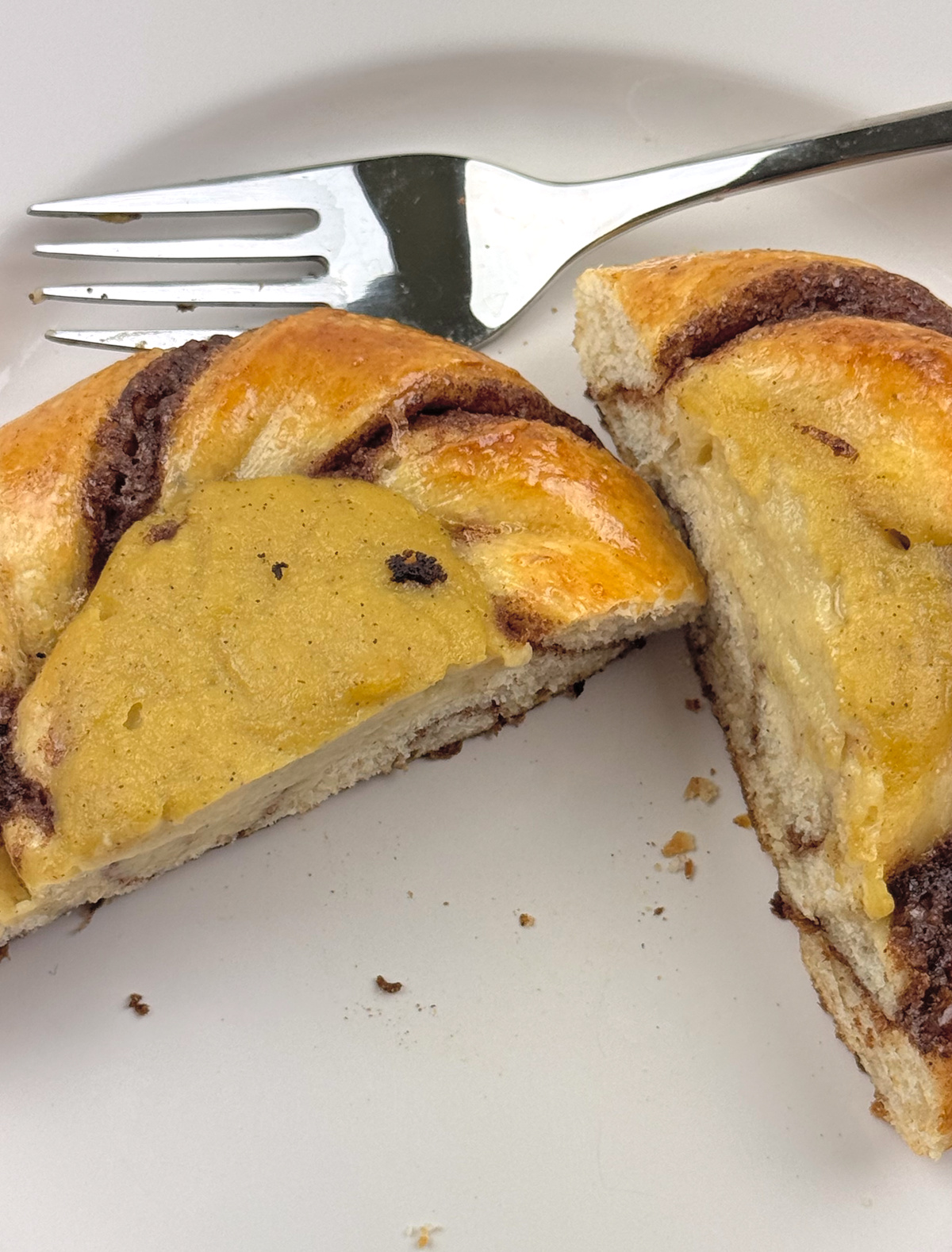
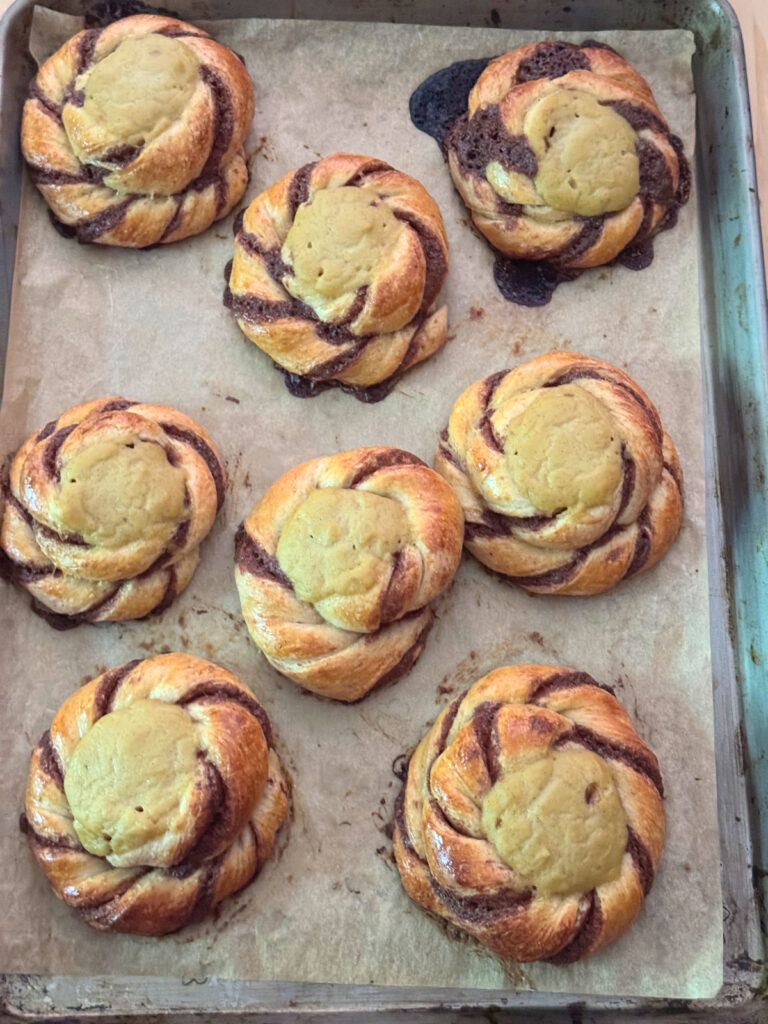
These Sourdough Solskinnsboller, Norwegian sun buns, filled with cinnamon butter and vanilla custard, are made with a sweet, stiff levain and cardamom-scented dough.
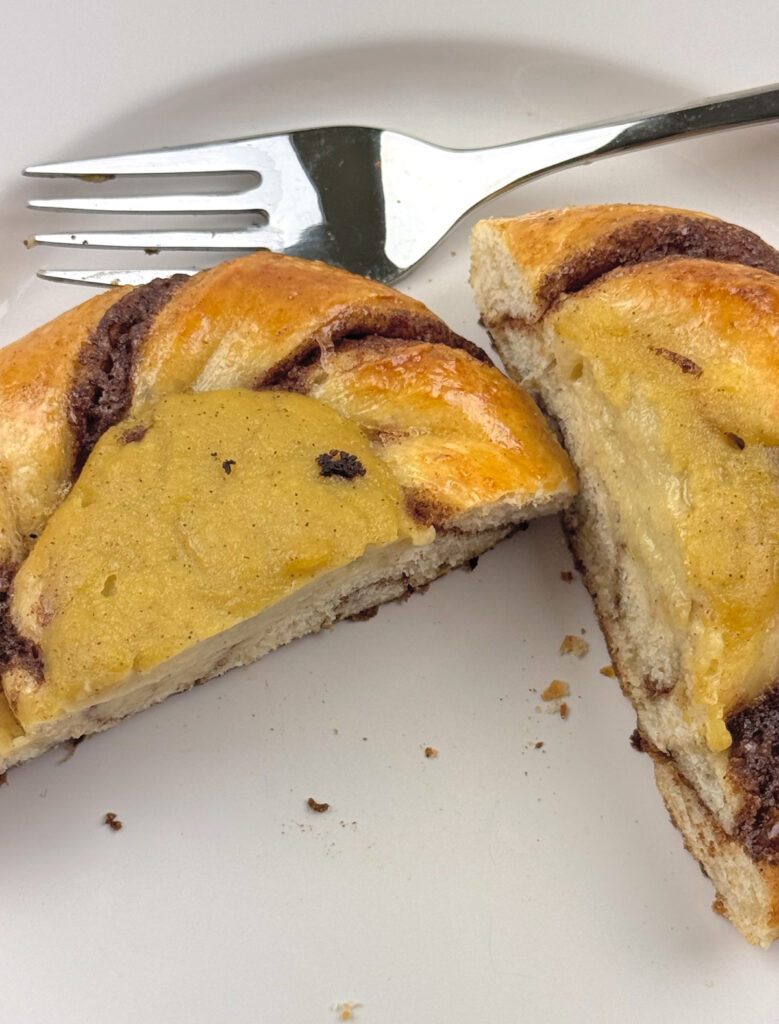
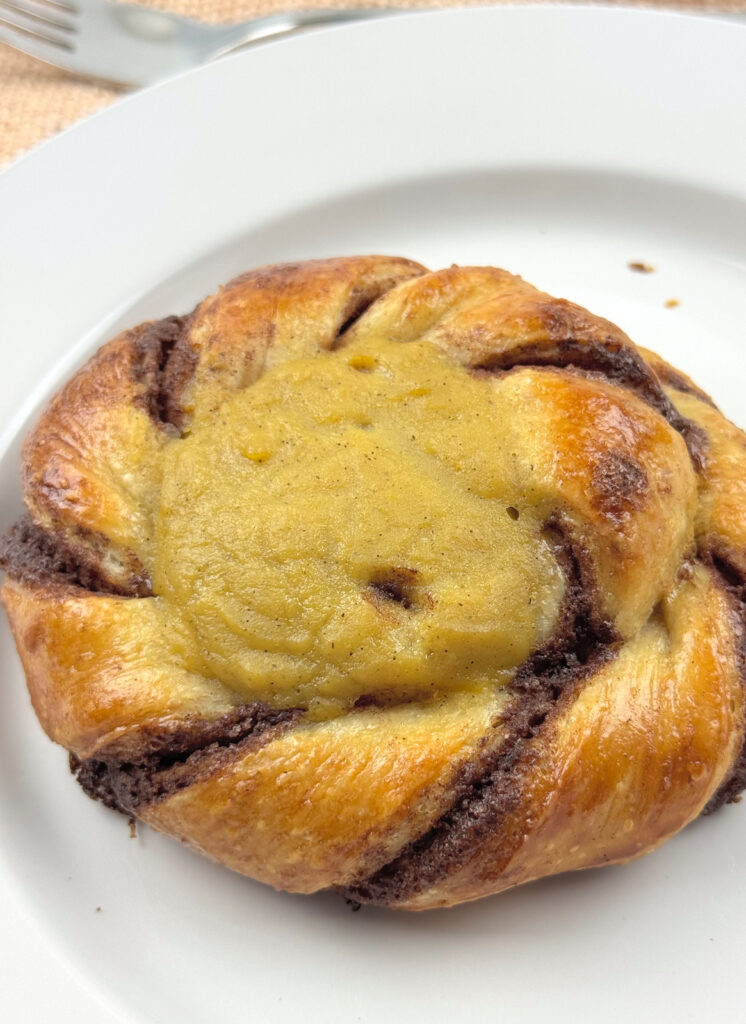
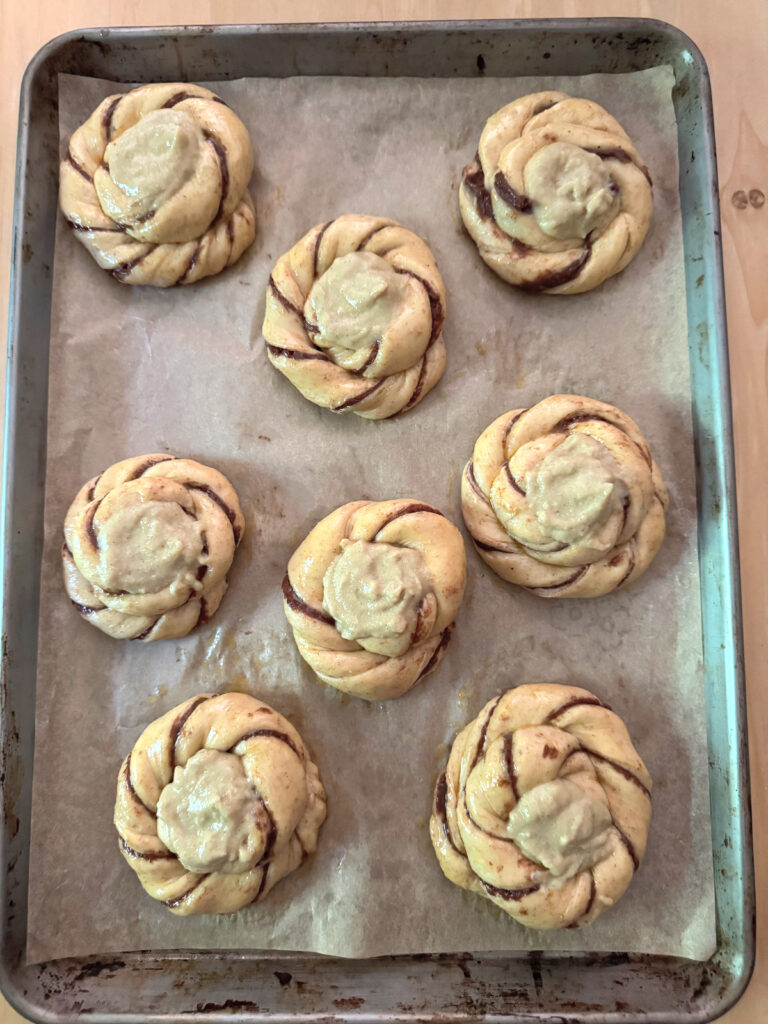
Each month, the Bread Baking Babes, my virtual baking group, take on a new project, and this month it is Solskinnsboller, the Norwegian sun buns named for the small pool of custard that sits in the center of each coil like a bit of sunshine.
They are soft and cardamom scented, layered with cinnamon butter, and finished with a spoonful of vanilla custard. They were a perfect candidate for a sourdough conversion, so the natural levain version is the one I want to share.
Why Make Sourdough Solskinnsboller with a Sweet Stiff Levain?
My goal was the lift and quiet depth of a wild levain without any sour note competing with the cardamom, cinnamon, and custard.
A sweet stiff levain does exactly that. Built with a little sugar and milk, it ferments gently and holds back the bacteria that turn a dough sharp, so you get the character of sourdough without the tang. I also worked a small amount of whole spelt into both the levain and the dough, just enough to provide a nutty sweetness in the background.
A half teaspoon of instant yeast is added to the dough alongside the levain. This is a rich, buttery dough, and after a long rest in the cold, it appreciates a dependable push. The yeast supports a good, even rise, while the levain carries the flavor and gentle depth.
I baked these twice. The recipe below reflects what the second bake taught me, and the notes that follow are the things I would tell a friend before she started.
A Few Notes Before You Begin
Measure the salt carefully. The dough takes one teaspoon, not one tablespoon. I misread the line on my first bake, and while the buns were still edible, the saltiness was hard to forgive. I should have weighed it. A teaspoon and a tablespoon are easy to confuse on a quick read, and the scale would have caught the mistake.
This Sourdough Solskinnsboller dough takes well to an overnight rest in the refrigerator, which turned out to be my favorite discovery. After mixing, let it rise on the counter for an hour or two, then cover the bowl well and move it to the fridge to bake the next morning. The cold dough is firmer and much easier to roll into a clean square.
Protect the dough during the cold ferment. Keep the surface fully sealed from the air, or the top dries into a hard skin overnight and will not roll out evenly. The next morning, let the bowl sit on the counter, still covered, for about an hour to take the chill off before you roll.
Use a lighter hand with the filling than you think you need. The original amount was generous to a fault. It oozed out of the coils and scorched on the parchment. I dropped the butter to 70 grams for the second bake and had only one bun misbehave.
The custard is happiest made ahead and chilled. I make mine during the final proof, let it cool, then refrigerate it so it is cold and spoonable when the buns are ready. A cold custard holds its shape in the indentation instead of running off. In a warm summer kitchen, the cinnamon filling appreciates the same treatment. Keep it in the refrigerator so it stays firm enough to spread cleanly, and let it soften slightly before you use it.
Chill the folded dough before shaping. Twenty to thirty minutes in the refrigerator firms the butter and keeps the filling from seeping while you cut and twist. I did this on both bakes and would not skip it.
Keep an eye on the bottom of the buns. My oven runs a little hot, and at 400 degrees, the undersides firmed up more than I liked.
Bake on a lower middle rack, and rotate the pan halfway through. If the bottoms are browning too fast, drop the temperature to 375.
You might also enjoy Swedish Cardamom Buns
Swedish Buns: Yeast & Sourdough Options for Sweet and Savory Flavors

Sourdough Solskinnsboller: Norwegian Sun Buns with Cinnamon and Custard
- Yield: 8 Buns 1x
Description
Sourdough Solskinnsboller, Norwegian sun buns, filled with cinnamon butter and vanilla custard, made with a sweet, stiff levain and cardamom-scented dough.
Weighing is the most reliable way to bake these, especially the levain. Volume measures are included throughout for convenience, but the scale will give you the most consistent result.
Ingredients
Sweet Stiff Levain
- 25 grams (about 2 tablespoons) mature sourdough starter
- 25 grams (about 3 1/2 tablespoons) whole spelt flour
- 25 grams (about 3 tablespoons) all-purpose flour
- 25 grams (5 teaspoons) whole milk, warmed to about 100 degrees
- 10 grams (2 1/2 teaspoons) granulated sugar
Dough
- 20 cardamom pods, shelled and ground in a mortar and pestle or spice grinder
- 125 grams (generous 1/2 cup) whole or non-dairy milk, lukewarm (hold back 25 to 30 grams to adjust as needed)
- 37 grams (3 tablespoons) granulated sugar
- 1/2 teaspoon instant yeast
- 1 teaspoon table salt
- 1 large egg, lightly beaten and divided (25 grams for the dough, the rest for the egg wash)
- 225 grams (about 1 3/4 cups) all-purpose flour
- 25 grams (about 3 1/2 tablespoons) whole spelt flour
- 70 grams (5 tablespoons) unsalted butter, softened
Cinnamon Filling
- 70 grams (5 tablespoons) unsalted butter, softened
- 37 grams (3 tablespoons) granulated sugar
- 15 grams (2 tablespoons) all-purpose flour
- 10 grams (4 teaspoons) ground cinnamon
Custard
- 25 grams (2 tablespoons) granulated sugar
- 4 grams (1 1/2 teaspoons) all-purpose flour
- 1 1/2 teaspoons (about 9 grams) vanilla bean paste
- 2 large egg yolks
- 142 grams (1/2 cup plus 2 tablespoons) whole milk
Instructions
Combine the starter, spelt flour, all-purpose flour, warm milk, and sugar. Mix to a stiff dough, cover, and let it ripen at warm room temperature until puffy and domed, usually 4 to 6 hours and longer in a cool kitchen.
I build mine in the morning so it is ready to mix into the dough in the afternoon. If it feels tight and crumbly at first, that is the spelt, and it will loosen as it hydrates. Use the levain ripe, not past its peak, since an overripe sweet levain is exactly where a sour note creeps in.
Add the ground cardamom, milk, sugar, yeast, and salt to the bowl of a stand mixer and whisk in 25 grams of the beaten egg. Add the ripe levain, both flours, and the butter. Knead on low for 2 minutes, then on medium-high for 8 to 10 minutes, until the dough is soft and smooth.
Spelt hydration varies, so adjust as you go. If the dough feels stiff or is tough to bring together, add the reserved milk a little at a time. If it runs slack, add a little flour, a tablespoon at a time. Bread flour can be used in place of the all-purpose in both the levain and the dough if you prefer a touch more chew and structure in the twists.
Place the dough in a clean bowl and cover it. From here, you have two paths.
For a same-day bake, let the dough rise until doubled, about 2 to 3 hours, then move on to assembly.
For an overnight bake, let the dough rise on the counter for 1 to 2 hours, then refrigerate it overnight and up to two days. The next morning, let it sit covered on the counter for about an hour to take off the chill before rolling. This is the method I prefer. The cold dough rolls out cleanly and fits a relaxed morning.
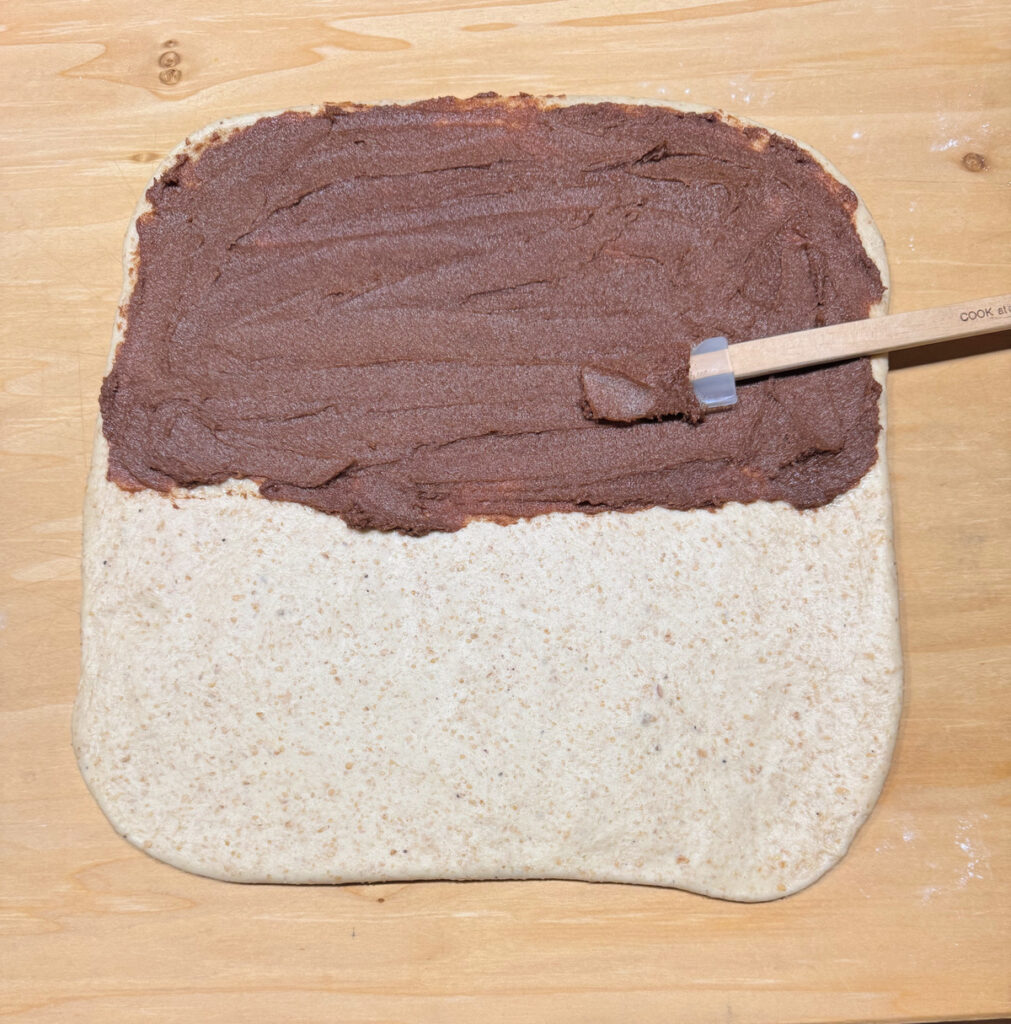
Mix the butter, sugar, flour, and cinnamon until smooth and set aside. The traditional instruction is not to refrigerate it, and in a cool kitchen, that holds true. If you are baking ahead or working in a warm summer kitchen, keep it in the refrigerator so it stays firm enough to spread cleanly, then let it soften slightly before use.
The custard can be made up to three days ahead and refrigerated, and it is easier to work with cold. In a small bowl, whisk the sugar and flour. Add the egg yolks and vanilla bean paste and whisk vigorously until pale.
In a small saucepan, bring the milk just barely to a simmer. Whisking the yolk mixture constantly, slowly pour in half of the milk. Once combined, pour the contents of the bowl back into the saucepan and whisk it thoroughly. Cook over medium heat, whisking constantly, for about 2 minutes, until thickened and almost pudding-like. Let it cool, then chill it until you are ready to fill the buns.
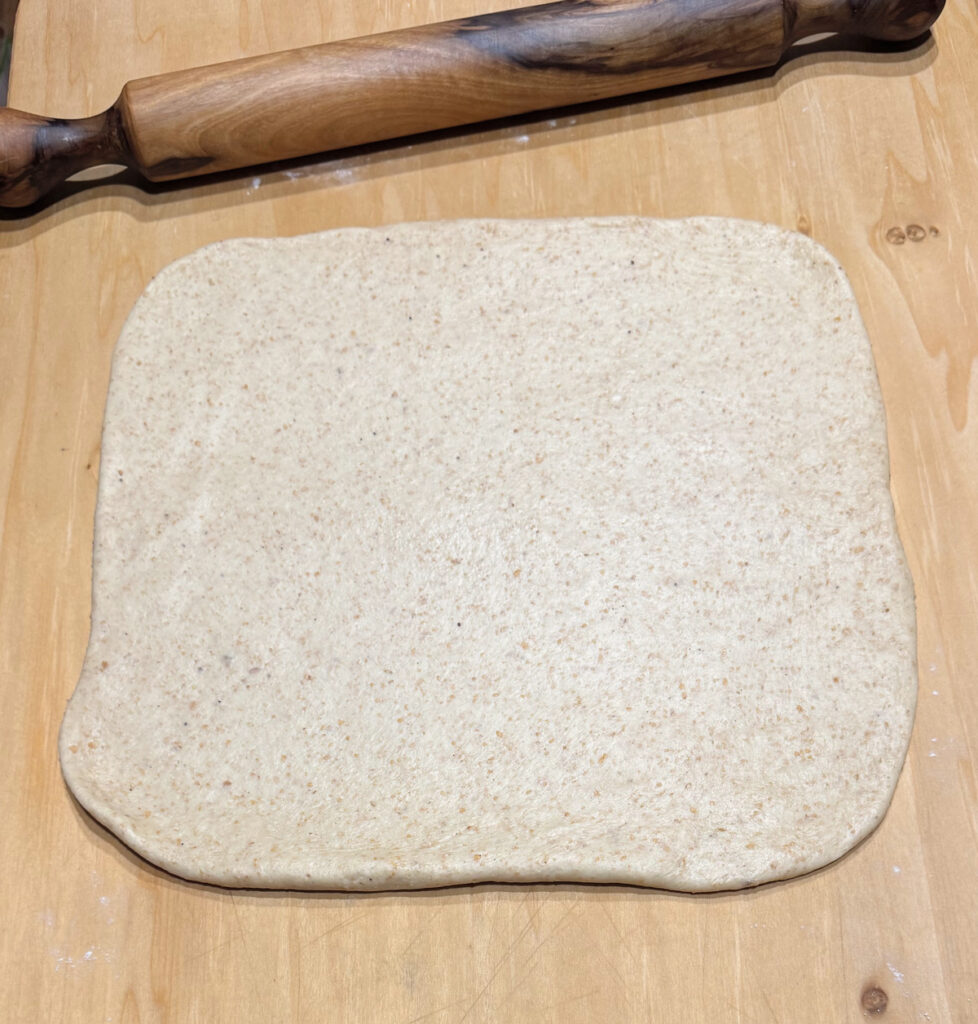
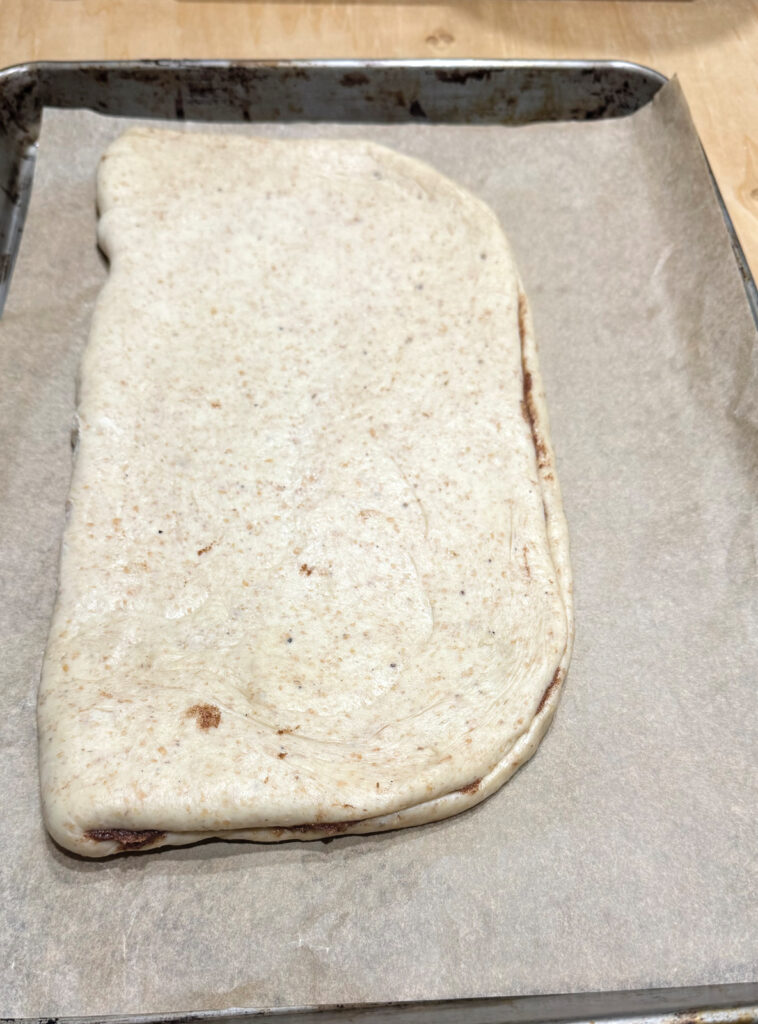
After the first rise, roll the dough into a 12-inch by 12-inch square. Spread the filling thinly over half of the dough, stopping short of the edges, then fold the clean half over the filling to form a 6-inch by 12-inch rectangle.
Place the dough on a parchment-lined pan and refrigerate it for 20 to 30 minutes. This firms the butter and keeps the filling from seeping while you shape.
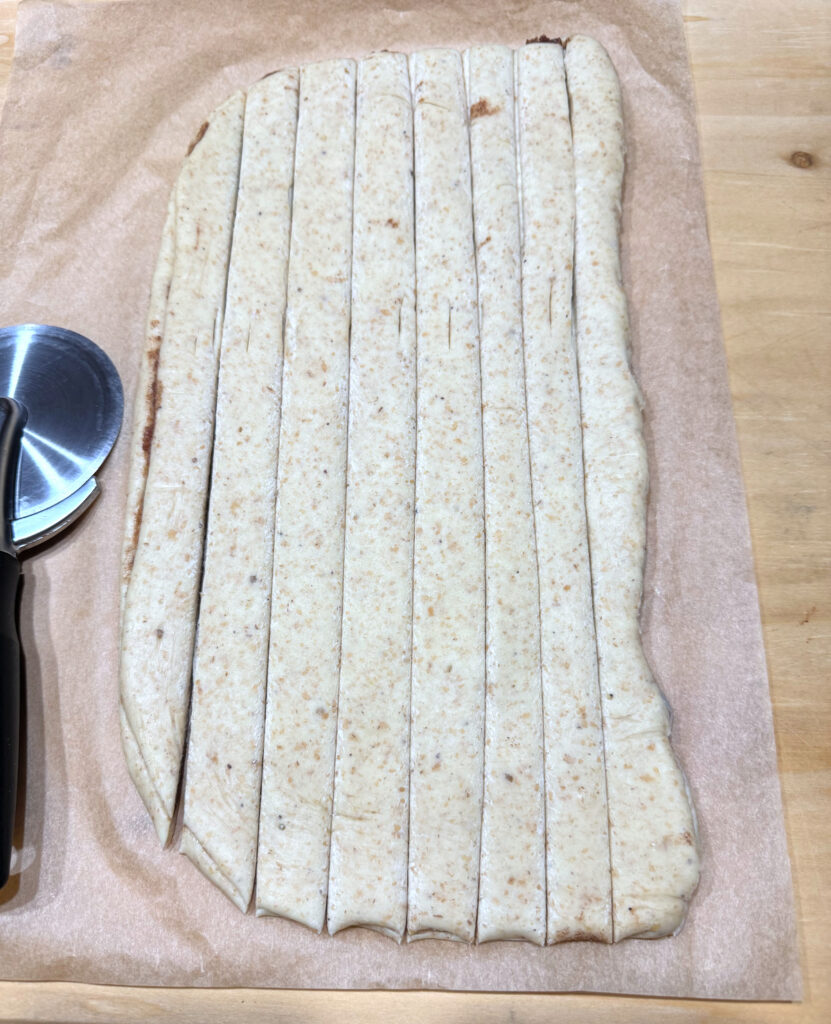
When the dough is chilled, roll it out to about 8 inches by 12 inches. This was the small change that gave me even, inch-wide strips on the second bake.
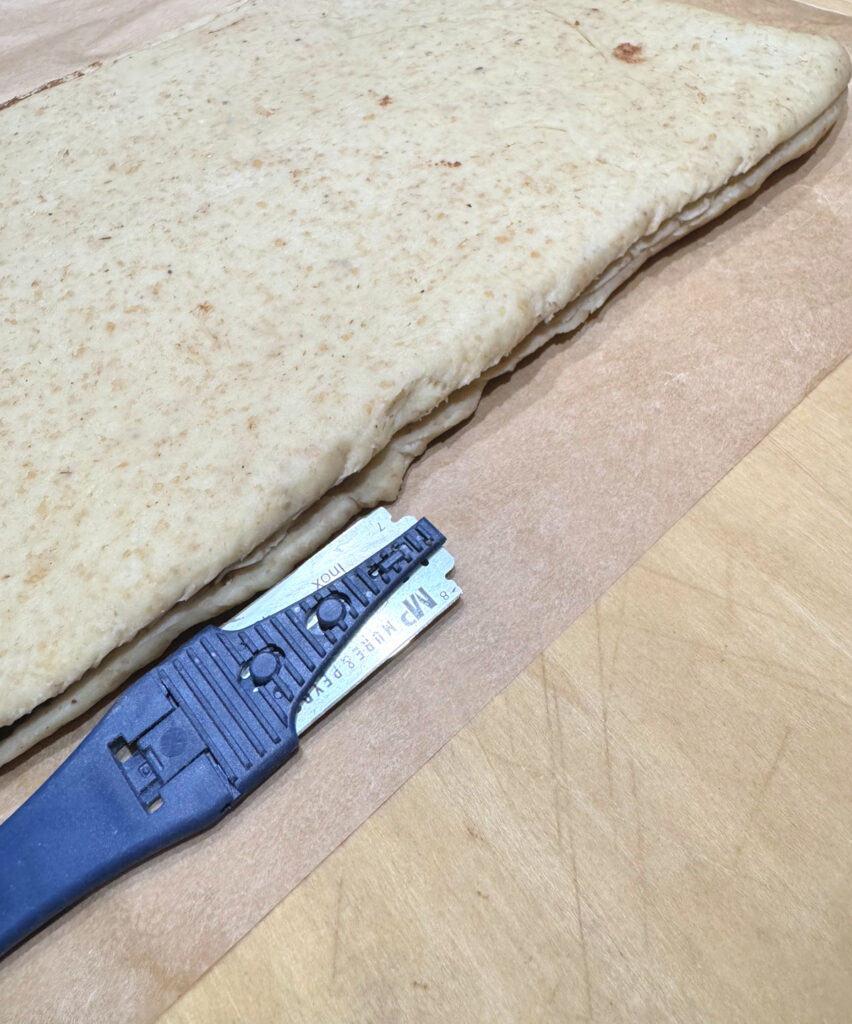
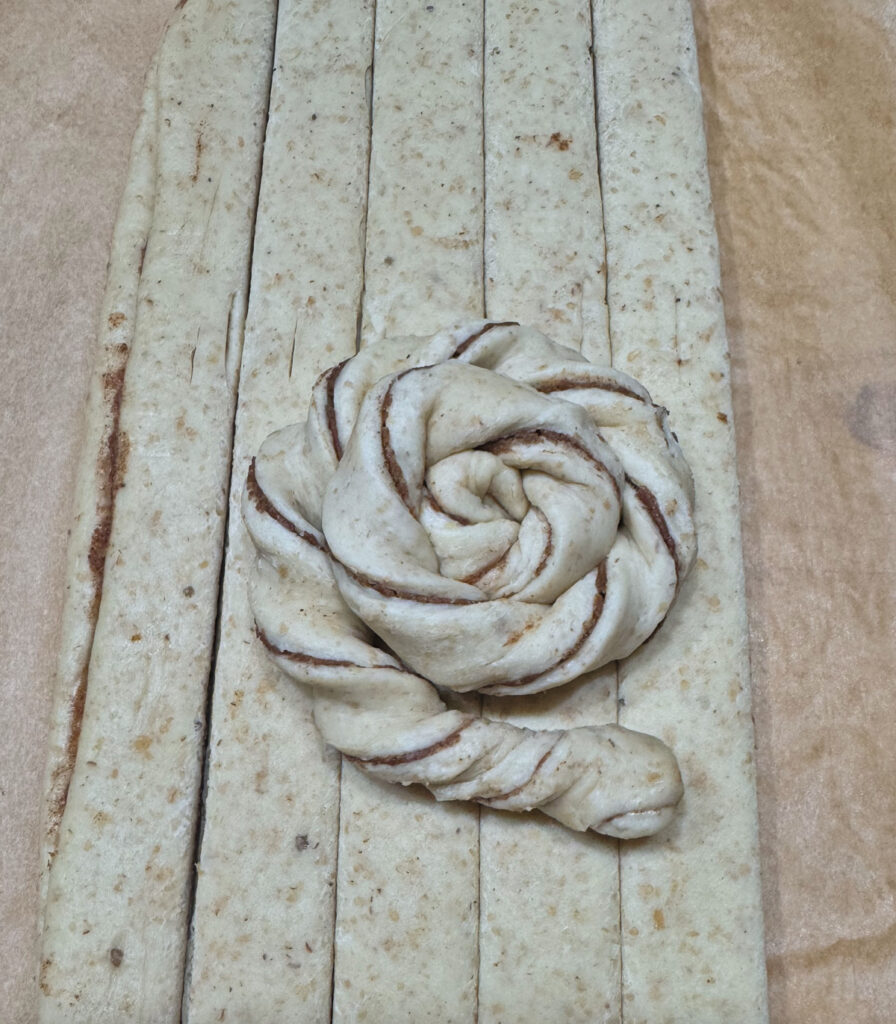
Now to the fold edge. On the first bake, I trimmed it off with a pizza wheel and cut away more than I meant to, which left some strips uneven. The second time, I left the fold intact and ran a lame down the side of it instead, scoring just deep enough to open the seam. I scored before rolling the dough out, and the line distorted a little under the pin. If I were doing it again, I would roll first and score second. The dough is a touch warmer by then, but the score stays cleaner, and I think that is the better trade.
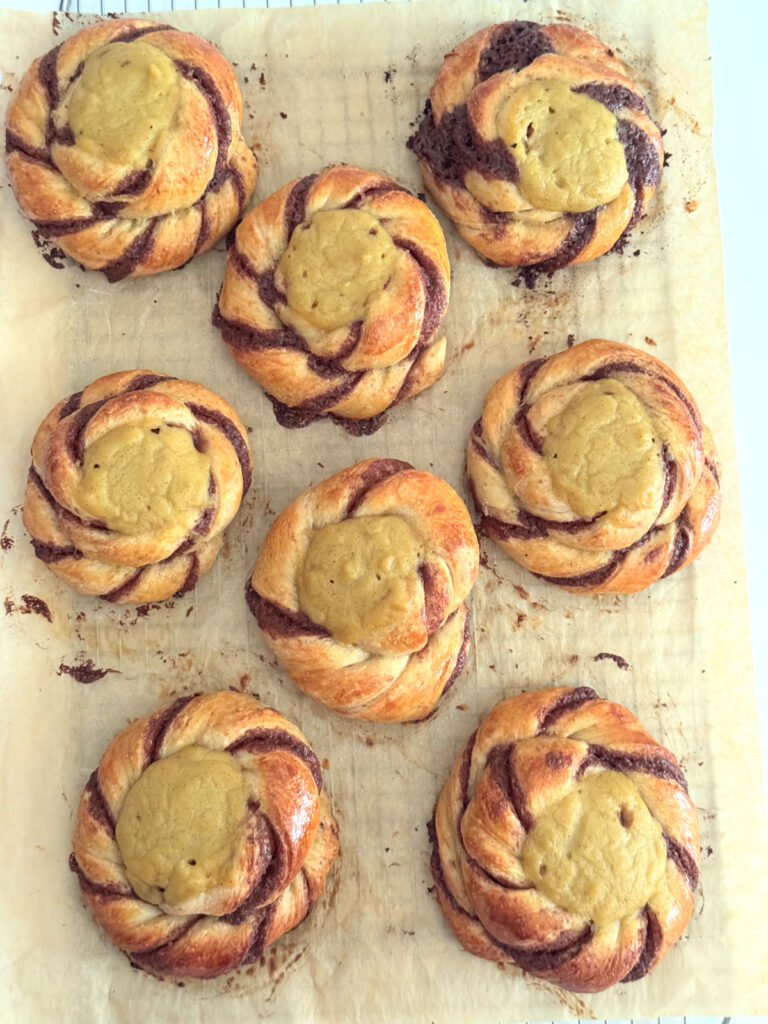
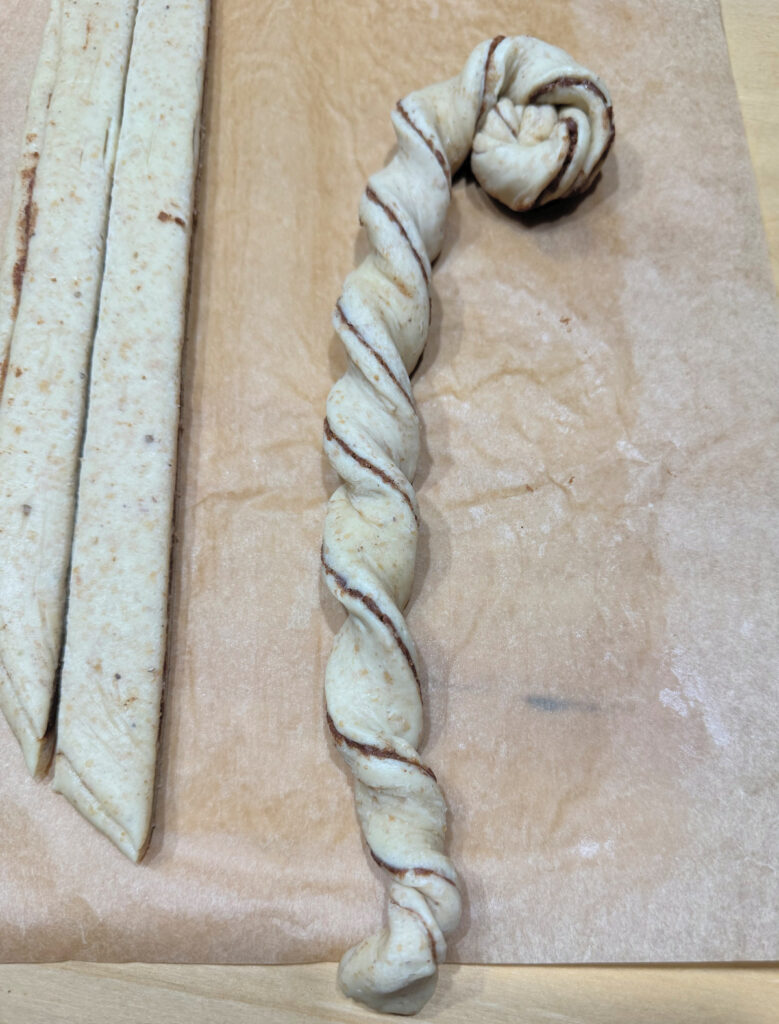
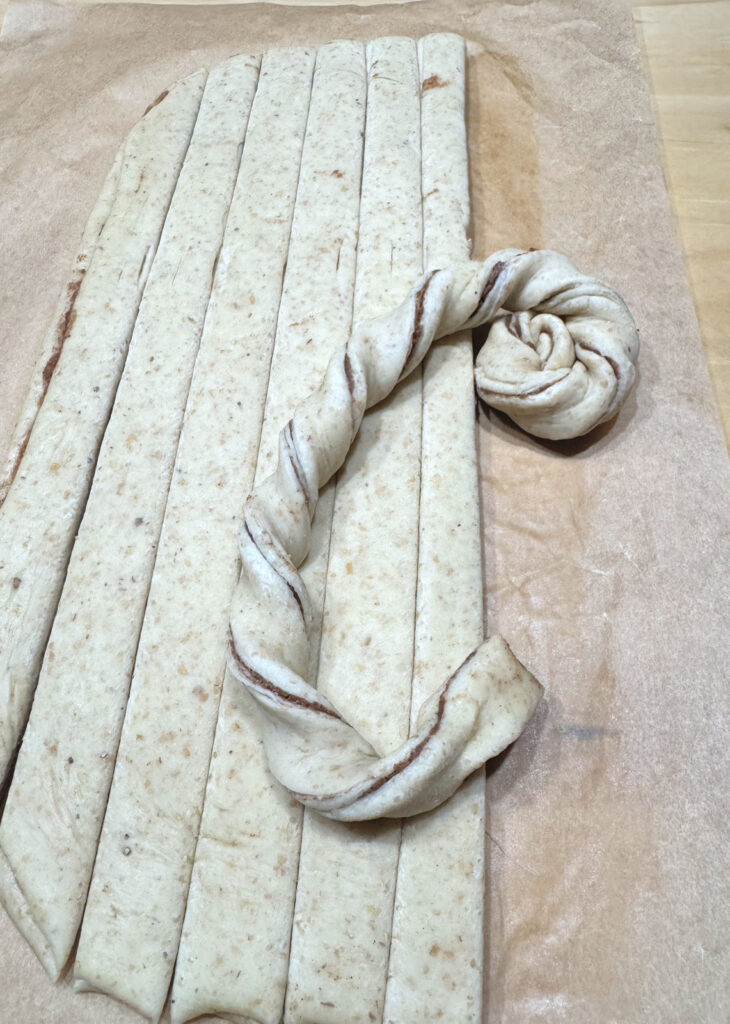
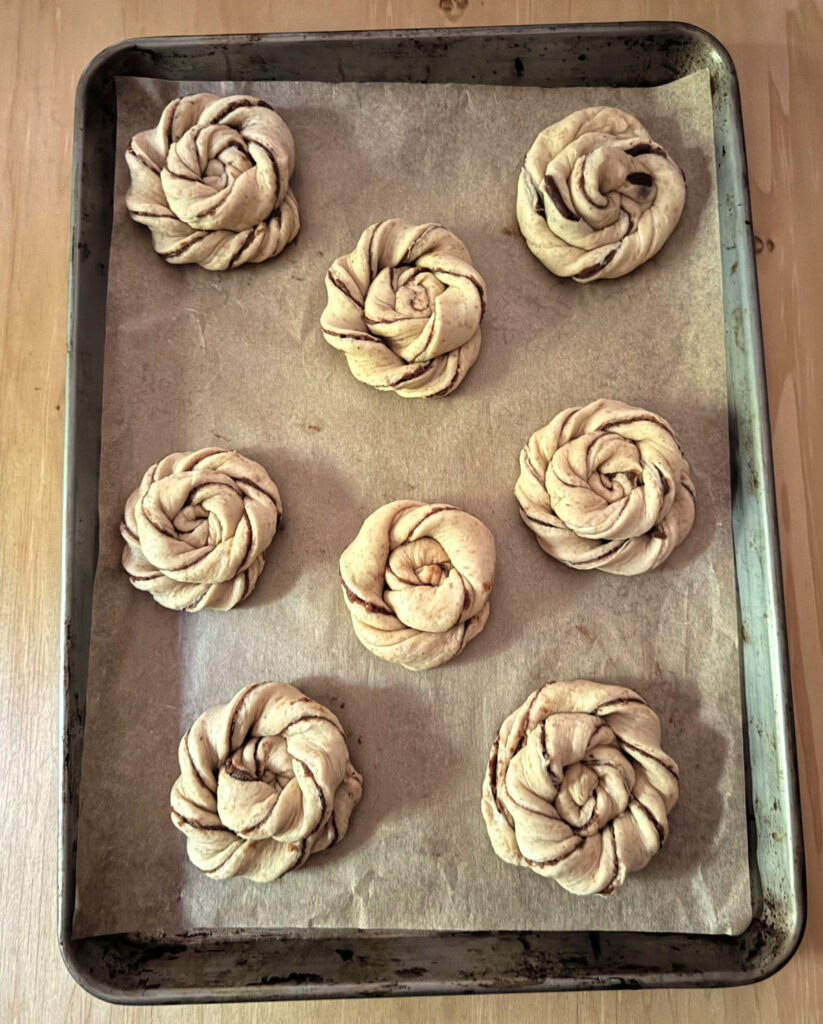
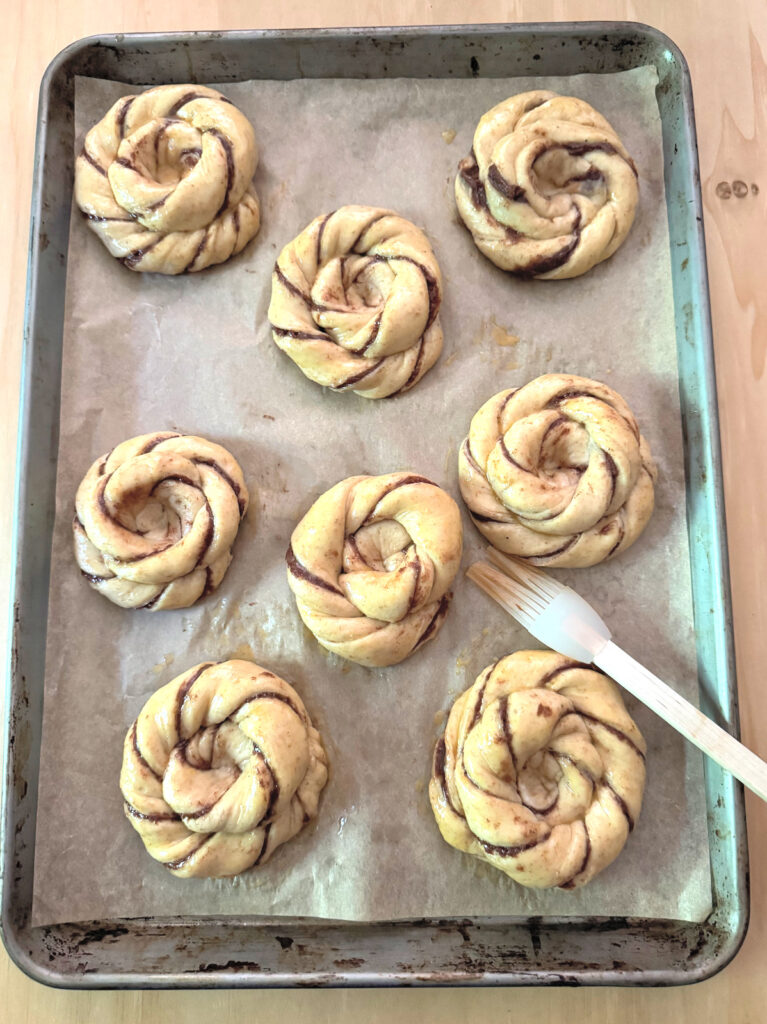
Cut the dough lengthwise into 8 strips, each about 1 inch wide. Twist each strip by holding one end still and turning the other until the rope is twisted end to end, then wrap it into a coil and tuck the end underneath. Place the coils in a single layer on a parchment-lined baking sheet and cover with lightly oiled plastic wrap. Let them rise until puffy and nearly doubled, about 1 1/2 to 2 1/2 hours. A cold overnight rise works here too and makes the indent-and-fill step even tidier.
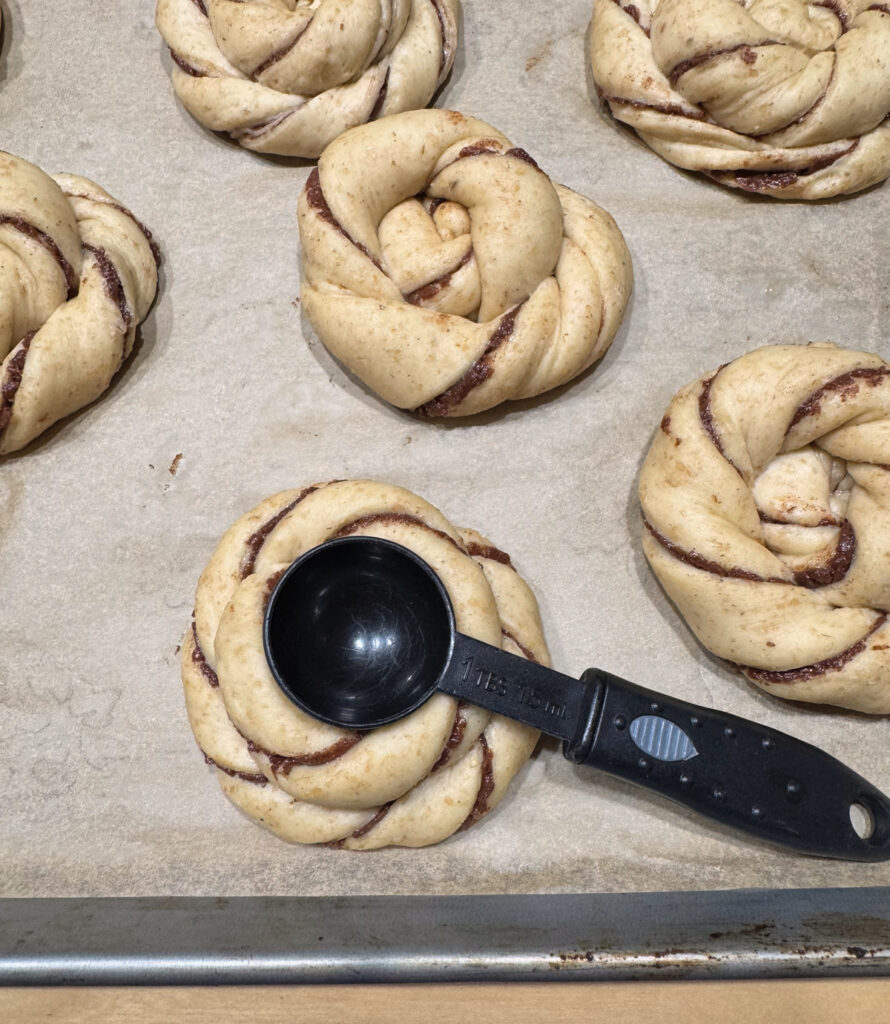
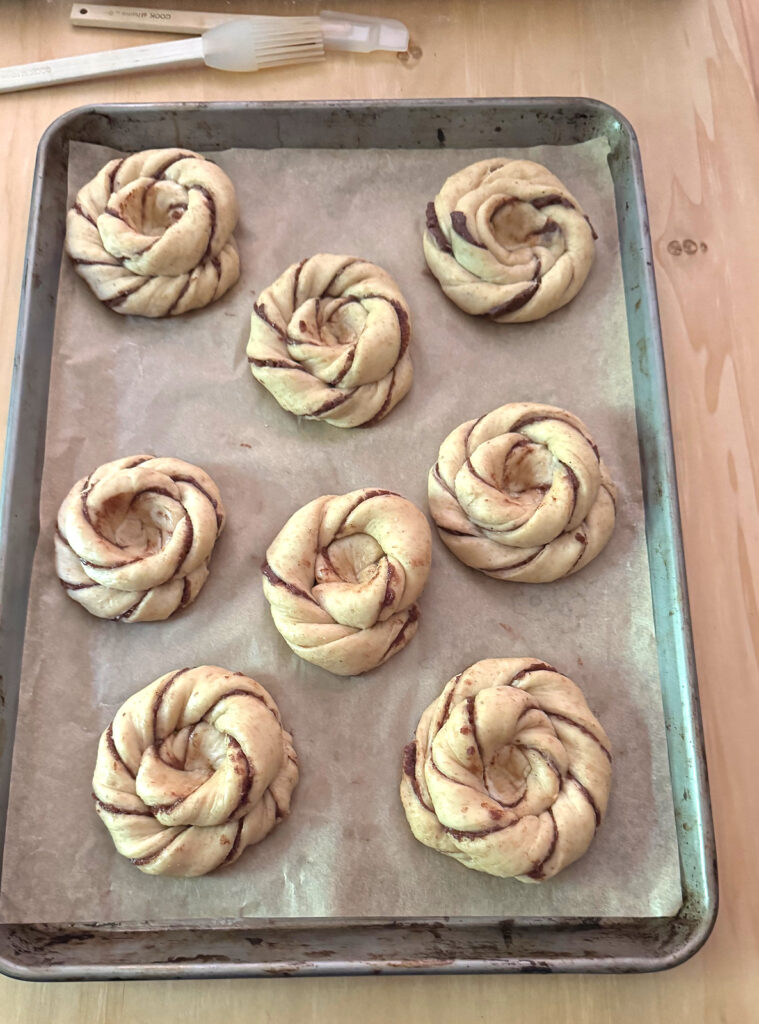
Heat the oven to 400 degrees. Indent the center of each coil with a round spoon, making a well about 1 inch wide. Brush the buns with the egg wash, then fill each indentation with about a tablespoon of the chilled custard, a little less if it threatens to overflow.
Bake for 18 to 20 minutes on a lower middle rack, rotating the pan halfway through. Watch the undersides, and if they brown too quickly, lower the oven to 375 for the remainder of the bake. Keep leftovers in the refrigerator and reheat for about 10 minutes in a warm oven.
- Category: Sweet Buns
- Method: Sourdough
- Cuisine: Norwegian
Who are the Bread Baking Babes?
We are a group of bakers who bake bread together every other month! Karen, of Karen’s Kitchen Stories, is the host kitchen this month.
There’s something extra special about baking with friends, even when those friends are scattered across the world.
Please join us in baking Solskinnsboller, and share your results.
Check out our Facebook group and the BBB blogs (links below) to see our baking results.
Karen’s Kitchen Stories – Karen (host kitchen)
A Messy Kitchen – Kelly
Judy’s Gross Eats – Judy
Bread Experience – Cathy
blog from OUR kitchen – Elizabeth
My Kitchen in Half Cups – Tanna
Happy Baking!
Cathy
Leave a Reply