
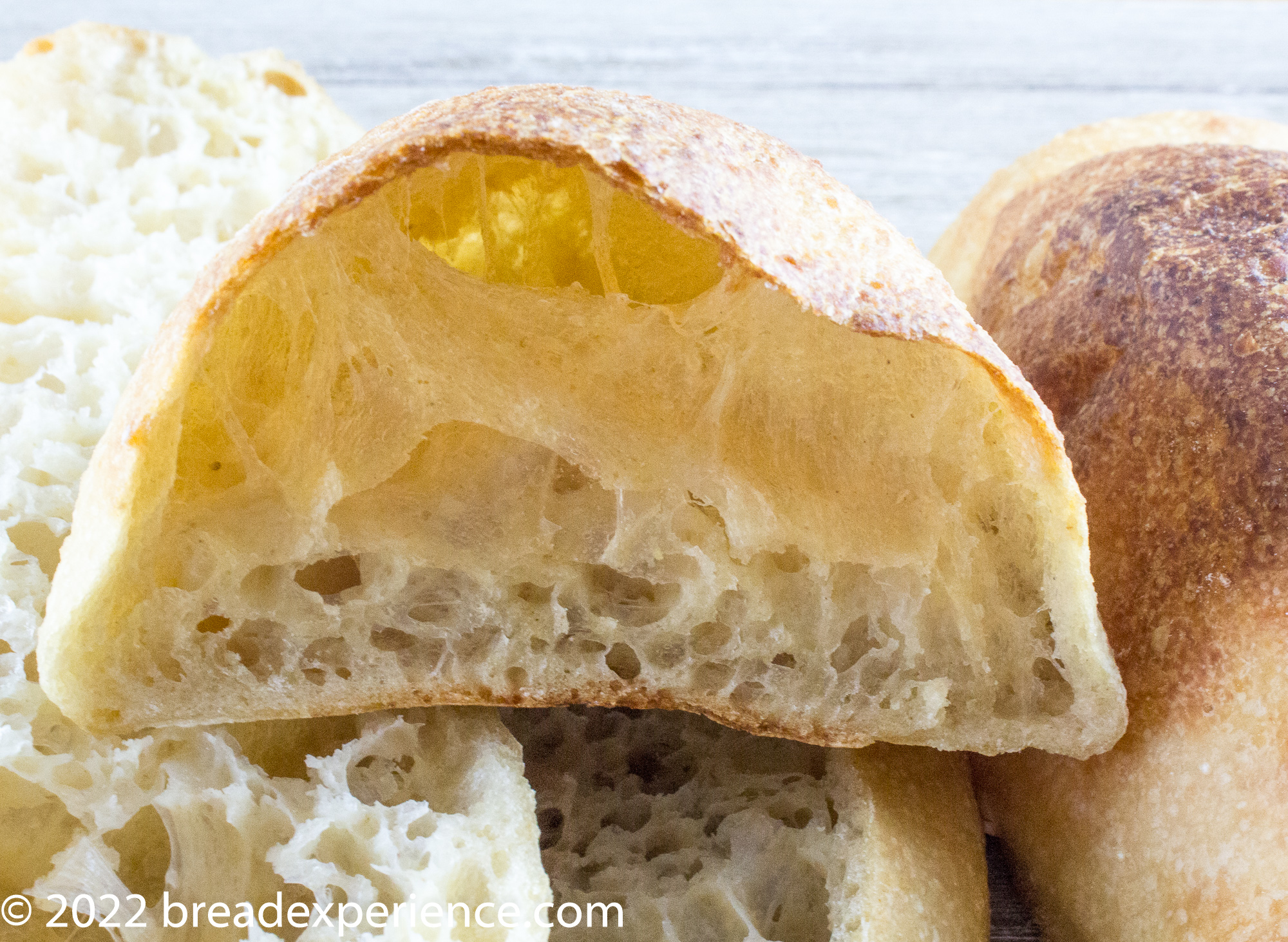
Pane de Cristal, also known as Glass Bread, is made with a high-hydration dough (100% or more) and features an open crumb structure with a thinner, crispier crust that supposedly shatters, like glass, when sliced. This unique bread is from the Catalonia region of Spain and represents the local version of ciabatta.

Instead of shattered glass, some of my loaves reminded me of blown glass. The loaves ballooned in the oven, and when they were finished baking, I could see right through the crust.
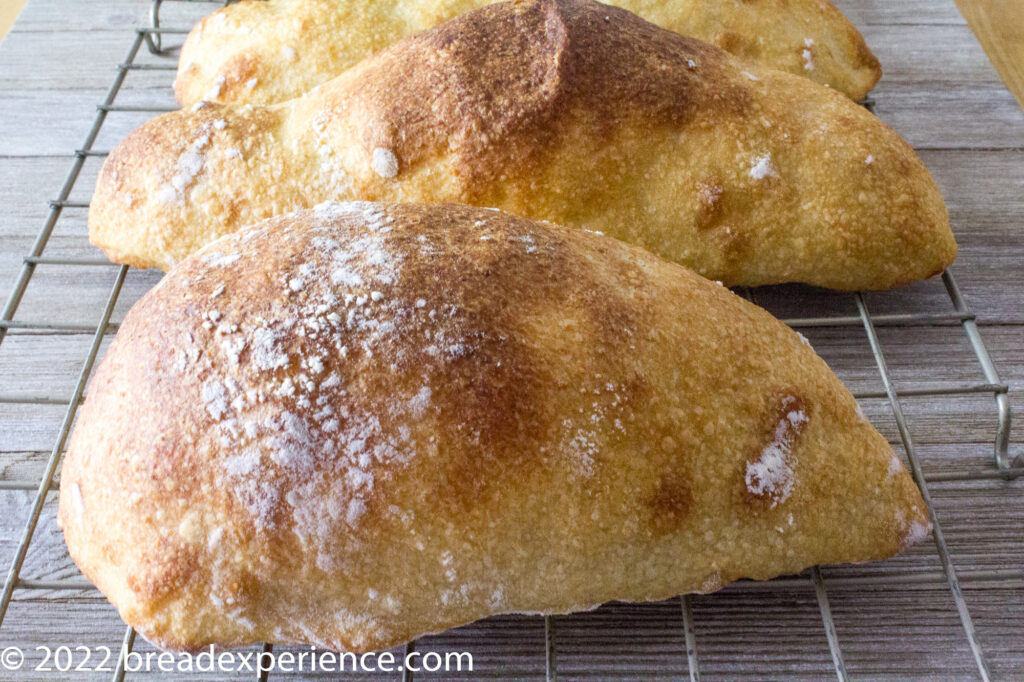
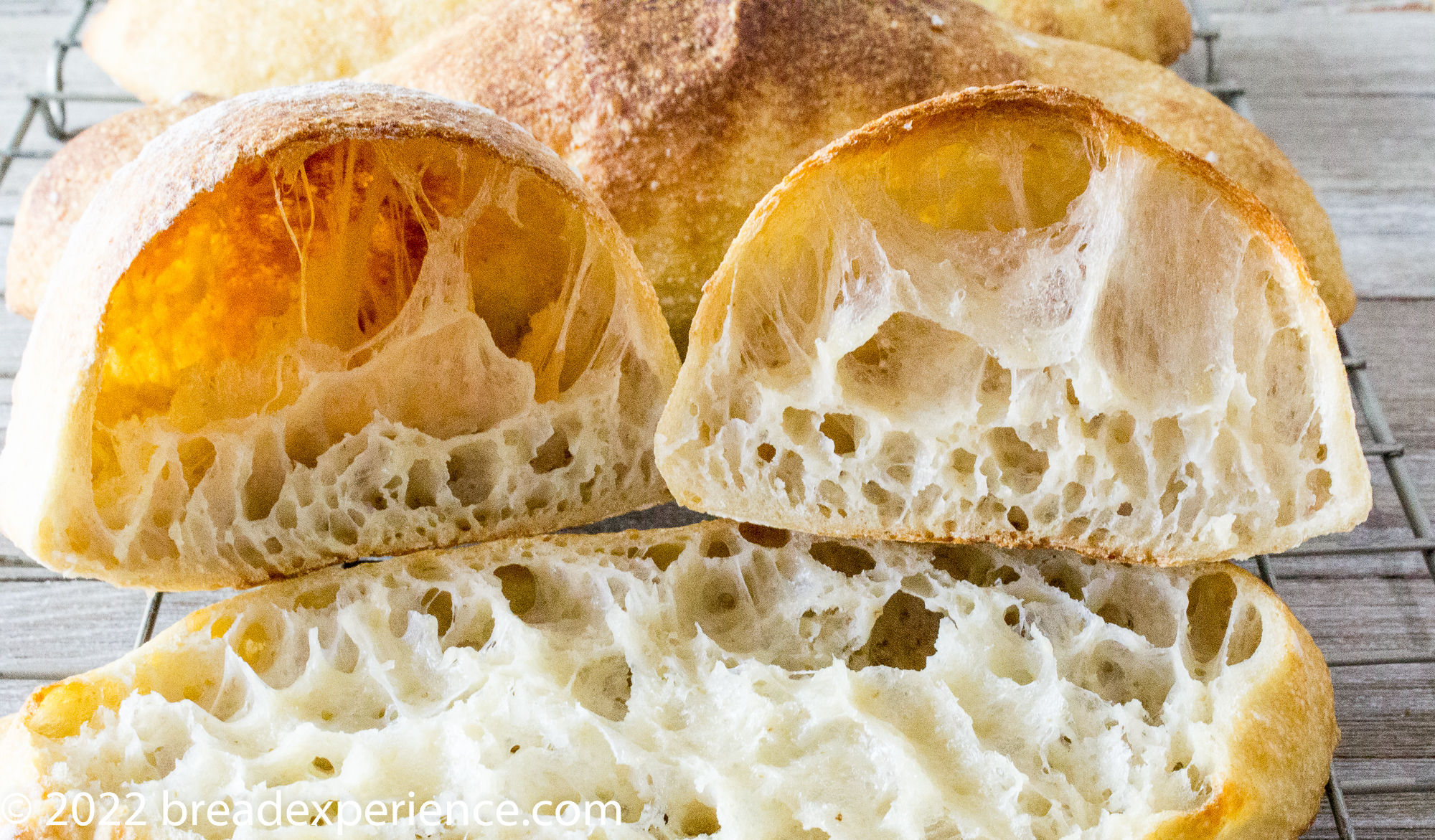
I thought it was cool the way the loaves ballooned, but if you sliced them lengthwise, they were pretty much hollow on one side.

I tried this bread several times and got similar results each time. I baked two loaves at a time. The loaves that ballooned the most had a final proof of 1 hour, and the other loaves proofed for almost 2 hours. Perhaps the longer proof gave the second batch a more even crumb.
Kelly of A Messy Kitchen chose this bread as the bread of the month for the Bread Baking Babes. If you are looking for bread therapy, this is the one! I was feeling a bit under the weather recently, and making this bread is just what I needed to brighten my day.
Use high-protein flour to make Pane de Cristal Glass Bread
One of the keys to making this interesting bread, with its high-hydration dough, is to use a high-protein flour such as KAF bread flour. KAF bread flour has 12.7% protein and includes a bit of barley malt to help with browning. However, in my case, it didn’t seem to help. My loaves didn’t brown evenly. I probably should’ve added some barley malt, but I didn’t have any, so for the final bake, I added a bit of sugar. It helped, but it still didn’t brown that well.
My version is made with bread flour and a little over 15% whole grain Kamut. I chose Kamut because it is more absorbent than bread flour, has good elasticity and extensibility, and apparently, you can use a high percentage of Kamut-to-bread flour and still obtain an open crumb.

There are numerous examples of this bread online, and Kelly provided us with two options – a yeast version from King Arthur Flour and a sourdough version.
I chose the sourdough method, as presented in the video by Joy Ride Coffee. I changed the formula a bit to include an overnight levain with 50/50 mix of bread flour to Kamut so I could introduce more Kamut into the dough. Although I only used 15%, I enjoyed the flavor and texture the Kamut imparted to the dough.
My favorite way to enjoy this bread is drizzled with olive oil, toasted, and spread with Trader Joe’s Brushetta – An Italian tomato topping with garlic and basil. The slices with the bigger holes don’t hold as much tomato topping, but they still taste good drizzled with olive oil.

Performing the coil method
In the Joy Ride Coffee video, they demonstrate the “coil method.” It is another key to making this bread. I had heard about this method but hadn’t tried it yet.
I enjoyed using the coil method! It made working with a high-hydration dough very easy.
The King Arthur Baking blog also has some good videos for making this bread.
I encourage you to watch some videos of this bread. The process is truly fascinating.
Make this Sourdough Pane de Cristal Glass Bread for Therapy
- Yield: 4 Loaves 1x
Description
Pane de Cristal, also known as Glass Bread, is made with a high hydration dough (100% or more) and features an open crumb structure with a thinner, crispier crust that supposedly shatters, like glass, when sliced.
Ingredients
Levain
- 25 grams bread flour (I used King Arthur Flour)
- 25 grams whole grain Kamut flour
- 50 grams water
- 7 grams sourdough starter
Final Dough
- 355 grams bread flour
- 45 grams whole grain Kamut flour
- 420 grams water (350, 70)
- 10 grams extra virgin olive oil
- 11 grams sea salt
Instructions
Evening of Day 1 – Create Levain
- Mix levain ingredients, cover and let rest at warm room temperature for 8-10 hours.
- Pour 420 grams of water into a liquid measuring cup and place in the refrigerator overnight.
Day 2 – Mix Dough
- Mix 355 grams bread flour, 45 grams Kamut flour & 350 cold water. Autolyse 45min
- Add 100g of levain, fold/work, 60 min rest
- Combine 70g reserve COLD water & 11g salt, add half and fold/mix. 10min rest
- Add remaining water/salt & mix, add olive oil & mix, 15 min rest
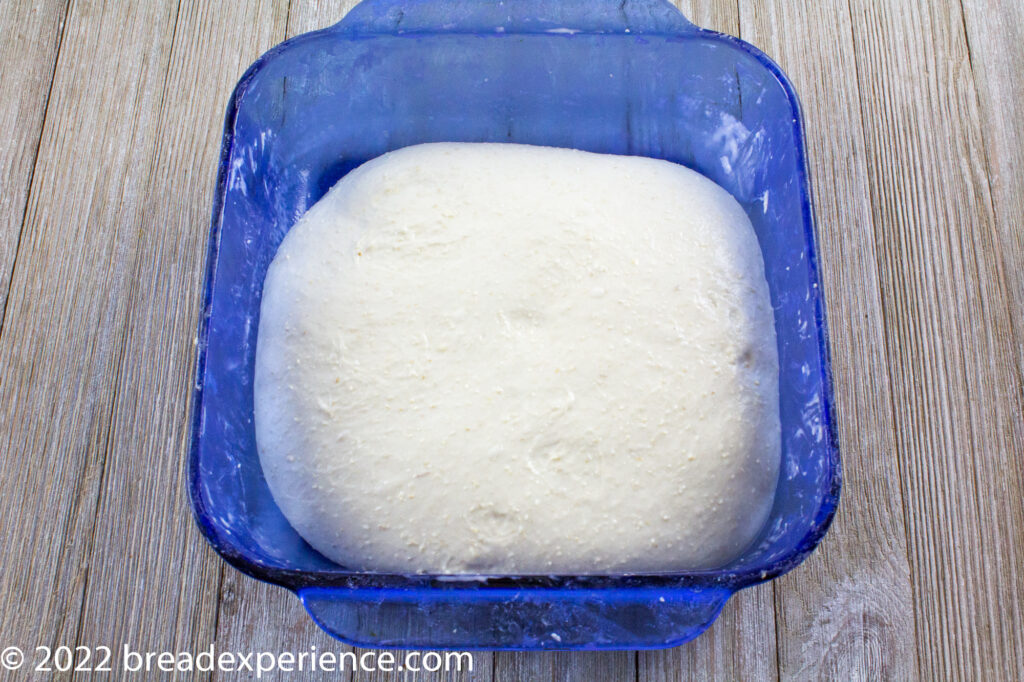
- Folds: Oil a glass baking pan, add dough and perform a few large folds. 45 min rest
- Folds: Large folds (coils) in thirds, then rotate 90 and fold in thirds, rest 45 min
- Folds: Repeat folds, rest 45 min
- Folds: Repeat folds, rest 45 min
- Folds: Repeat folds, Cover and place in the refrigerator overnight for cold bulk
Day 3 – Divide and Bake Loaves
- Remove the dough from the refrigerator and allow it to rest at room temp for 60 min.
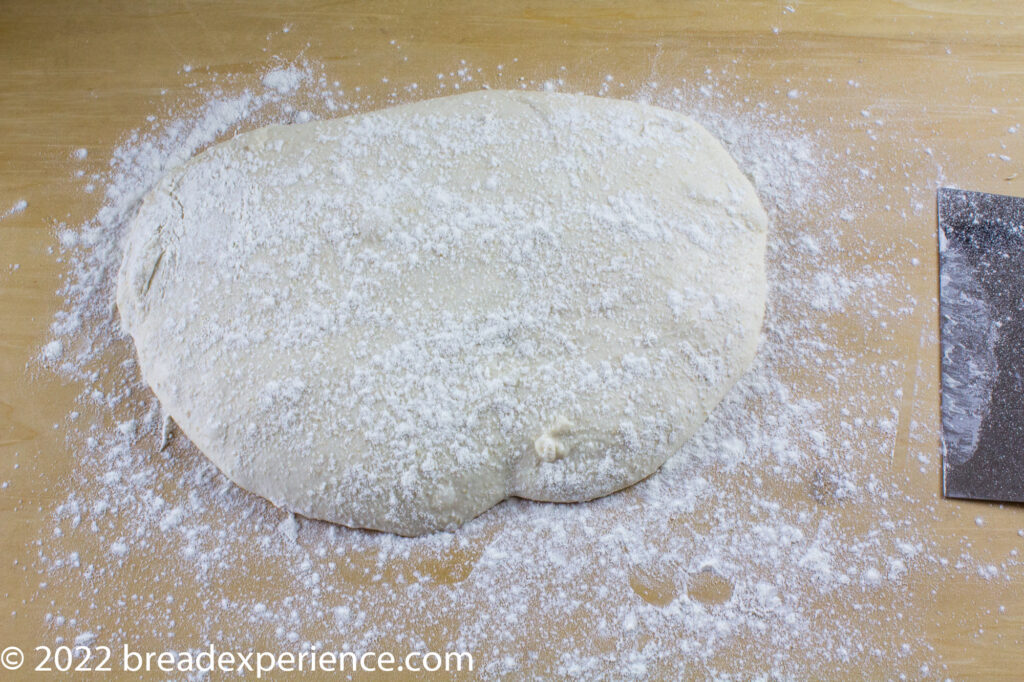
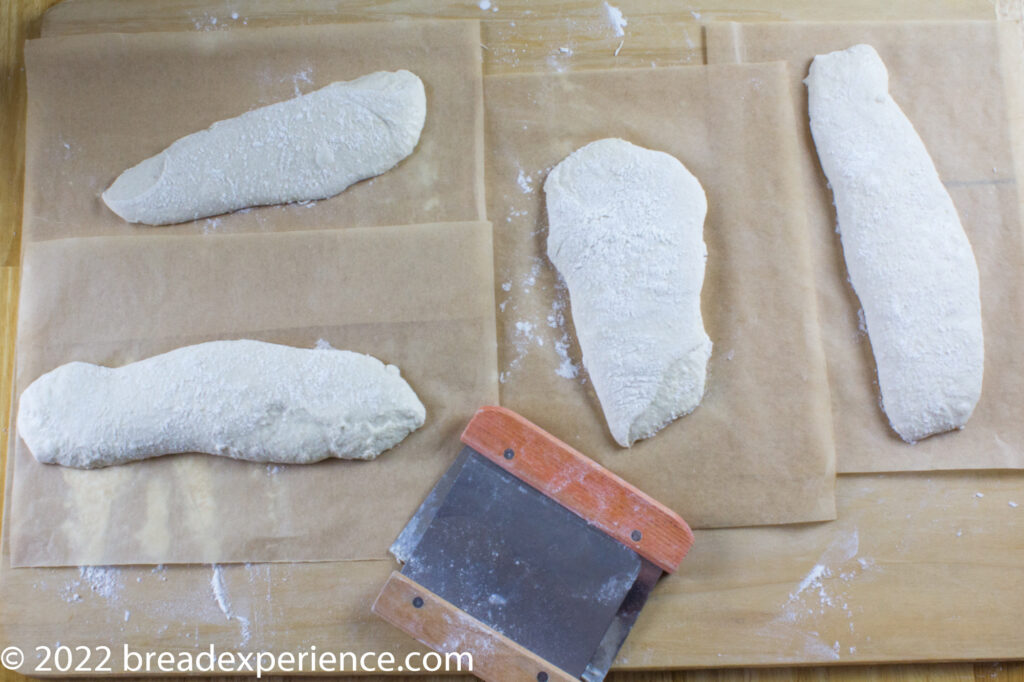
- Heavily flour table and pour the dough out, divide into 4 & place on parchment. 60 min rest
- Place a steam pan or cast iron skillet on the bottom shelf of your oven and a baking stone or steel on the rack above.
- Preheat the oven to 475-500 degrees F., depending on your oven. (My loaves started to burn on the bottom at 500 degrees using a baking steel so I reduced the temperature to 475 for the next bakes.
- Transfer the proofed loaves (on the parchment) to the baking stone or steel.
- Carefully place a cup of ice cubes in the steam pan.
- Bake at 475 (or 500 F.) for 8min with steam, reduce temperature to 410 and bake for 20 min. For more even browning, you may want to move the loaves up a shelf towards the end of the bake cycle.
- Remove loaves to wire rack to cool.
- Category: Bread
- Cuisine: Spanish



Who are the Bread Baking Babes?
We are a group of breadbakers who get together every month and bake bread! We have a Facebook group if you’d like to bake along. New recipes are posted every month on the 16th.
Kelly, of A Messy Kitchen, is the host kitchen this month. If you want to bake along with us and receive your Buddy Badge, please refer to her post for instructions.
Check out the different variations for this month’s bake:
A Messy Kitchen – Kelly (Host Kitchen)
Karen’s Kitchen Stories – Karen
Judy’s Gross Eats – Judy
blog from OUR kitchen– Elizabeth
Feeding My Enthusiasms – Pat
My Kitchen in Half Cups – Tanna
My Diverse Kitchen – Aparna
Bread Experience – Cathy
Thyme for Cooking – Katie (roundup)
Happy Baking!
Cathy
Leave a Reply to Elizabeth Cancel reply