
Updated April 2026 with improved formatting and expanded starter tips.
A sourdough starter for bread is a living culture of wild yeast and beneficial bacteria that gives sourdough its distinctive flavor, chewy texture, and natural rise. Unlike breads made with commercial yeast, sourdough relies on this fermented starter to do the work, and the results are worth it.
There are many ways to create a sourdough starter for bread, and part of the fun is trying different methods. Some use just flour and water. Others use fruit, like grapes or apples, to introduce wild yeast from natural sources. Each method produces a slightly different starter with its own character, and all of them can be maintained and used for years.
The photo below shows an apple sourdough starter made from hazy apples picked straight from an orchard. The apple water smells like apple cider while it is fermenting, which makes the process especially enjoyable.
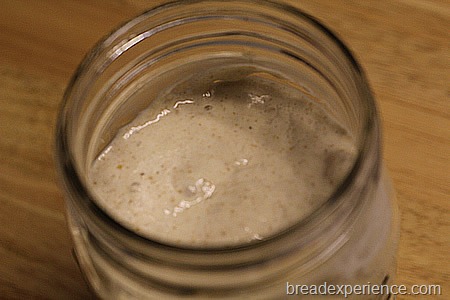
Create your own sourdough starter
Not sure which starter to try? Here is a brief guide to help you choose:
If you are just getting started, the basic Sourdough Starter or the Whole Wheat Sourdough Starter are good entry points. If you want to use fruit to introduce wild yeast, try the Apple Starter or the Grape Sourdough Starter.
For whole grain options, the Einkorn Sourdough Starter, Spelt Levain, or Sourdough Rye Starter are worth exploring. If you already have a dried or dormant culture, see Restarting a Dried Sourdough Culture or Activating a Sourdough Culture.
- Activating a Sourdough Culture (Starter)
- Amish Friendship Starter
- Apple Sourdough Starter
- Developing a Sourdough Rye Starter
- Drying a Sourdough Starter
- Einkorn Sourdough Starter
- Grape Sourdough Starter
- Restarting a Dried Sourdough Culture
- Rye Sourdough Starter
- Salt Rising Bread
- Sourdough Rye Starter – step-by-step process
- Sourdough – from BBA Challenge
- Sourdough Starter – Bread Machine method
- Spelt Levain (Starter)
- Sourdough Starter using Wholegrain Flour – from Sourdough School
- Whole Wheat Sourdough Starter
- “Wild Yeast” Whole Wheat Starter
Tips for using a Sourdough Starter for Bread
Here are some frequently asked questions about creating and maintaining a sourdough starter for bread.
What container should I use? Use a container at least three times larger than the volume of your starter ingredients. This gives the starter room to grow. Cover with a lid or plastic wrap while it is active.
What types of flour and water work best? Organic flour and spring or filtered water are ideal. Chlorine and other additives in tap water can inhibit the growth of wild yeast. If you only have tap water, let it sit out overnight before using and most of the chlorine will dissipate.
How do I know if my starter is working? A healthy, active starter should be light tan in color, bubbly, and have a sweet and slightly sour aroma. Check it a few times a day during the first few days. You should see bubbles forming and the mixture increasing in volume within a few hours of each feeding.
How fast will the starter develop? This depends on the temperature of the mixture, the warmth of the room, and how much wild yeast has been introduced. A starter in a warm kitchen may become active within a day or two. In a cooler environment it may take longer. Patience and consistent feeding will get you there.
How do I store a starter? Once your starter is bubbly and active, transfer it to a clean glass jar, cover, and refrigerate. A cold starter is a resting starter. Bring it to room temperature and feed it before using.
How often should I feed my starter? For a new starter, feed twice a week to help it build strength. Once it is established and rising and falling predictably after each feeding, a weekly feeding is sufficient. Each time you feed, discard all but a small amount and replenish with equal parts flour and water by weight. Always let the starter rest at room temperature for 2 to 4 hours after feeding before returning it to the refrigerator.
How do I know if my starter has gone bad? Discard any starter that has a spoiled or unpleasant smell, or that shows a pink or orange tint. A healthy starter may develop a layer of liquid on top called hooch, which is a normal byproduct of fermentation. Simply stir it back in or pour it off and feed as usual.
Sources:
Eckhardt, Linda West and Butts, Diana Collingwood. Rustic European Bread from Your Bread Machine. 1995 Doubleday a division of Bantam Doubleday Dell Publishing Group, Inc.
Leader, Daniel. Local Breads. 2007 W. W. Norton & Company, Inc.
Reinhart, Peter. The Bread Baker’s Apprentice. 2001 Ten Speed Press.