
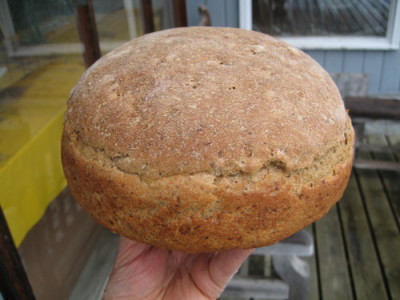
by David
Manitoba, Canada
I love experimenting and as a result rarely make the same bread twice though I do have a few favourites such as a malt bread or the Irish Barmbrack. Recently I have tried making coloured bread using pureed spinach for green, pureed blueberries for purple turmeric for yellow and pureed/strained raspberries for pink. Beets made a lovely colour in the dough but after baking all the colour had disappeared.
[includeme file=”includes/responsive-yeast-breads-top”]
This Oat bran and ground flax bread started with just the ground flax when I planned to do a workshop on breadmaking and needed a one-rising recipe. It worked very well and many friendly ladies who tested it out before the workshop continue to use that recipe even today.
Then I thought – what about adding some oat bran and the result was this recipe. I have since tried making a white sauce using some oil, flour and water, and when that has thickened by boiling, I add the ground flax and oat bran. This is still a work in progress because I tried to make this into a sourdough bread but my starter was inert.
Another very good bread I have ‘invented’ is to add some apple cider vinegar to the dough and leave it overnight. Then next day add the yeast and proceed as usual. The acid in the vinegar works of the flour somehow and gives the bread a very distinct flavour and for some reason always makes the crust go nice and brown.
One-Rise Oat Bran and Ground Flax Bread
makes 2 large loaves
1. In a large bowl put:
- ½ cup ground flax
- ½ cup oat bran
- 4 cups boiling water
- 2 tsp sugar
This makes a sticky gelatinous porridge-like material that helps with holding the gas bubbles.
Stir and allow to cool.
2. Premix and then add:
- 3 cups all-purpose white flour
- 3 cups whole-wheat flour (I used own home ground)
- 4 tsp instant dried yeast
- 2 tsp salt
- ½ cup raw sunflower seeds
3. Mix well and knead to an elastic dough – (at least 10 – 15 minutes). Some extra flour or water may be necessary.
4. Divide the dough into two, form into loaf shapes and put in your bread tins. Put in a warm place to rise. Set the oven at 425 degrees.
5. When well risen bake 15 mins at 425 degrees and then reduce the temperature to 375 and bake for a further 30 minutes.
6. Allow to cool on a rack.
[includeme file=”includes/responsive-yeast-breads-bottom”]
Notes:
1. The dough is very sticky to start with. A bit of oil in the dough (¼ cup) may help or putting a little oil on your hands.
2. The traditional double rising method – ie to let the dough rise in the big bowl, knock it down and then shape the loaves – helps with gluten development, and in this case less yeast is necessary (eg 2 tsp).
3. A little more water may be necessary as I didn’t measure it very accurately.
4. With the additional oat bran this bread must be equivalent of 100% whole wheat bread but it is lighter in colour and lighter in texture.
5. Oat bran is a soluble fibre whereas wheat bran is insoluble.
Leave a Reply