
Updated October 2025 with improved formatting and a new recipe card.
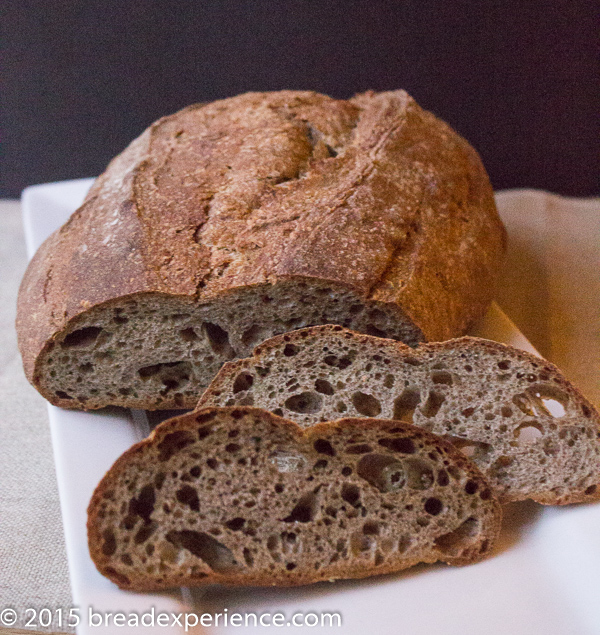
This Sourdough Buckwheat Rye utilizes a 24-hour cold ferment in the refrigerator to strengthen the gluten and bring out the flavor of the bread.
I started working on this bread after attending the Maine Kneading Conference. I brought home one of Derek’s (Hootenanny) loaves from the Artisan Bread Fair, and enjoyed it so much I decided to recreate it myself.
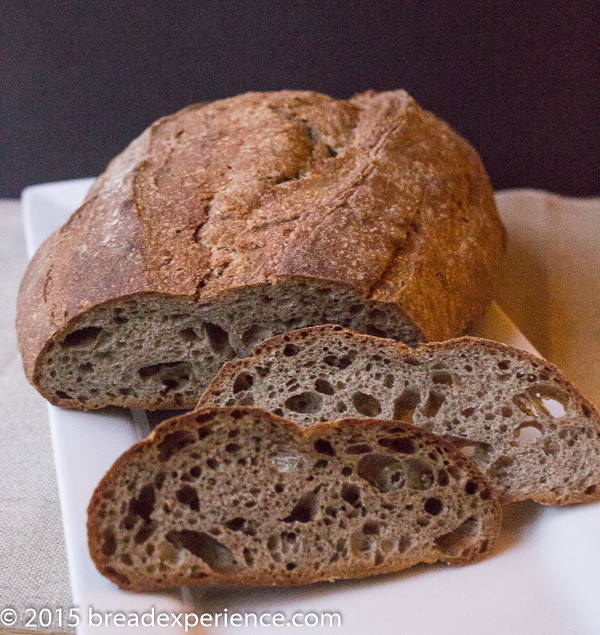
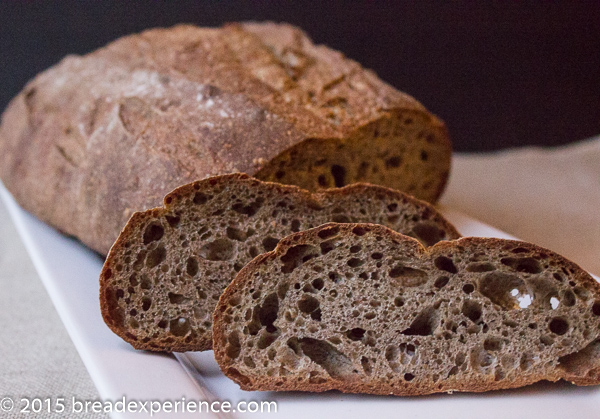
After my initial attempt, I got sidetracked with other bread projects, so this one sat on the back burner for a few weeks. But this past weekend, I revisited it and finally found the right proportions to achieve an open crumb with a texture that isn’t gummy or bitter.
Adjusting the Grain Percentages
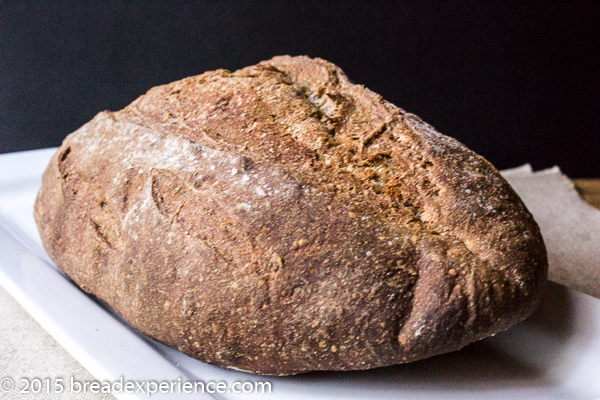
While my Sourdough Buckwheat Rye isn’t the same as Derek’s loaf, I’m happy with how it turned out.
If I remember correctly, his version used about 40% buckwheat and rye combined. I started with 15% buckwheat and 25% rye but wasn’t satisfied with the result, so I gradually reduced the rye until I found a combination that suited my taste.
This formula is perfect for experimentation. Feel free to adjust the ratio of white flour to rye and buckwheat to match your preferences. Note: I kept the hydration level between 60–65% for each trial, but you can tweak it if you like.
Try not to change too many variables at once (something I’ve been guilty of) because it can make troubleshooting difficult if the loaf doesn’t turn out as expected.
Why Use Buckwheat and Rye?
Buckwheat and rye aren’t just flavorful additions; they bring unique qualities to the bread:
- Buckwheat: Despite its name, buckwheat isn’t a wheat grain, making it gluten-free (though the bread itself isn’t gluten-free due to the wheat flour). Buckwheat adds a deep, earthy flavor and a darker crumb. It’s also rich in antioxidants, fiber, and essential minerals, like magnesium and manganese.
- Rye: Rye flour contributes a slightly tangy taste and enhances moisture retention, which gives the bread a longer shelf life. It also provides a hearty texture and pairs beautifully with the nutty notes from buckwheat.
Together, these grains create a loaf with a rich, complex flavor and a pleasantly chewy texture. Slices of this loaf are perfect for sandwiches or enjoying on their own.
Troubleshooting Tips
Even experienced bakers run into challenges. Here are common issues and solutions for this Sourdough Buckwheat Rye bread:
Dense loaf?
- Double-check your fermentation times; underproofing is a common culprit.
- Make sure your starter is active and bubbly before mixing the dough.
Gummy texture?
- Extend the bake time slightly to ensure the crumb sets.
- Let the loaf cool completely before slicing. Cutting too early can make the crumb seem gummy.
Flat loaf or poor oven spring?
- Ensure proper shaping and surface tension before proofing.
- Preheat your oven thoroughly and use steam (like adding ice cubes to a hot pan) to boost oven spring.
Crumb not as open as desired?
- Increase hydration slightly, but adjust carefully and incrementally.
- Be gentle during shaping to preserve the air bubbles formed during fermentation.
Substitution Ideas
Not everyone has rye or buckwheat flour on hand, so here are some alternatives:
- For buckwheat flour: Substitute with whole wheat, spelt, or einkorn flour for a similar nutty flavor. Be aware that these may absorb liquid differently. Adjust hydration as needed.
- For rye flour: Use whole wheat flour if you prefer a milder tang or spelt flour for a softer texture.
- For the white flour base: You can experiment with bread flour for more structure or all-purpose flour for a lighter crumb.
Tip: When trying substitutions, only change one ingredient at a time to understand how it affects the final loaf.
Fermentation Options
I found that a 24-hour cold bulk ferment in the refrigerator helped develop the flavor and improve the dough’s structure. After the cold ferment, let the dough warm up to room temperature for about an hour before shaping the loaf.
If you’re short on time, you can bake the loaf on the same day you mix the final dough. Just be sure to allow for a two-hour bulk ferment and an additional two-hour final proof after shaping.
Serving Suggestions
This Sourdough Buckwheat Rye pairs wonderfully with both sweet and savory toppings. Here are a few ideas to enjoy it:
Savory Options:
- Creamy cheeses like brie or goat cheese
- Smoked salmon with fresh dill and cream cheese
- Avocado with a sprinkle of sea salt and chili flakes
- Hearty stews or soups. Perfect for dipping
Sweet Options:
- Butter with a drizzle of honey or maple syrup
- Homemade fig jam (my personal favorite!)
- Nut butters with sliced bananas or berries
This versatile loaf is delicious fresh, toasted, or even used in sandwiches.
You might enjoy some of these rye bread recipes
Print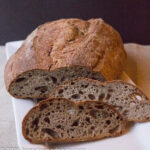
Sourdough Buckwheat Rye
- Yield: 1 loaf 1x
Description
This Sourdough Buckwheat Rye utilizes a 24-hour cold ferment in the refrigerator to strengthen the gluten structure and bring out the flavor of the bread.
Ingredients
Sourdough Build:
- 70 grams sourdough starter
- 70 grams all-purpose flour
- 70 grams warm water
Final Dough:
- 200 grams levain (all minus 10 grams)
- 260 grams all-purpose flour
- 80 grams whole grain rye flour
- 60 grams buckwheat flour
- 265 grams water
- 15 grams salt
Instructions
Sourdough Build
Add the sourdough starter to a medium bowl, pour in the warm water, and stir to break up the starter. Mix in the flour and incorporate thoroughly using a wooden spoon or Danish dough whisk.
Cover the mixture and let it rest overnight at room temperature for 8 – 12 hours or until ripe.
Mix and Autolyse
In a large bowl, combine the levain and all but 50 grams of the water.
Add the flours and stir until no dry bits remain. Cover and let the dough rest (autolyse) for 15-20 minutes.
Add Salt and Begin Bulk Fermentation
Add the salt and the remaining 50 grams of water. Mix until the salt is fully incorporated.
Cover the bowl and let the dough bulk ferment for 2 hours at room temperature.
-
During the first hour, perform two sets of stretch-and-folds at 30-minute intervals.
-
Let the dough rest undisturbed for the final hour.
Choose Your Fermentation Path
At this point, you have two options:
Option 1: Cold Bulk Ferment (for deeper flavor)
After the 2-hour room-temperature bulk ferment, cover the bowl tightly and place it in the refrigerator for up to 24 hours.
The next day, remove the dough and let it sit at room temperature for about 1 hour to take off the chill.
Shape the loaf into an oval (or your preferred shape) and place it on parchment dusted with cornmeal or in a floured brotform. Let the loaf proof for 1-2 hours at room temperature before baking.
Option 2: Same-Day Bake
Skip the cold ferment and continue straight to shaping after the 2-hour bulk ferment.
Shape and proof the loaf for about 2 hours, or until puffy and slightly springy to the touch.
Baking
At least 45 minutes before baking, preheat the oven to 450°F (232°C) with a baking stone on the lower rack and a steam pan or cast-iron skillet on the upper rack.
When ready to bake, score the loaf and slide it (with parchment) onto the hot stone. Add 4-5 ice cubes or boiling water to the steam pan and close the oven door quickly.
Bake for 25-35 minutes, removing the parchment and rotating the loaf halfway through for even browning. The bread is done when it sounds hollow when tapped on the bottom and has a deep golden crust.
Cool completely on a wire rack before slicing.
Notes
I prefer the 24-hour cold bulk ferment because it really enhances the flavor and structure. But if you’re short on time, the same-day method still makes a lovely loaf.
- Category: Rye, Buckwheat
- Method: Sourdough
Happy Baking! See you in the kitchen!
Cathy
Leave a Reply