
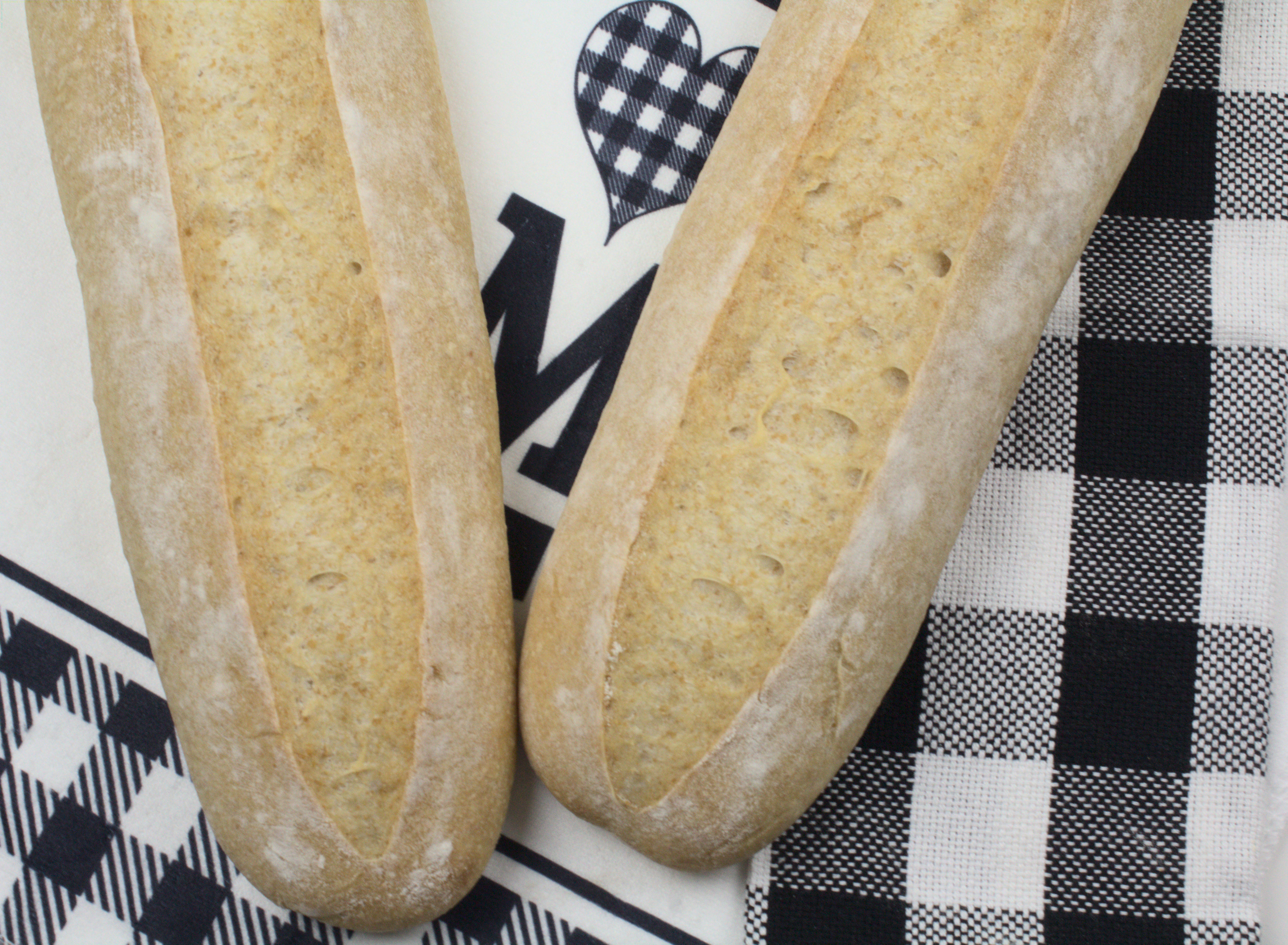
For a unique twist, try this Sourdough New Orleans French Bread made with 25% whole grain spelt flour. It is a soft, airy loaf with a delicate crust that adds a nutritious, tangy twist to the classic, perfect for sandwiches and more.
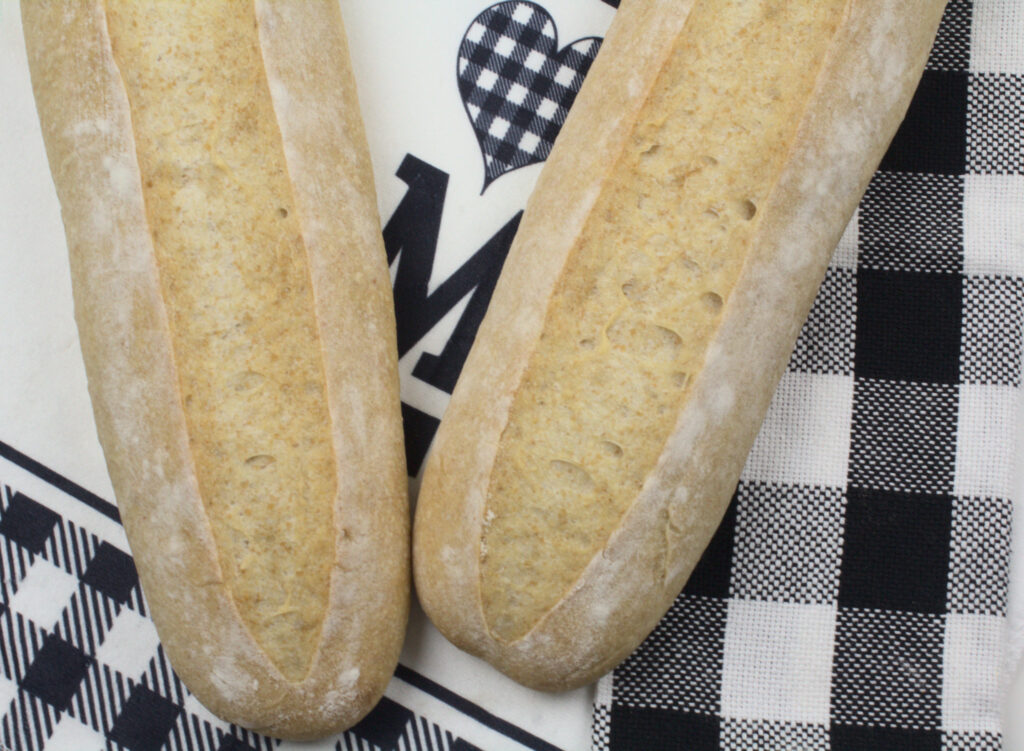
How does this sourdough New Orleans French bread differ from a traditional French baguette?
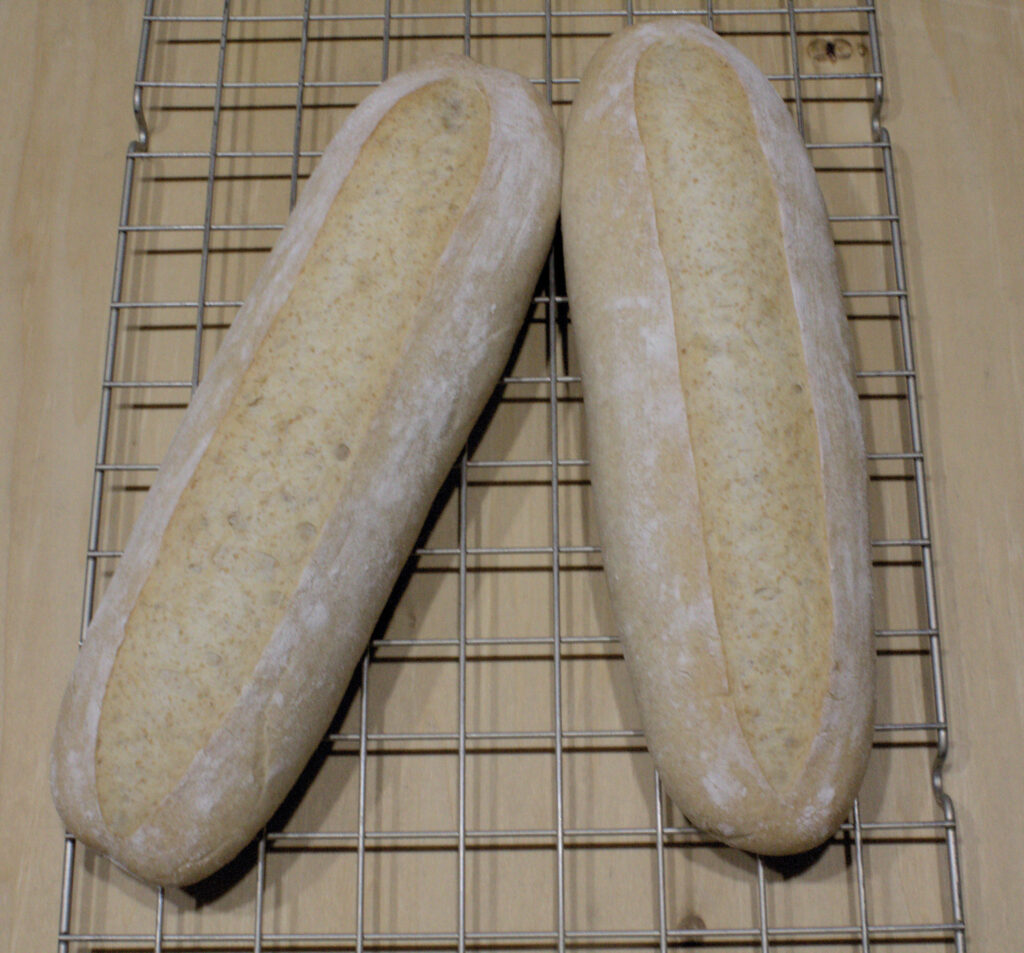
New Orleans French bread is a variation of French bread, known for its light, airy interior and a thinner, softer crust compared to the traditional French baguette.
While French baguettes are thin loaves with a crispy, crunchy crust and a chewy crumb, New Orleans French bread is slightly broader and features a softer, more tender crust, making it ideal for sandwiches.
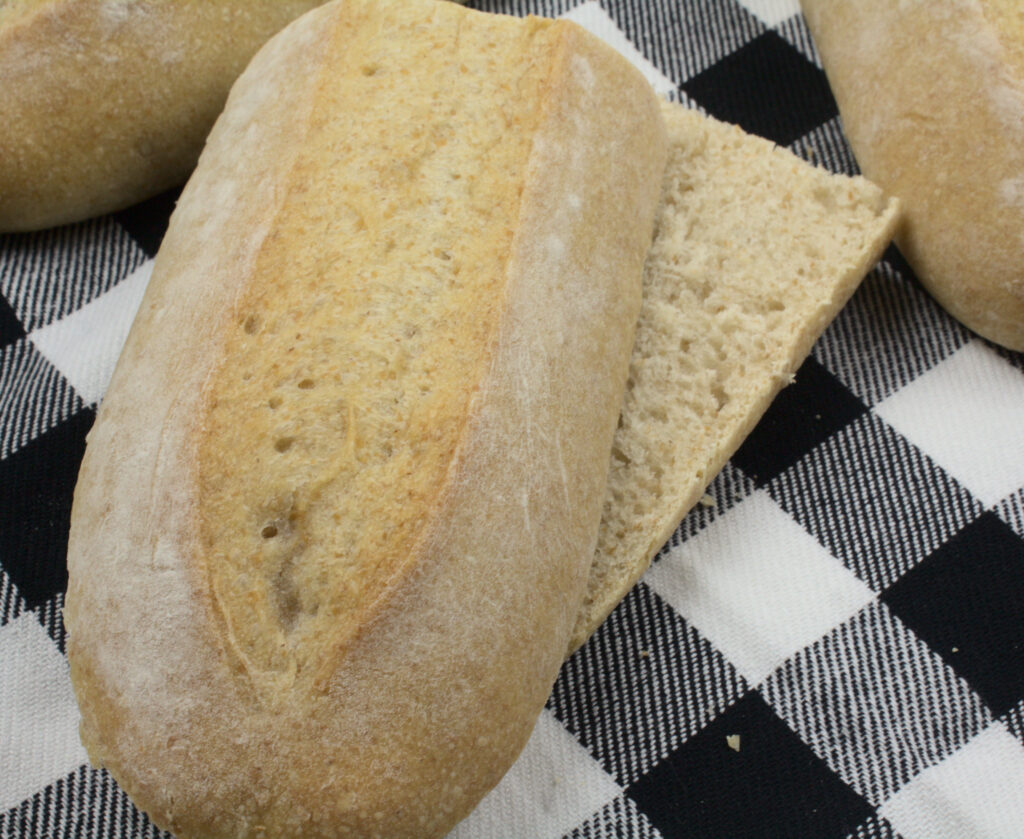
The crumb of New Orleans French bread is more airy and open, perfect for absorbing sauces without becoming soggy.
Where did the term NOLA bread come from?
The term “NOLA bread” comes from the abbreviation “NOLA,” which stands for New Orleans, Louisiana. “NOLA bread” typically refers to the traditional New Orleans French bread, a bread that is a crucial part of famous New Orleans dishes like the po’ boy sandwich. It’s a more informal way of referring to New Orleans French bread, connecting it directly to the city’s food heritage.
Why use a portion of whole grain flour in this bread?
New Orleans French bread is traditionally made with all-purpose flour to achieve its characteristic light, airy crumb and slightly crisp crust. Incorporating wholegrain flour adds a bit more flavor, texture, and nutritional value to the bread.
When substituting whole grain flour for a portion of the all-purpose flour, it’s important to keep in mind that whole grain flour has different properties, such as higher fiber content and different gluten structure, which can affect the texture and rise of the bread.
I incorporated 25% whole grain spelt flour in my New Orleans French bread to provide more flavor and nutritional value while retaining the soft, airy characteristics of the bread.
Why proof sourdough New Orleans French Bread in baguette banneton proofing baskets?
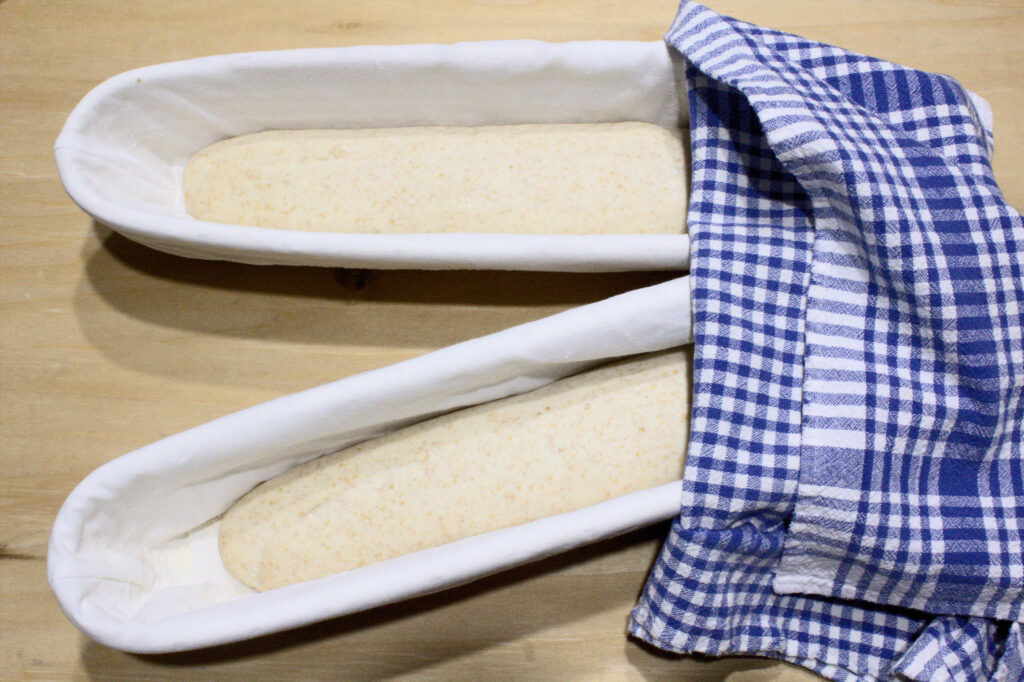
I proofed the dough for these loaves in the Bread Experience 15-inch baguette proofing baskets.
Using a banneton basket with a cotton liner to proof your baguette loaves provides excellent support while allowing the dough to maintain its shape as it rises.
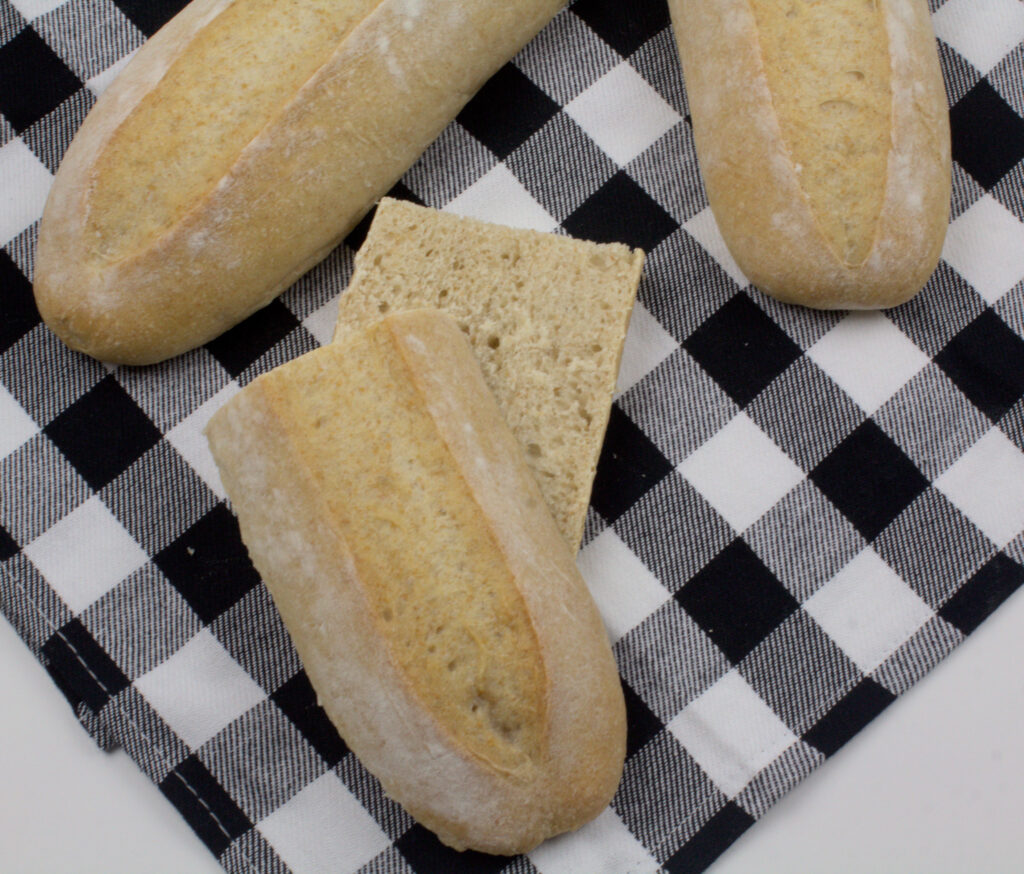
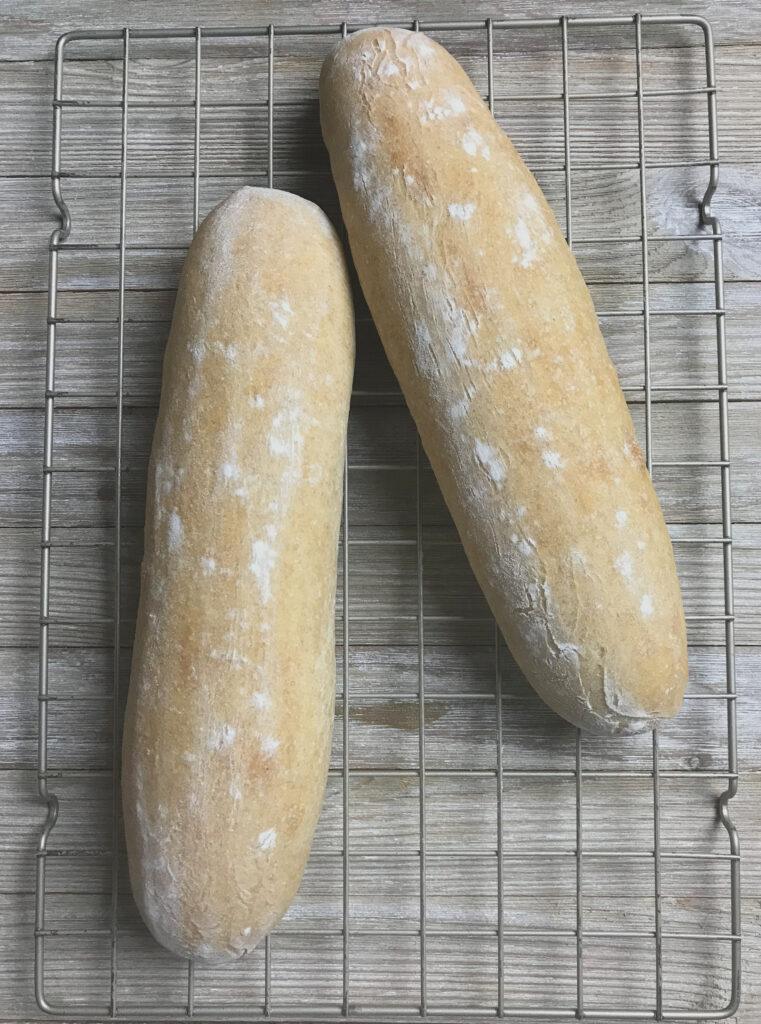
The cotton liner creates a smooth surface on the loaf, preventing sticking and ensuring an even rise without the deep ridges of an unlined banneton. You can see the smooth, even surface on the loaves shown above, which is characteristic of this proofing method. It also promotes a uniform, thin crust while helping to retain moisture in the dough.
This method is particularly helpful for sourdough loaves, ensuring a neat, professional finish with a softer, smoother exterior.
Watch the Baguette Proofing Baskets in Action
Watch this short demonstration of preparing the cotton-lined baguette proofing baskets for shaped dough:
The video shows the baskets being prepared with a light dusting of flour on the cotton liner. This step helps prevent the shaped dough from sticking and creates the smooth surface mentioned earlier in this post.
How much dough will the baguette proofing baskets hold?
While testing this French bread, I used varying amounts of flour and landed on a method that yields loaves about 370-375 grams each. The proofing baskets will hold up to 550 grams of dough, but I decided that was too much dough for my intended purpose for these loaves.
I ended up with New Orleans French Bread loaves that are the perfect size for sandwiches, in my opinion. Just cut them in half, slice them lengthwise, and fill them with your favorite sandwich fixings. I built this one with turkey, provolone, and spinach, but the bread works beautifully with any fillings.

Should you score sourdough New Orleans French bread?
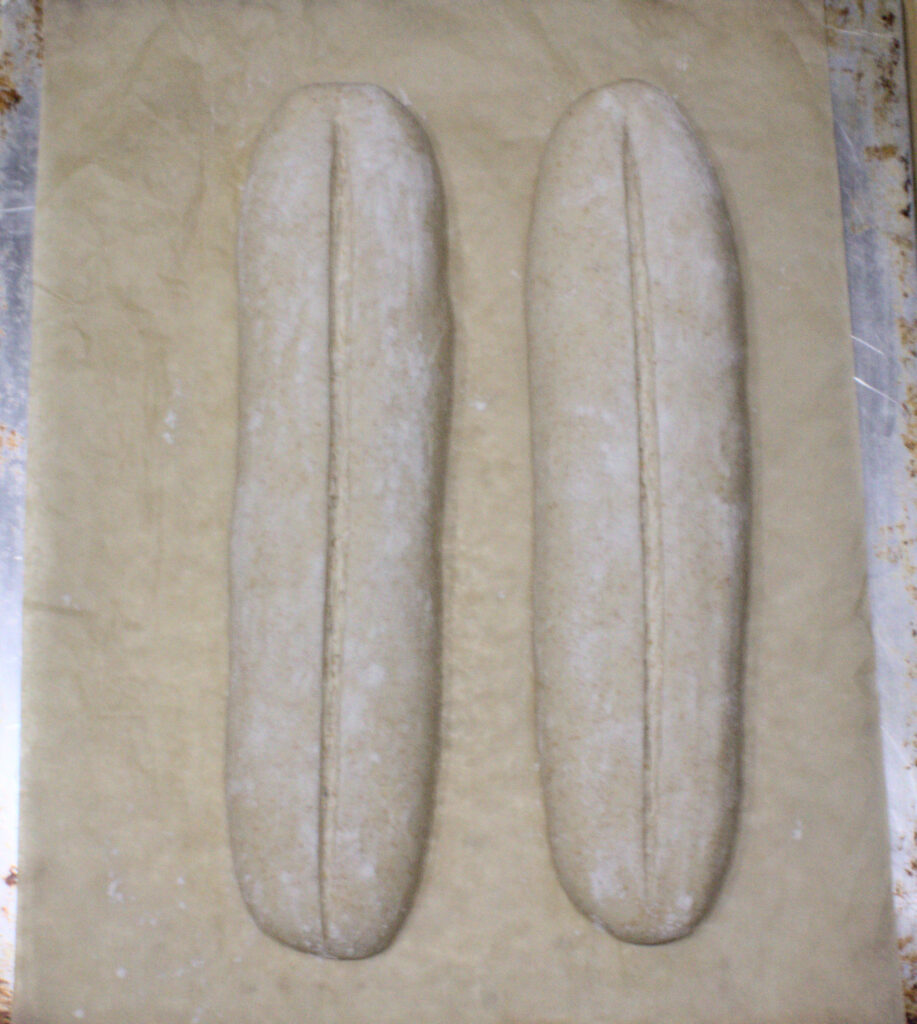
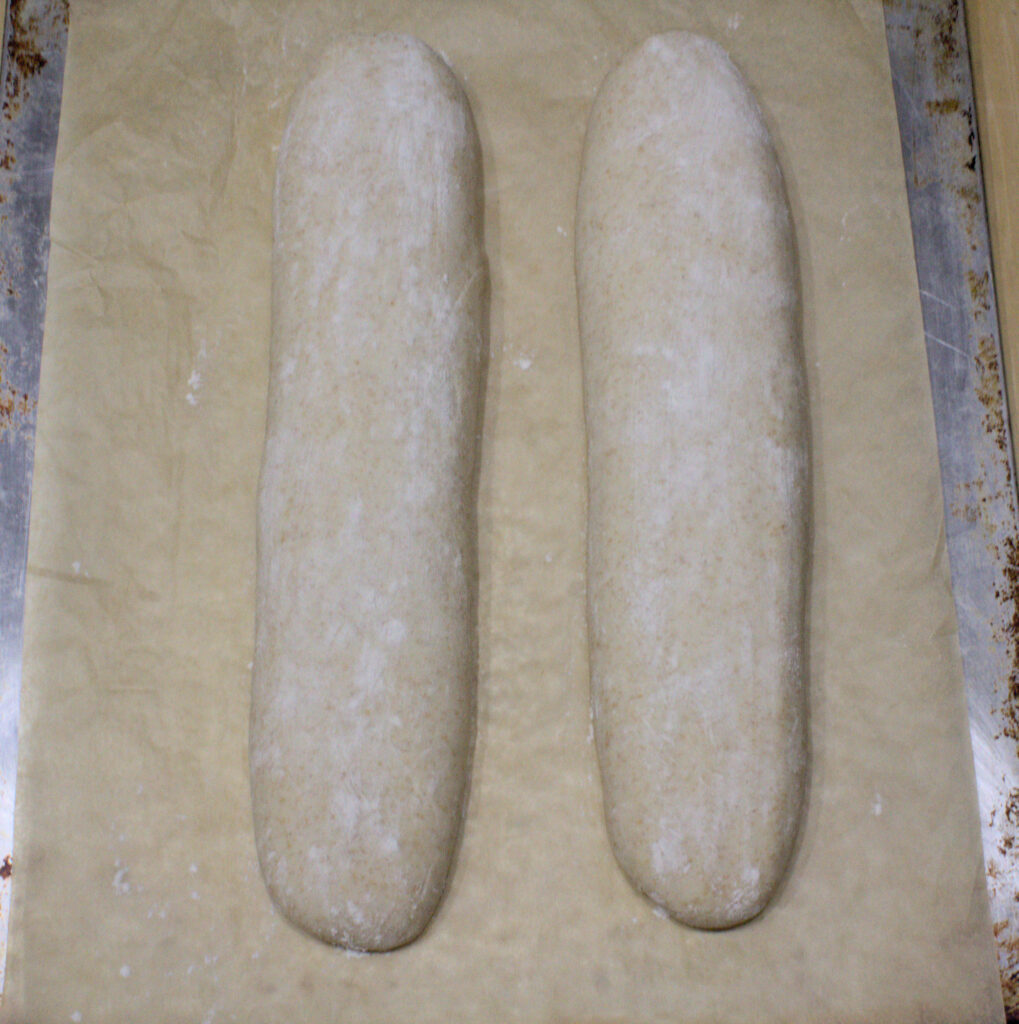
Scoring these sourdough New Orleans French bread Loaves is optional.
To score, use a lame or sharp knife, and make one long slash down the middle of the loaves before baking, or leave the loaves unscored.
You might enjoy this Rustic Baguette-Style Sourdough Milk Bread
Print
Sourdough New Orleans French Bread with 25% Whole Grain Spelt Flour
- Yield: 2 Loaves 1x
Description
Experience my unique Sourdough New Orleans French Bread, made with 25% whole grain spelt flour. This soft, airy loaf with a delicate crust brings a nutritious and tangy twist to the classic, perfect for sandwiches and more.
Ingredients
- 270 grams all-purpose flour
- 105 grams whole grain flour (such as whole wheat or spelt flour)
- 230 – 250 ml warm water
- 75 grams sourdough starter, active and fed
- 18 grams sugar
- 36 grams vegetable shortening, lard, or butter
- 10 grams salt
Instructions
Day 1: Make, Shape & Proof NOLA Loaves
In the bowl of a stand mixer, combine the flours, and 230 mL water. Mix on low speed until there are no dry bits of flour. Cover, and allow the mixture to rest (autolyse) for 30 minutes.
Add the sourdough and mix on low speed until thoroughly combined. Cover, and let it rest for 20-30 minutes.
Add the shortening and sugar and mix on low speed until a shaggy dough forms and the shortening is thoroughly incorporated into the dough. Cover and let the dough rest for 20 minutes.
Add the salt and mix thoroughly. Sprinkle in additional water if needed to thoroughly incorporate the salt throughout the dough.
Place the dough in a large clean bowl. Cover, and let it rest for 3-4 hours at warm room temperature.
Perform 2 stretch-and-folds during the first 1 ½ hours at 45-minute intervals. After the second stretch and fold, let the dough proof in the bowl, covered, for 1 – 2 hours, depending on the temperature in your kitchen.
Turn the dough out to a lightly floured work surface. Divide the dough in half (~370 grams each) and allow the pieces to rest covered for 20 minutes.
Shape into long, slightly flat loaves and place seam side up in lined 15-inch baguette banneton baskets.
Cover and allow the shaped baguettes to rest (in the proofing baskets) at warm room temperature for 1-2 hours. Then, cover tightly and place in the refrigerator overnight.
Day 2: Bake the Loaves
The next day, preheat your oven to 375°F with a rack on the middle shelf and a steam pan on a lower shelf. Have 1 cup of ice cubes ready.
Remove the loaves from the refrigerator while the oven is preheating. Gently flip the loaves from the baskets and place them seam side down on a parchment-lined baking sheet.
Scoring the loaves is optional. Using a lame or sharp knife, make one long slash down the middle of the loaves before baking or leave the loaves unscored.
Place the loaves (on the baking sheet) into the oven. Immediately add 1 cup of ice cubes to the steam pan and close the door.
Bake the loaves for about 20-25 minutes, rotating for even baking. If necessary for browning, move the baking sheet up one shelf during the final few minutes of baking. The loaves should be golden brown and sound hollow when tapped on the bottom.
Let the loaves cool on a wire rack before slicing.
- Category: Bread
- Method: Sourdough
- Cuisine: French
Happy Baking! See you in the kitchen.
Cathy
Leave a Reply