
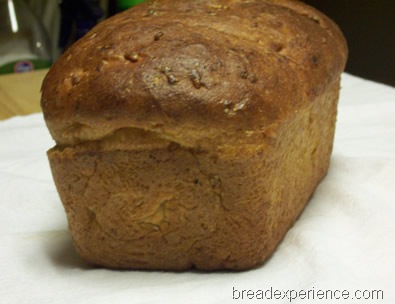
This Sprouted KAMUT Bread is made with sprouted KAMUT berries, home-milled whole grain Khorasan flour, and regular bread flour.
KAMUT® is the name of the brand, and not the wheat. The wheat is “Khorasan” wheat. To ensure the quality of the organic, heirloom grain, Khorasan, the wheat was trademarked KAMUT®. The word “kamut” comes from the ancient Egyptian word for “wheat.”
Khorasan is related to Durum. Both grains descended from Emmer. Khorasan is high in protein, with a sweet aroma and a chewy texture. The kernels are amber in color and almost translucent.
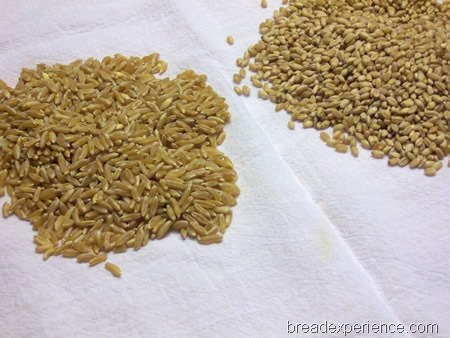
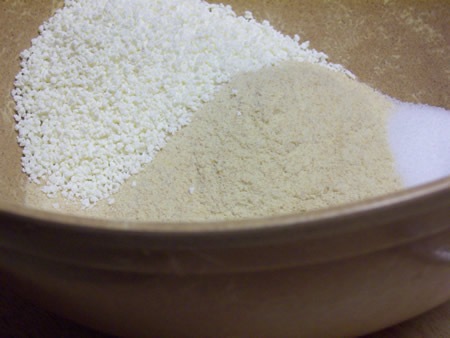
I got some Khorasan grains from the farmer’s market and ground them into flour. As you can see from the photo below, KAMUT® grains (on the left) are much bigger (about 2 to 3 times) than white winter wheat berries (on the right).
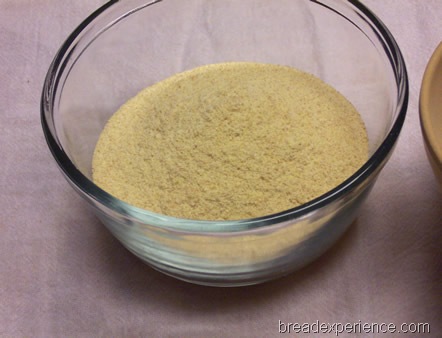
Flour milled from KAMUT® Brand Khorasan berries is beautiful and cream-colored. It reminds me of semolina, but it’s not as coarse or grainy.
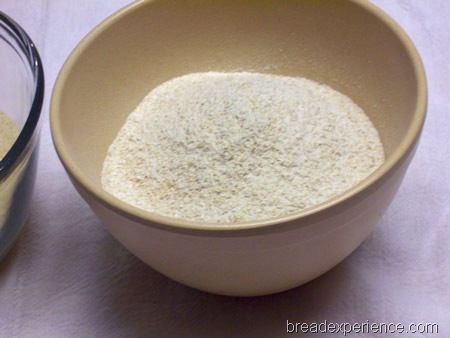
This is what the white winter wheat looks like when it’s ground into flour.
Additional posts and helpful information on sprouted bread
- How to make sprouted bread
- Sprouted Bread with sprouted wheat & bread flour
- Sprouted Wheat Bread with sprouts and no flour – Take Two
- Sprouted Wheat Bread with sprouts and no flour – Take One
- Sprouted Einkorn Bread with no flour
Other experiments using different grains in sprouted wheat bread
All of these breads include sprouted wheat berries along with whole wheat flour and bread flour.
- Sprouted Barley Bread
- Sprouted Einkorn Bread
- Sprouted Rye and Spelt Bread
- Sprouted Spelt Bread
- Sprouted Wheat Bread
Sprouted KAMUT Bread Recipe
Adapted from The Pleasure of Whole-Grain Breads by Beth Hensperger
Makes: 1 loaf
The notes in the book suggest using 7/8 cup of KAMUT® Brand Khorasan flour to 1 cup of whole wheat flour in bread. For this particular recipe, I substituted 1/2 cup of KAMUT® flour for 1/2 cup of whole wheat and an additional 1 cup of KAMUT® flour for 1 cup of bread flour for a total of 1 1/2 cups of KAMUT® flour.
Ingredients:
- 1/4 cup warm water
- 3/4 tablespoons active dry yeast
- Pinch of sugar
- Pinch of ginger
- 1 1/2 cups home-milled KAMUT® Brand Khorasan whole wheat flour
- 1/2 cup nonfat dry milk powder
- 1/2 tablespoon salt
- 3/4 cup warm water
- 1/8 cup honey
- 2 tablespoons unsalted butter, at room temperature
- 1 cup sprouted KAMUT® berries, chopped
- 1 1/2 cups bread flour
- Wheat germ, for sprinkling (optional)
- Melted butter, for brushing
Directions:
Step 1: Sprout the KAMUT® Berries
Duration: 2 to 3 days
Makes: 1 cup
1/4 cup raw KAMUT® berries
Place the berries in a bowl and add tepid water to cover by 1 inch. Let stand at room temperature for 6 to 8 hours.
Drain the berries and rinse with fresh water. Place the berries in a 1-quart jar. Cover with cheesecloth and secure with a rubber band.
Place the jar on its side in a warm, dark place. Twice a day, rinse and drain the berries with tepid water poured through the cheesecloth.
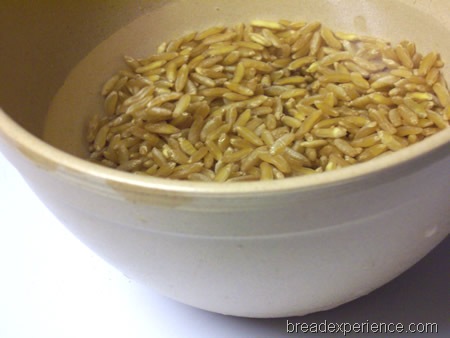
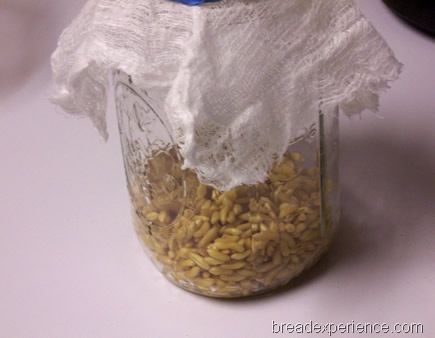
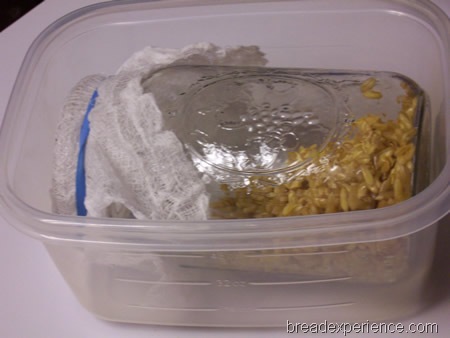
After 2 to 3 days, the berries will sprout. Refrigerate in a plastic bag for up to 3 days.
When I made this bread in the summer, I only had to sprout the berries for about a day, then I dried them on a towel and refrigerated them for a couple of days until I was ready to bake the bread. When you’re ready to bake the bread, grind the berries in a food processor or blender. Be careful not to overprocess the berries; they should be chunky.
Step 2: Make the Sprouted Bread
Pour 1/2 cup of warm water into a small bowl. Sprinkle the yeast, sugar, and ginger over the water. Stir to dissolve and let stand until foamy, about 10 minutes.
In a large bowl using a whisk or the bowl of your mixer, combine the KAMUT® flour, milk powder, and salt.
Add the warm water, honey, and 4 tablespoons of butter. Mix or beat for 1 minute.
Add the yeast mixture and beat for another 1 minute. Add all the KAMUT® berries and the bread flour, 1/2 cup at a time, beating on low speed until a soft dough forms. It should just clear the sides of the bowl. Switch to a wooden spoon when necessary, if making by hand. I mixed the dough by hand using a Danish dough whisk.
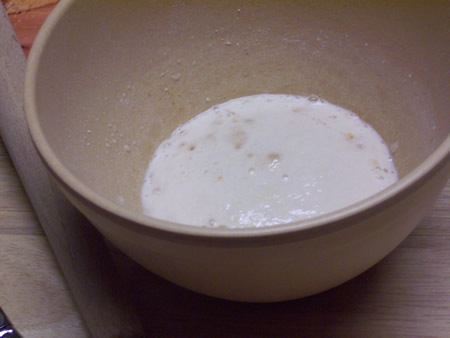
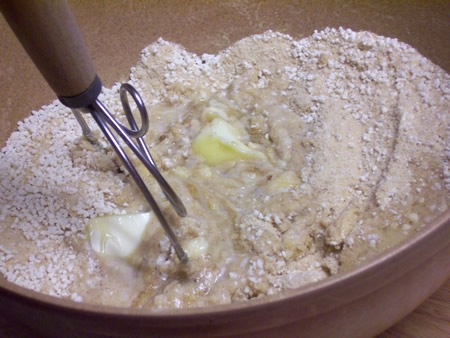
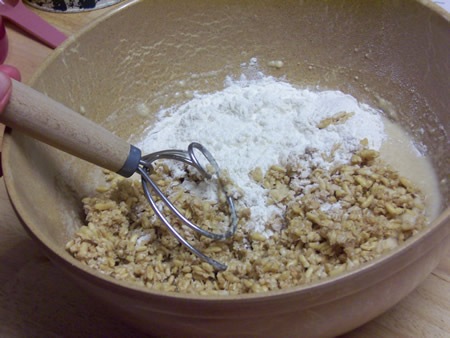
Turn the dough out onto a lightly floured work surface and knead until soft and spongy, 1 to 2 minutes for a machine-mixed dough and 3 to 4 minutes for a hand-mixed dough, dusting with flour only 1 tablespoon at a time, just enough as needed to prevent sticking.
Place in a lightly greased deep container, turn once to coat the top with oil, and cover with plastic wrap. Let rise at room temperature until it is doubled in bulk, 1 1/2 to 2 hours.
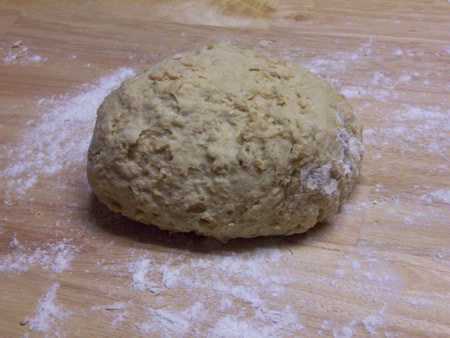
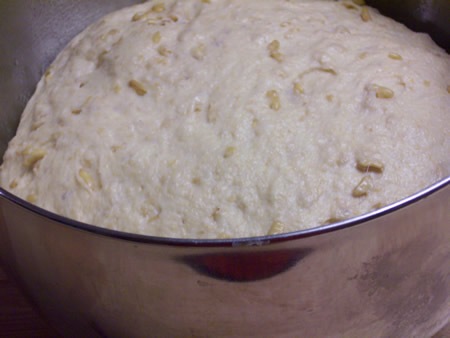
Grease an 8-by-4-inch loaf pan and sprinkle the bottom and sides with wheat germ. Turn the dough out onto the work surface and shape it into a loaf.
Flatten each piece on the counter and pat each portion into a rectangle. Then roll into a loaf shape. Press the seam closed with your fingers, and place seam side down into the prepared pan.
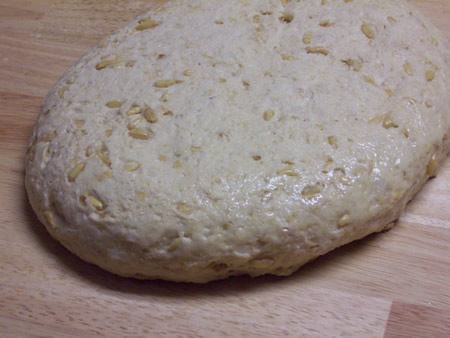
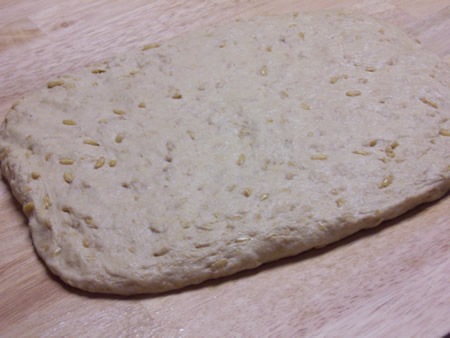
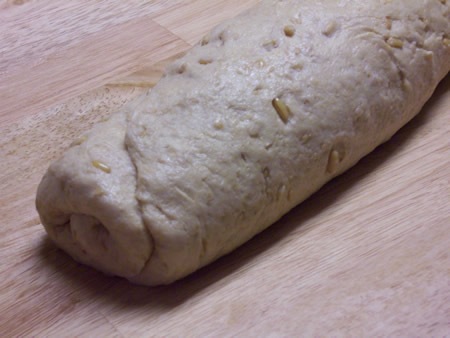
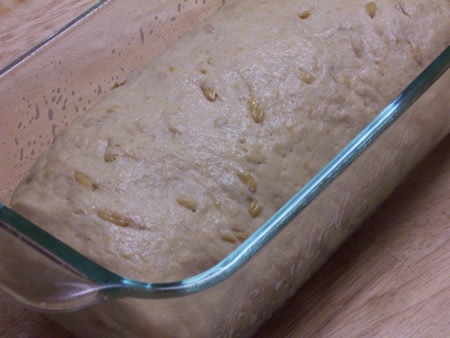
Cover the dough loosely with plastic wrap and let it rise until it level with the rims of the pans, about 1 hour.

About 20 minutes before baking, preheat the oven to 350 degrees F. and position a rack in the center of the oven. Bake for 45 to 50 minutes, or until crusty and golden. Remove the loaf from the pan to cool on a rack and brush the top with melted butter. Let the loaf cool, then slice and enjoy.
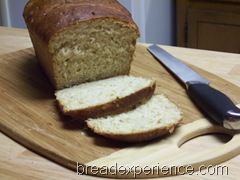
I like this bread. It is a little bit chewy and tastes great toasted with butter and/or spread with jam. However, I couldn’t quite distinguish the KAMUT® flavor. It just tasted like wheat to me (which is not a bad thing because I happen to like wheat).
This bread has been YeastSpotted.
Please visit Wild Yeast to view all of the lovely breads in the roundup.
Happy Baking!
Cathy
Leave a Reply