
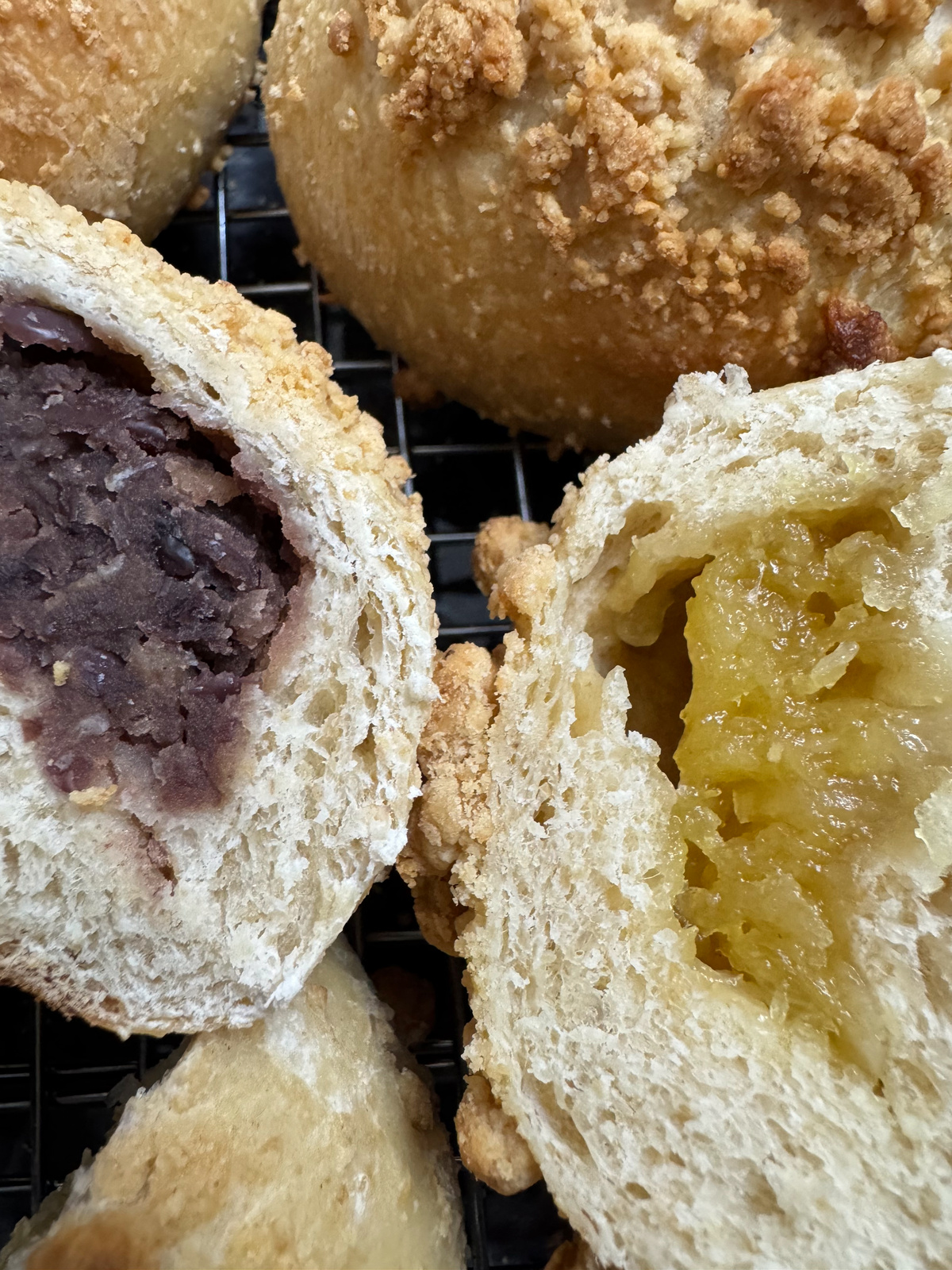
This Soboro Ppang recipe incorporates tangzhong and a stiff sourdough starter to create soft Korean peanut streusel buns, and includes tested fermentation and filling tips.
What Is Soboro Ppang?
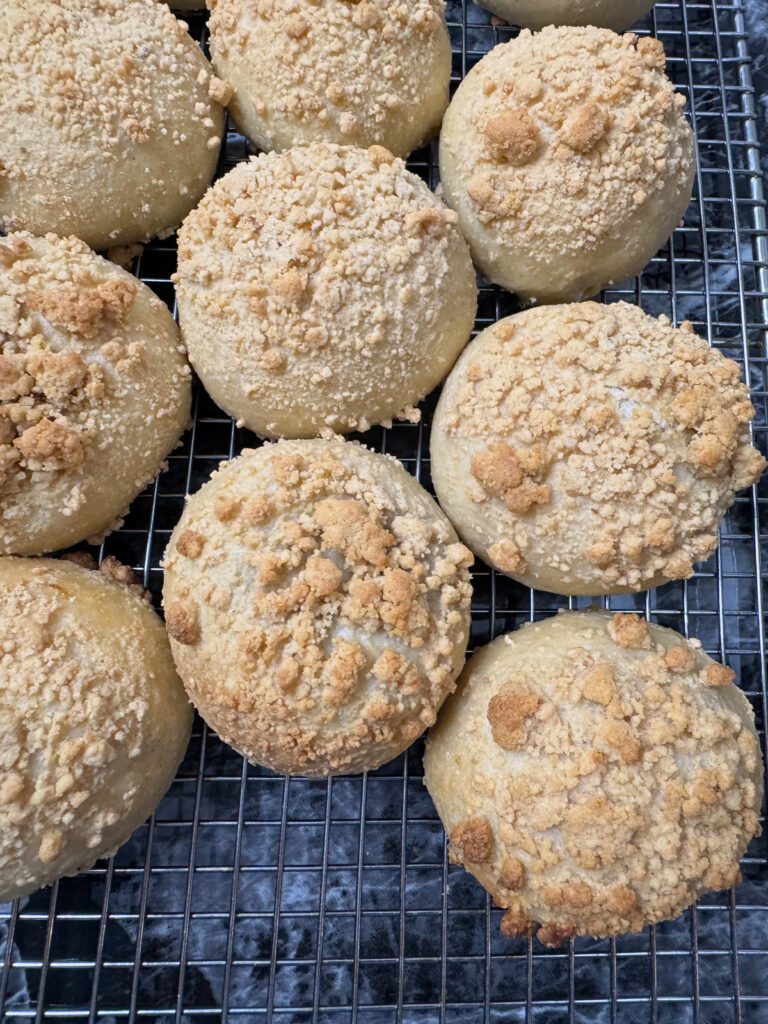
Soboro Ppang is a soft, sweet Korean bun topped with a crunchy peanut streusel. It is comforting, playful, and deceptively simple at first glance. When this bread came up as the monthly bake for my virtual baking group, our host shared a tangzhong-based version designed to produce an especially fluffy crumb. Tangzhong is a technique I enjoy working with, particularly for enriched doughs like this one, and it felt like a natural starting point.
This Soboro Ppang Recipe: Tangzhong with a Stiff Sourdough Starter
I decided to take the recipe a step further by adapting the dough to include an overnight stiff sourdough starter. That idea was inspired by a version from Jessica’s Dinner Party, which uses a stiff levain to add depth of flavor without overwhelming the soft character of the bread. I adjusted the proportions to work with the tangzhong and better suit my own baking process.
What I Learned While Testing This Tangzhong Sourdough Dough
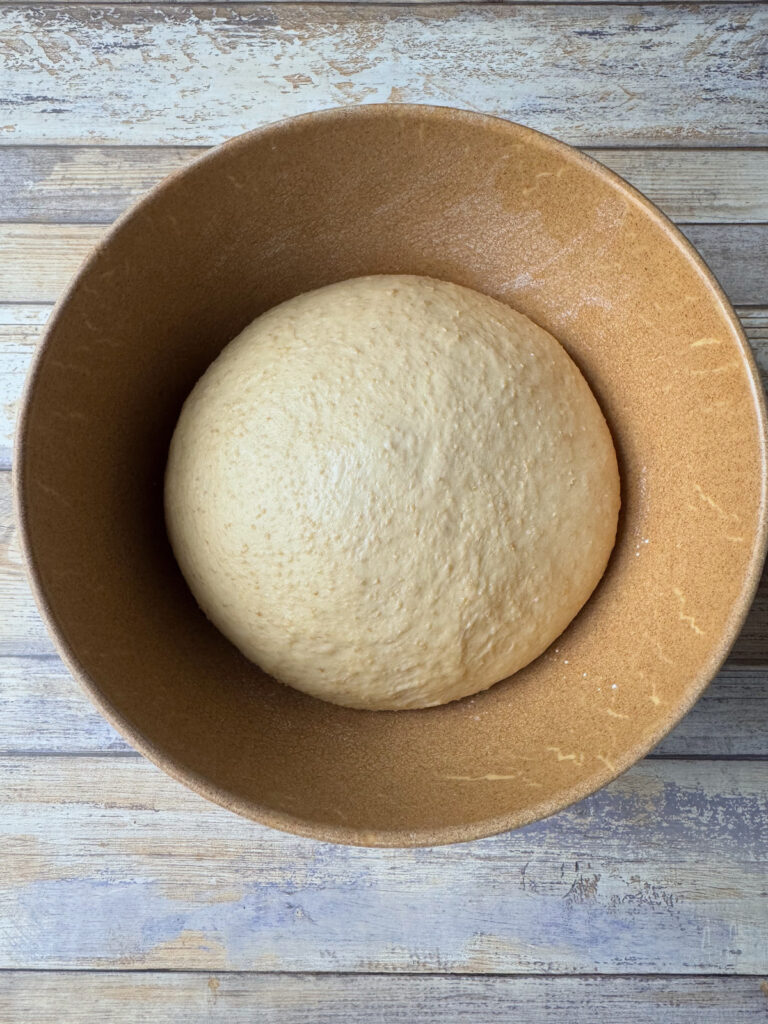
As with many sourdough adaptations, the process itself turned out to be instructive. I added an overnight cold ferment for scheduling reasons, assuming it would improve structure and flavor. Instead, it behaved much like a Finnish Pulla braid I had baked earlier.
The cold bulk fermentation extended proofing time without improving oven spring, and resulted in a slightly denser crumb.
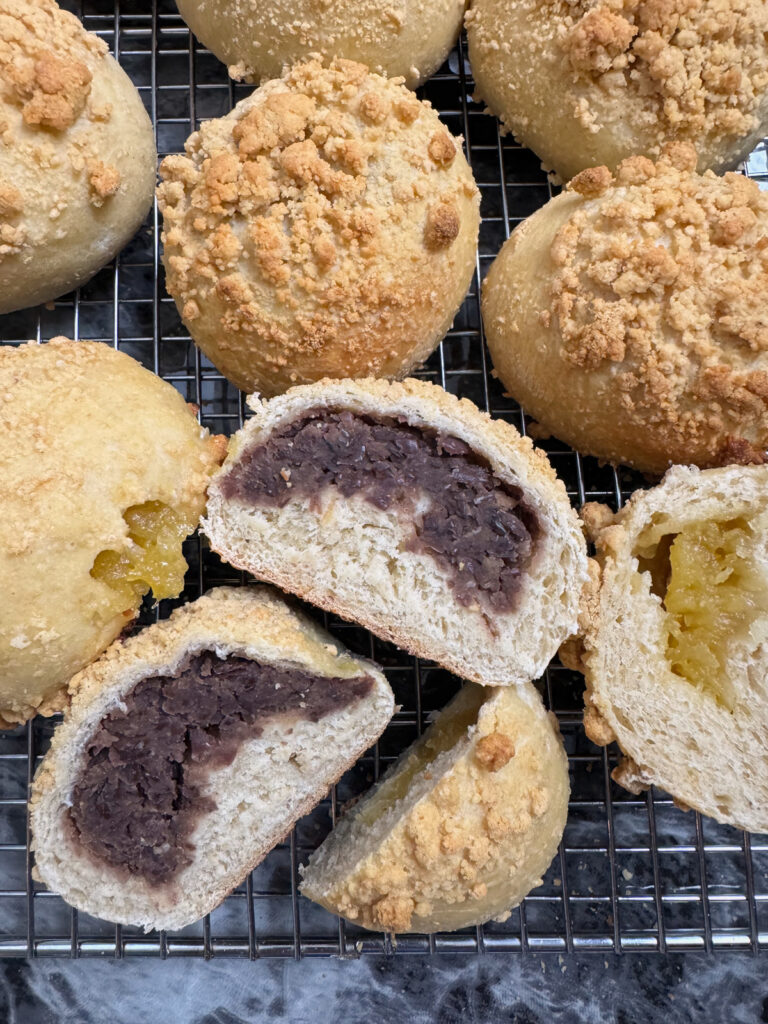
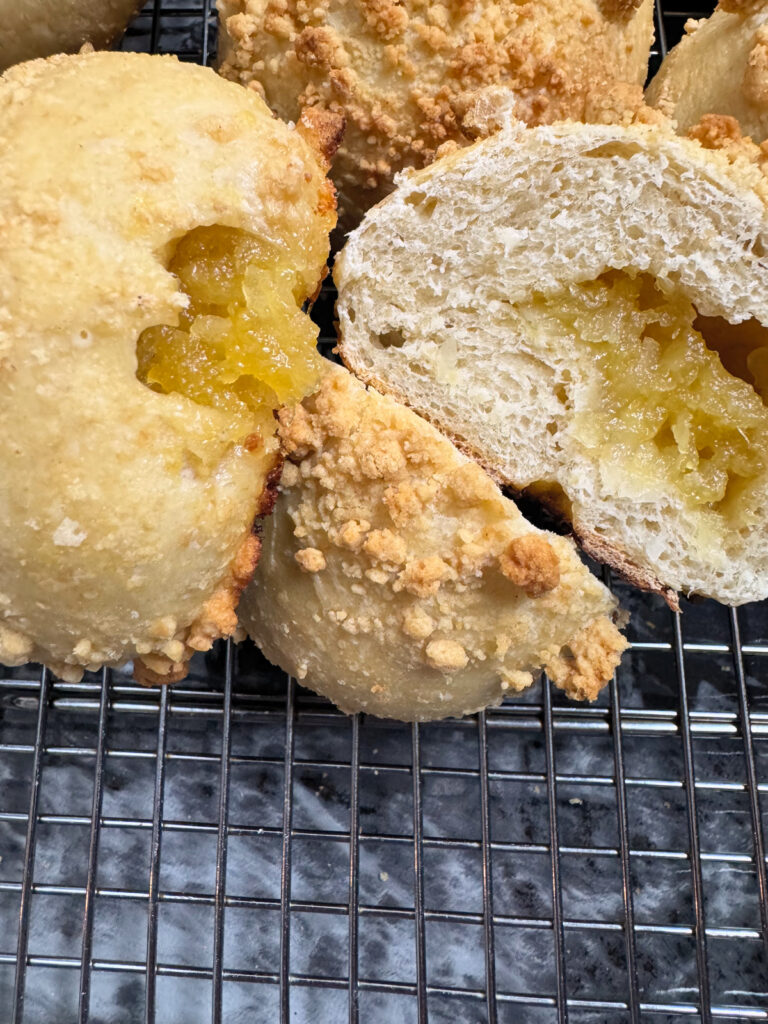
I also learned that restraint matters when it comes to filling. Soboro Ppang can certainly be filled, but too much filling limits expansion and affects the final texture. Using less filling allows the dough to rise more freely, which helps to keep the crumb light and tender.
The recipe below reflects those lessons. It keeps the tangzhong technique from the original group bake, incorporates a stiff sourdough starter for flavor, and adjusts hydration, fermentation timing, and filling amounts to support a soft, fluffy result.
Sourdough Adaptation Notes
This version of Soboro Ppang builds on a tangzhong-based dough by incorporating an overnight stiff sourdough starter. A few key observations from testing:
- Tangzhong and stiff starter both bind water. Reducing the milk too much can result in a tight crumb, even if the dough feels soft.
- Cold bulk fermentation is not recommended for this dough. In testing, it increased proofing time without improving oven spring and contributed to a denser texture.
- Warm fermentation works best. Allow the dough to build structure at room temperature before shaping.
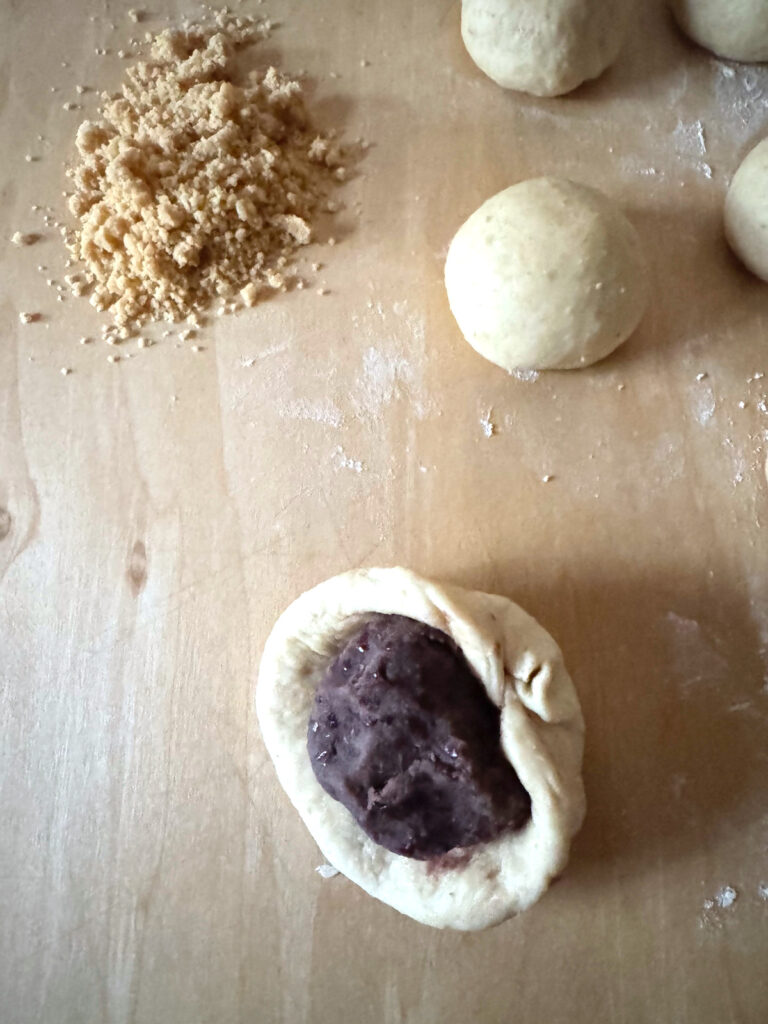
- Use filling sparingly. About 12 to 15 grams per bun is enough for flavor without restricting expansion.
- A small amount of commercial yeast, optional, helps support lift in enriched sourdough doughs without compromising flavor.
If you are used to giving lean sourdough long cold ferments, this dough behaves differently. Think softness first, structure second.
Making Soboro Ppang Without Feeling Overwhelmed
I will be honest. This is not a one-bowl, mix-and-bake kind of bread. Between the tangzhong, the peanut streusel, the dough, and optional fillings, Soboro Ppang can feel like a lot to coordinate, especially if you are baking on a busy day.
To make the process more manageable, I broke it into stages. I prepared each of the fillings several days before and stored them in the refrigerator. That made bake day far less stressful.
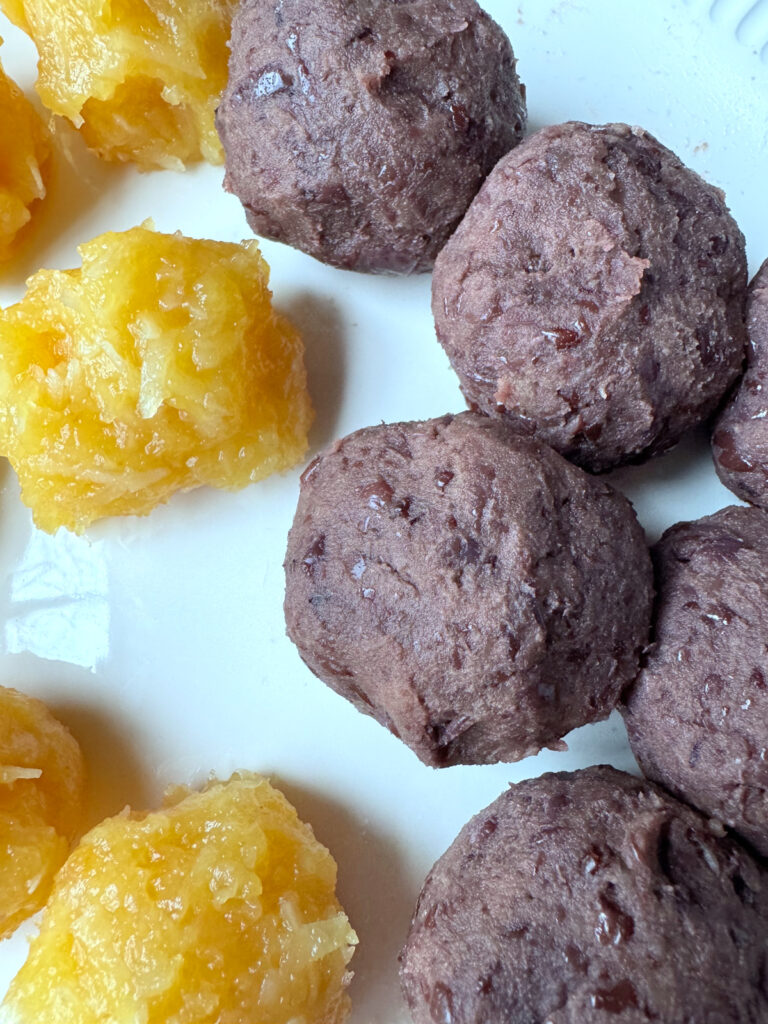
Having those components ready allowed me to focus on the dough itself rather than juggling multiple elements at once.
It is also worth saying that these buns are excellent without any filling at all.
If you are short on time or want to simplify things, feel free to skip the filling altogether. The peanut streusel topping is rich, flavorful, and delicious on its own.
If you do choose to add filling, a little goes a long way. Using less filling not only makes shaping easier, but it also allows the buns to expand more freely in the oven, resulting in a lighter crumb.
Suggested Prep Timeline (Optional but Helpful)
This recipe may feel overwhelming at first glance, so breaking it into stages makes it much more manageable.
1. One to Three Days Ahead
Prepare any fillings, such as red bean paste or pineapple-coconut filling. Store in an airtight container in the refrigerator.
2. The Night Before
Mix the stiff sourdough starter and leave it to ferment overnight.
3. Baking Day
Make the tangzhong, and allow it to cool. Mix and knead the dough. Prepare the peanut streusel while the dough is fermenting. Shape the buns, with or without filling, apply the streusel, proof, then bake.

Soboro Ppang (Korean Peanut Streusel Buns)
- Total Time: About 5–6 hours, plus overnight starter
- Yield: 10–12 buns (depending on size) 1x
Description
These soft, fluffy Korean soboro buns are topped with a crumbly peanut streusel and optionally filled with sweet red bean or pineapple-coconut filling. This version uses tangzhong for extra tenderness and an overnight stiff sourdough starter for flavor, while maintaining a light, airy crumb.
Important Note: Tangzhong-based enriched doughs behave differently than lean sourdough doughs. For the best texture, this dough should be fermented at a warm temperature. Cold bulk fermentation is not recommended.
Ingredients
Stiff Sourdough Starter
- 60 g bread flour
- 30–33 g water (50-55% hydration)
- 12 g mature sourdough starter
Tangzhong
- 80 g water
- 16 g all-purpose flour or whole wheat flour
Peanut Streusel
- 75 g unsalted butter, room temperature
- 64 g peanut butter
- 90 g brown sugar
- 1 large egg yolk
- 1 teaspoon vanilla extract
- 140 g all-purpose flour
- 1 1/2 teaspoons baking powder
- 1 tablespoon cornstarch
Dough
- All of the tangzhong
- 120 g milk, lukewarm
- 1 large egg (about 50 g)
- 36 g sugar
- 4 g salt
- 210 g all-purpose flour
- All of the stiff sourdough starter
- 1/2 teaspoon instant yeast (optional but recommended)
- 28 g unsalted butter, very soft
Filling (Choose One or Omit)
Sweet Red Bean Paste
Option 1: Quick Method
- 430 g (14.3-ounce) can sweetened, mashed red beans
Option 2: From Dried Beans
- 1 cup (200 g) dried adzuki beans
- 1/4 cup (55 g) brown sugar, packed
- 1/4 cup (85 g) honey
- 1/2 teaspoon (3 g) salt
Pineapple-Coconut Filling
- 4 ripe pineapples, peeled and finely processed
- 200 g granulated sugar (adjust to taste)
- 65 g desiccated coconut
- 3–4 whole cloves
- 1 small cinnamon stick
- Pinch of salt
For Coating the Buns
- 1 cup water
- 1–2 tablespoons cornstarch
Instructions
1. Prepare the Stiff Sourdough Starter (10–14 Hours Ahead)
Mix the bread flour, water, and mature sourdough starter into a firm dough. Cover and ferment at room temperature until it is slightly domed and fragrant.
2. Make the Tangzhong
Whisk the water and flour together in a small saucepan. Cook over medium heat, whisking constantly, until it is thick and smooth. Transfer the roux to a bowl and cool to room temperature.
3. Prepare the Peanut Streusel
Cream the butter and peanut butter until smooth. Mix in the brown sugar, egg yolk, and vanilla. Add the flour, baking powder, and cornstarch, and mix until it is crumbly. Cover and set aside at room temperature.
4. Prepare the Filling (If Using)
Sweet Red Bean Paste (From Dried Beans)
Soak the dried adzuki beans overnight, at least 8–10 hours. Drain and rinse well.
Place the soaked beans in a pressure cooker and add about three times their volume of water. Add a small pinch of baking soda. Pressure cook until the beans are soft and slightly mushy. Drain the beans, rinse once, and reserve about 1 cup of the cooking liquid.
Return the cooked beans to the pot. Add the brown sugar, honey, and salt, and stir until incorporated. Add 1/2 cup of the reserved bean liquid.
Place the pot over medium heat. Bring to a boil, then reduce to a simmer and cook for 8–10 minutes, stirring occasionally, until thick and chili-like in consistency. Add more bean liquid as needed to adjust the texture.
Transfer to a clean bowl and cool completely before using. The red bean paste can be made up to 3 days in advance and stored in the refrigerator.
Pineapple-Coconut Filling
Combine all filling ingredients in a saucepan. Simmer over low heat until it is thick and jam-like. Remove the cloves and cinnamon stick and cool completely before using.
5. Mix the Dough
In the bowl of a stand mixer, whisk together the tangzhong and milk until smooth. Add the egg and sugar and mix well. Tear the stiff sourdough starter into pieces and add to the bowl.
Add the flour, salt, and yeast, if using. Mix on low speed until a shaggy dough forms. Cover and let rest for 10 minutes to allow the flour to hydrate.
6. Knead
Knead on medium-low speed for 5 minutes. Add the butter gradually and continue kneading for another 3–5 minutes, until the dough is smooth, elastic, and slightly tacky but not sticky.
7. Bulk Fermentation (Warm Only)
Place the dough in a lightly greased bowl. Cover and ferment at warm room temperature for 60–90 minutes, until increased in volume by about 1½ to 1¾ times.
Do not refrigerate the dough at this stage.
8. Divide and Rest
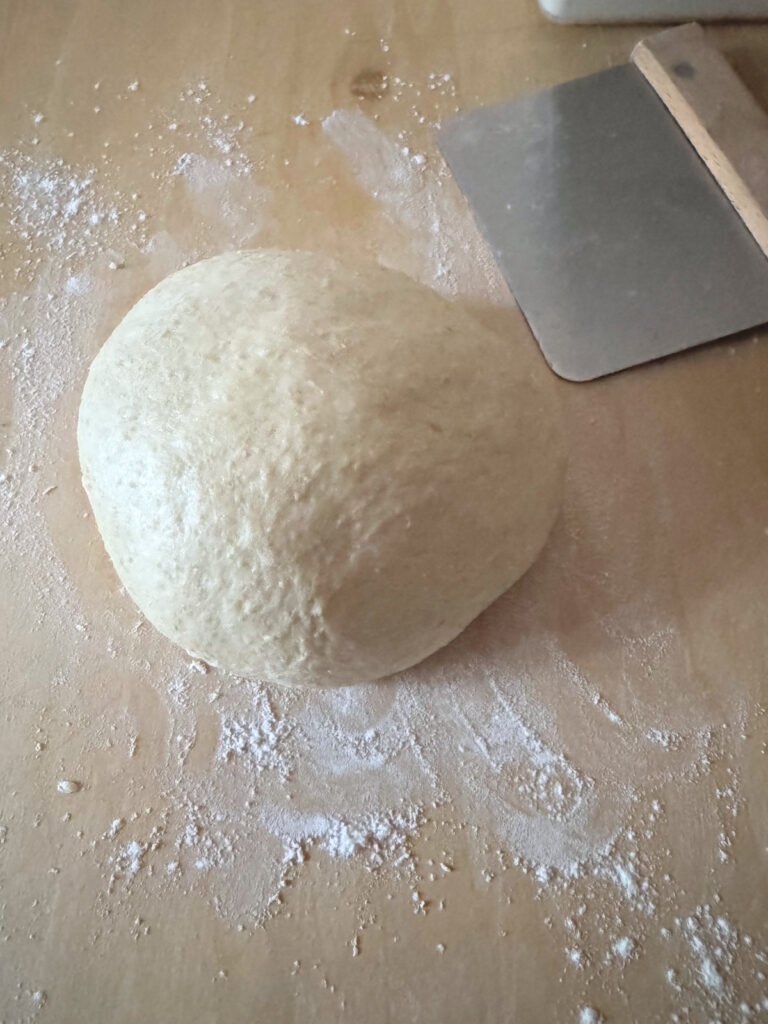
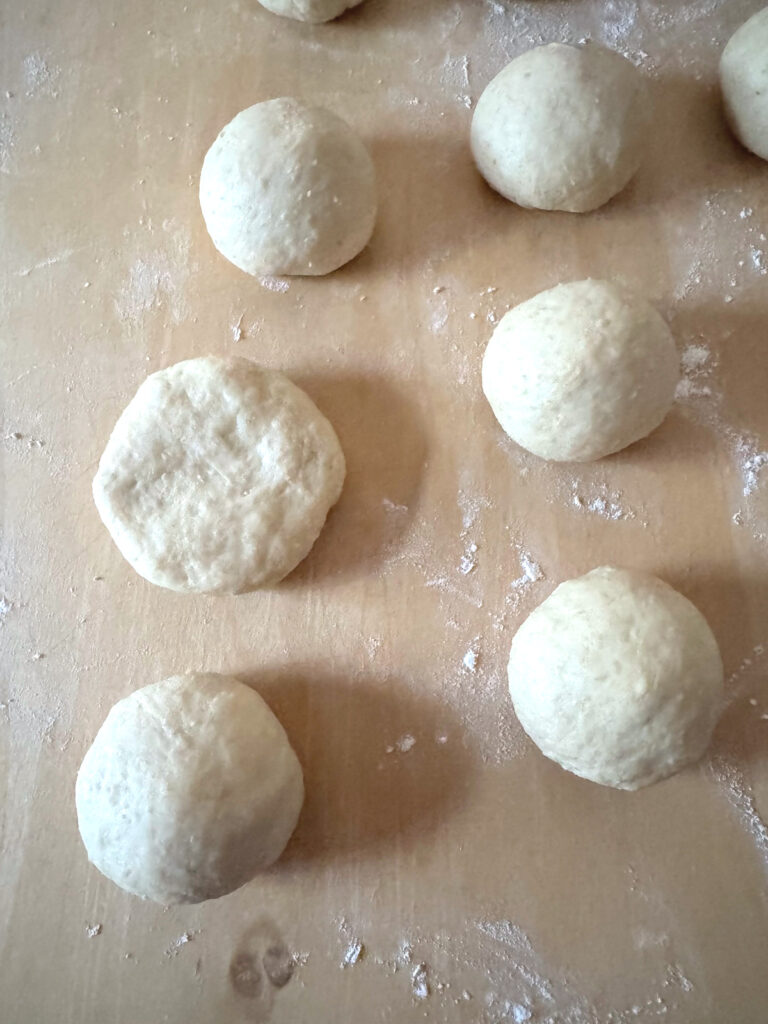
Turn the dough out onto a lightly floured surface. Divide into 10–12 pieces, depending on preferred bun size.
- For 10 buns: 55–58 g each
- For 12 buns: 45–48 g each
Shape into loose balls, cover, and rest for 15 minutes.
9. Fill and Shape
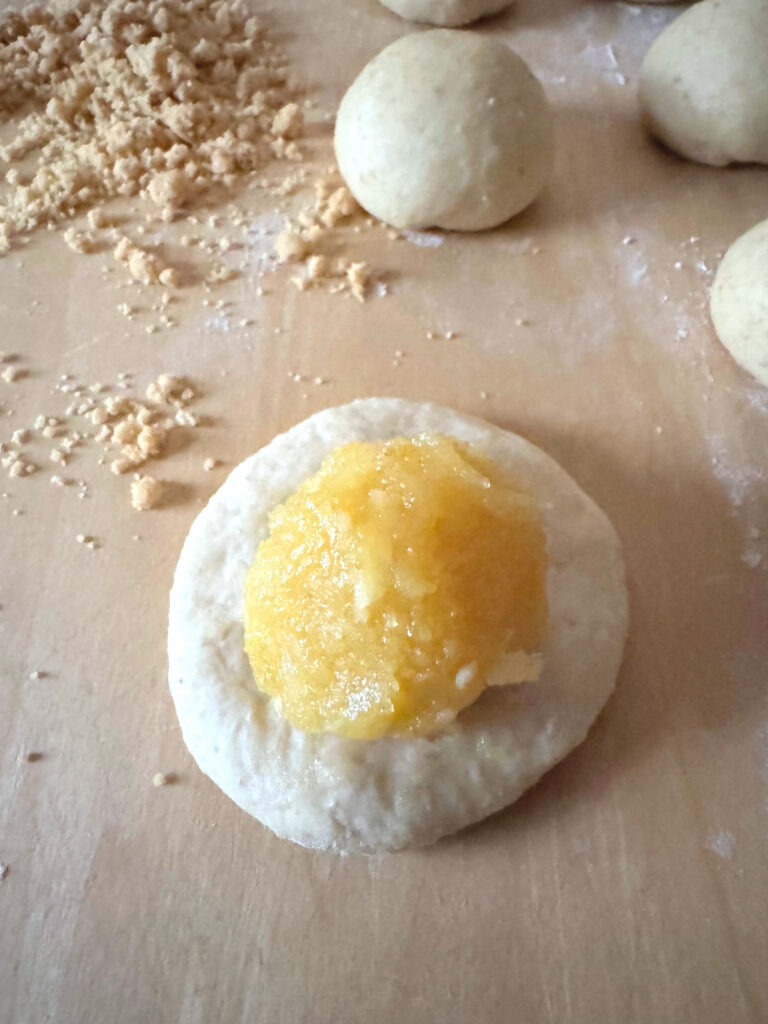
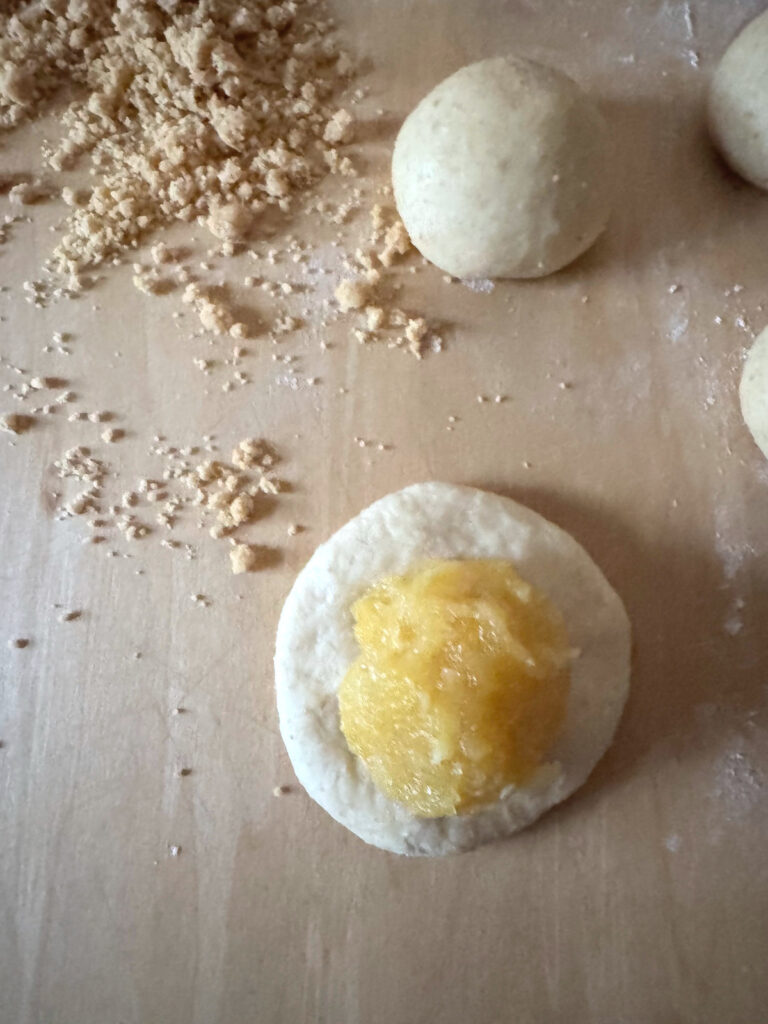
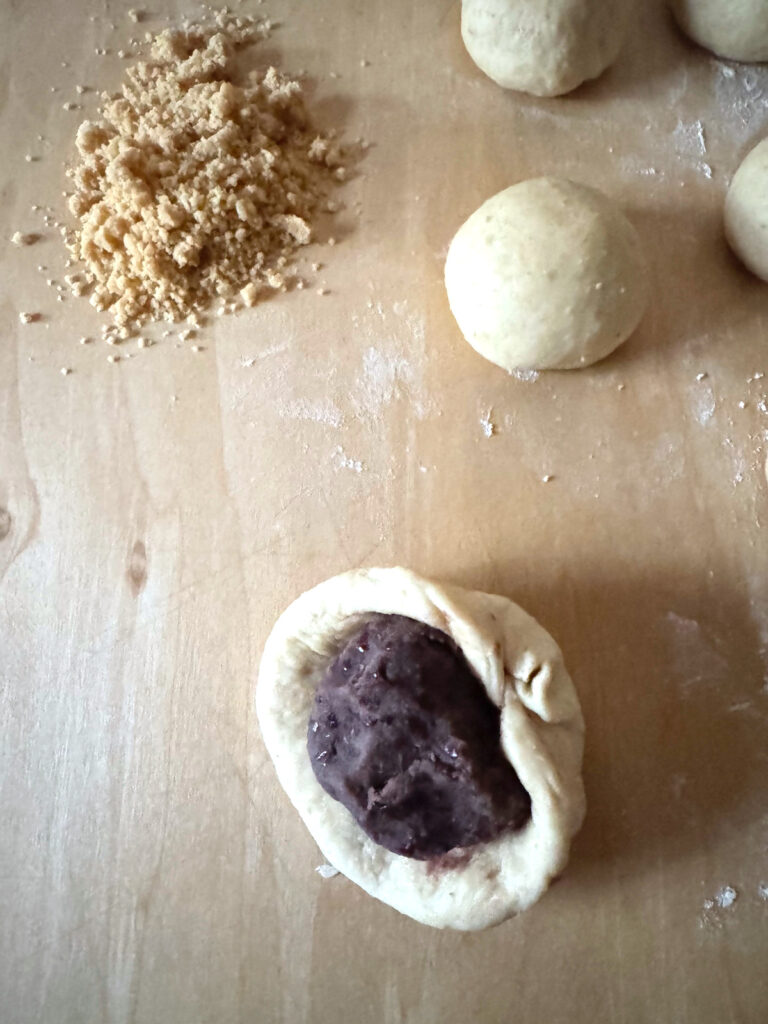
Flatten each piece gently. Add filling according to bun size and seal carefully.
- For 10 buns: 12–15 g filling
- For 12 buns: 10–12 g filling
Why less filling works better: Using a smaller amount of filling allows the dough to expand more freely in the oven, resulting in a lighter crumb.
10. Apply Streusel
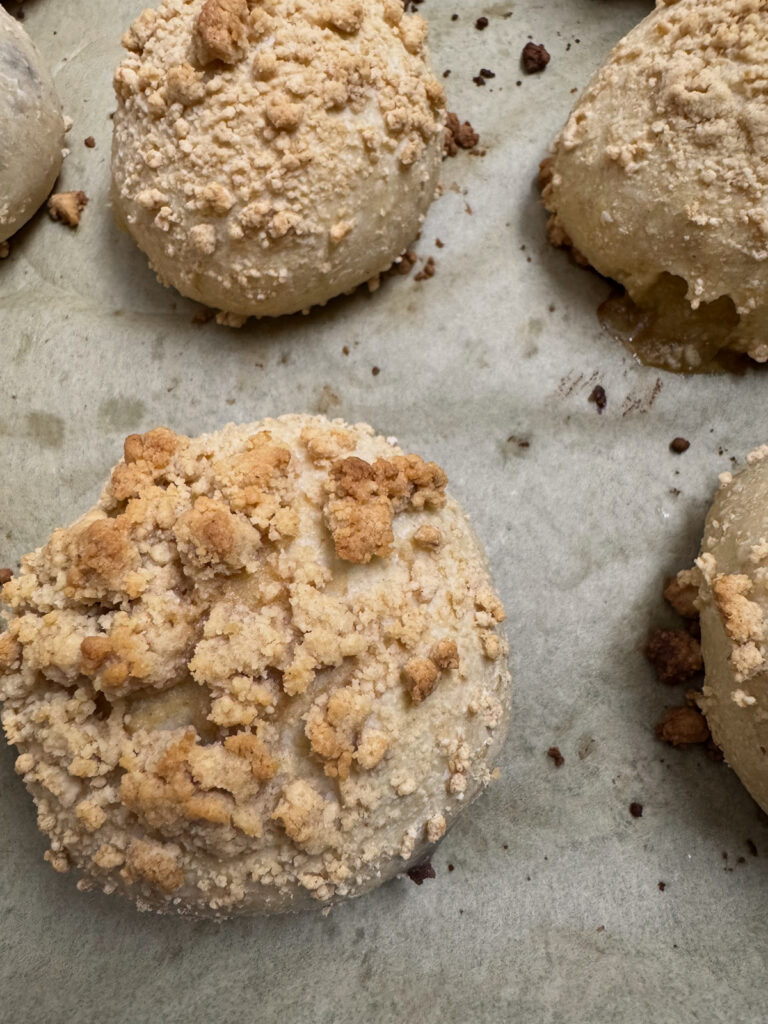
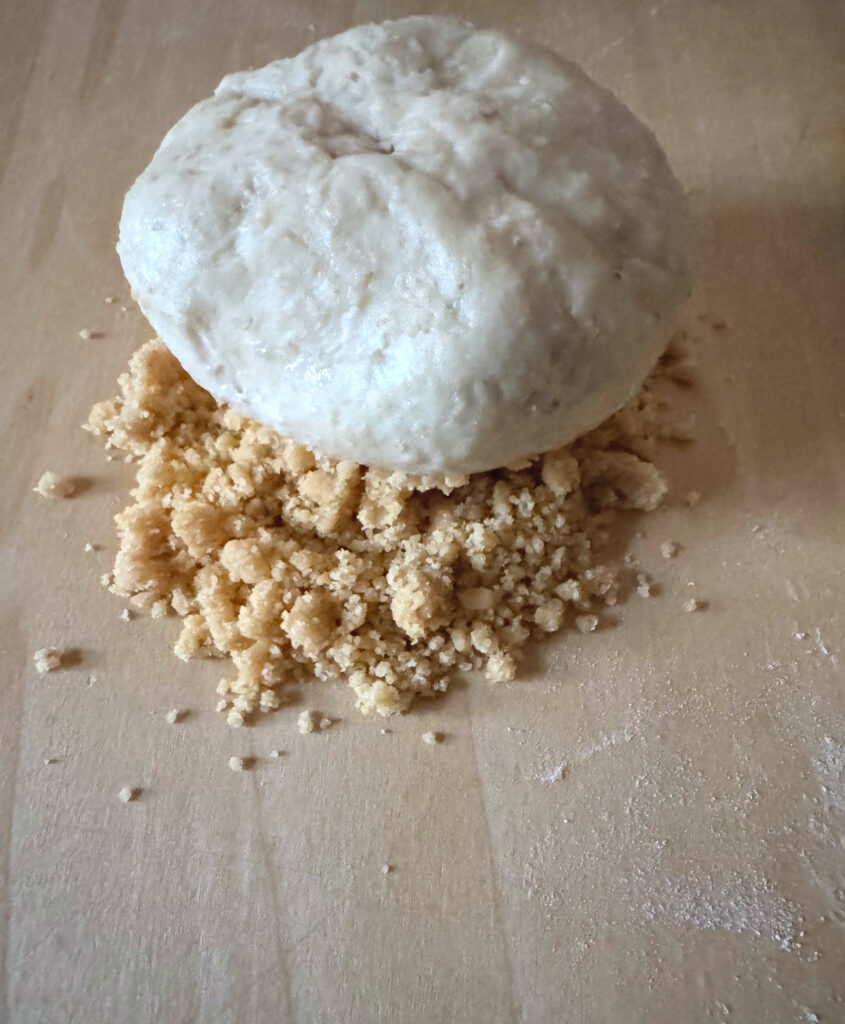
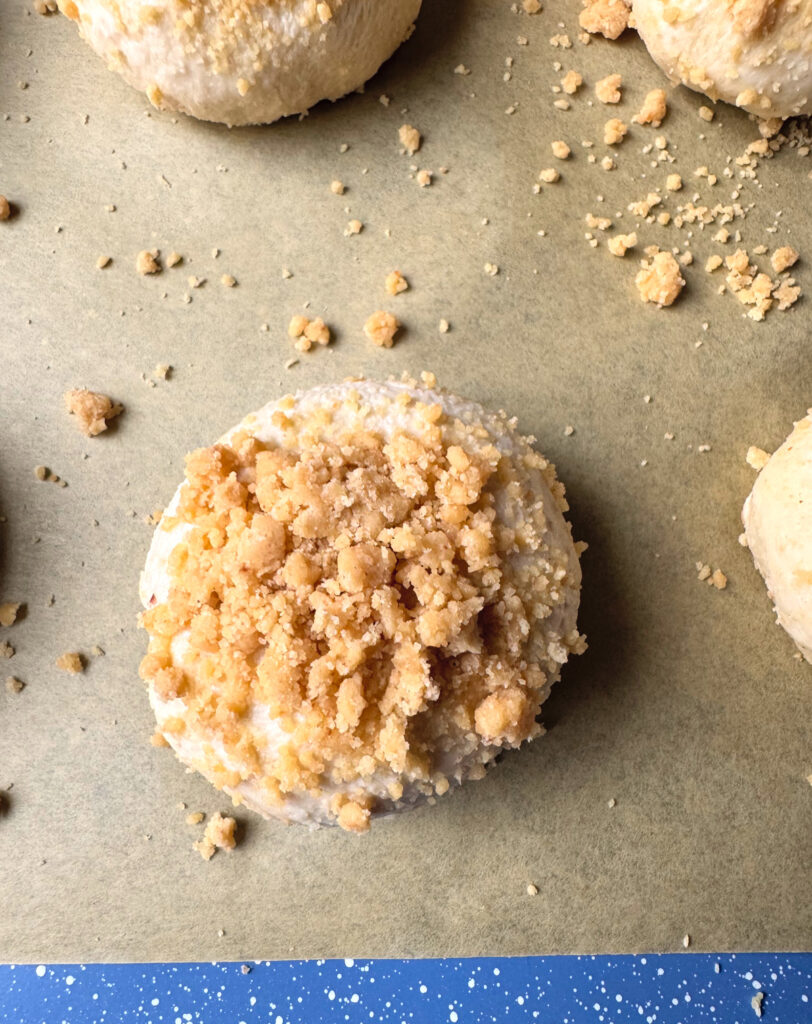
Whisk the water and cornstarch together to make a thin slurry. Dip the smooth top of each bun into the slurry, then press generously into the peanut streusel. Place 5–6 buns on each parchment-lined baking sheet.
11. Final Proof
Cover loosely and proof in a warm place for 40–50 minutes, until the buns are puffy and slightly jiggly.
12. Bake
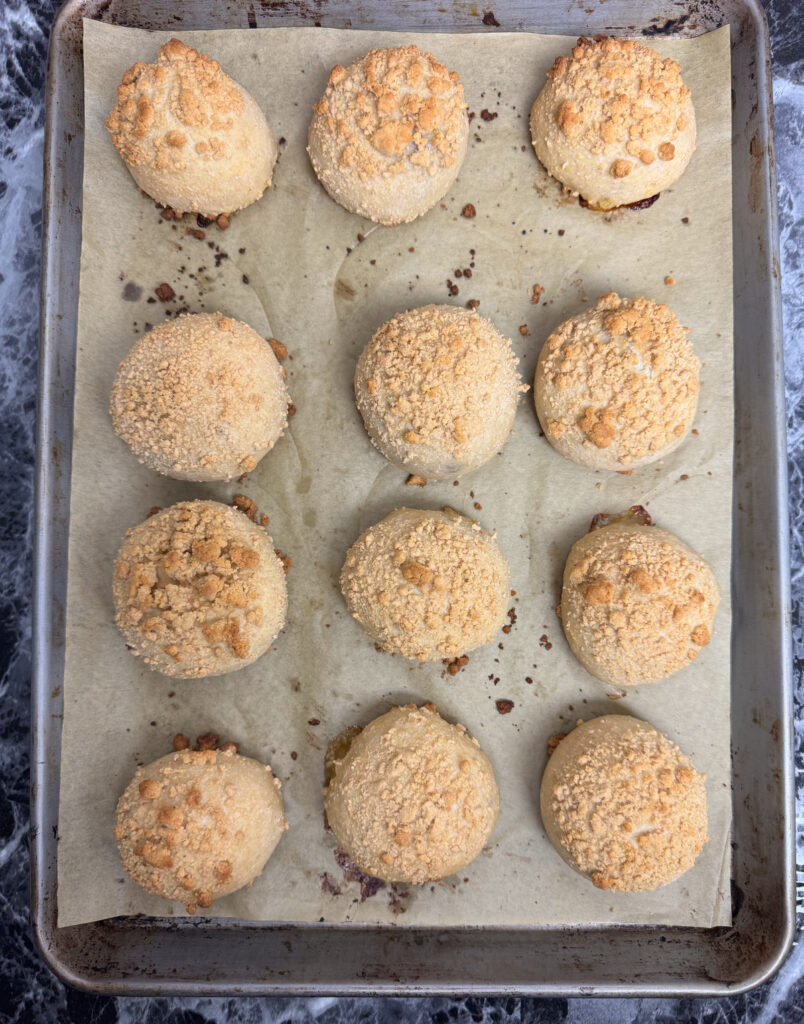
Bake in a preheated 375°F (190°C) oven for 13–15 minutes, rotating pans halfway through. Cool on a wire rack.
Notes
Prep Tip
This recipe has several components. To make bake day easier, prepare the fillings a day or two in advance. The buns are also excellent without any filling. The peanut streusel is flavorful enough to stand on its own.
Make-Ahead Notes (Optional)
Short cold pause: After partial bulk fermentation, the dough may be refrigerated up to 10 hours. Bring fully to room temperature before dividing and shaping.
Overnight shaped proof: Shape and fill the buns, then refrigerate overnight. Allow to proof at room temperature until puffy before baking.
Storage and Freezing Notes
Storage:
Soboro Ppang is best eaten the day it is baked, once cooled to room temperature. Leftover buns can be stored in an airtight container at room temperature for up to 1 day, or refrigerated for up to 2 days.
Freezing Baked Buns:
Fully baked and cooled buns freeze well, with or without filling. Wrap individually and freeze for up to 1 month. Thaw at room temperature, then rewarm briefly in a low oven to refresh the texture.
Freezing Unbaked Buns:
Shaped buns without streusel may be frozen after shaping. Freeze until firm, then store in an airtight container for up to 1 month. Thaw overnight in the refrigerator, bring to room temperature, add the streusel, proof until puffy, and bake as directed.
To reheat: Warm briefly in a low oven until just heated through to restore softness.
- Category: Sweet Buns
- Method: Sourdough
- Cuisine: Korean
Recipe Notes & Attribution
This recipe is adapted from a tangzhong-based Soboro Ppang shared by Aparna, the monthly host of our virtual baking group. The sourdough adaptation using a stiff starter was inspired by Jessica’s Dinner Party, with further adjustments to hydration, fermentation timing, and filling amounts based on hands-on testing.
Who are the Bread Baking Babes?
We are a group of bakers who bake bread together every other month!
There’s something extra special about baking with friends, even when those friends are scattered across the world.
Please join us in creating Soboro Ppang, and share your results. Aparna is the host kitchen this month.
Check out our Facebook group and the BBB blogs (links below) to see our baking results.
My Diverse Kitchen – Aparna (host kitchen)
Karen’s Kitchen Stories – Karen
Judy’s Gross Eats – Judy
A Messy Kitchen – Kelly
My Kitchen in Half Cups – Tanna
Bread Experience – Cathy
blog from OUR kitchen – Elizabeth
Thyme for Cooking – Katie (roundup)
Happy Baking! See you in the kitchen!
Cathy
Leave a Reply