
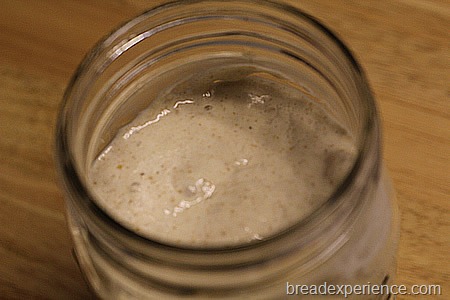
Updated April 2026 with improved formatting and an expanded care and feeding guide.
This apple sourdough starter, made from hazy apples picked fresh from an orchard, is one of my favorites. I have kept it alive since 2011 and still use it regularly.
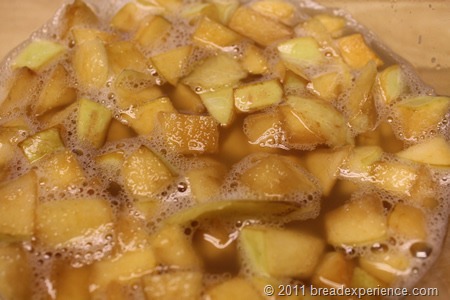
The apple water smells like apple cider while it is fermenting, which makes the process especially enjoyable.
Once the apple sourdough starter is established and regularly fed, the apple character fades, as it does with any sourdough starter. What remains is a lively, well-developed wild yeast culture that brings great flavor and texture to your bread.
Apple-Picking Adventure
The adventure began with a Meetup hike aptly named “Apple of my Hike.” It was such a great play on words that I decided to name this post after it. Special thanks to Dante, our hike leader, for the inspiration.
Before the hike, we visited Mercier Orchards in the North Georgia Mountains. With 200 acres and 100,000 trees, it was an incredible sight.
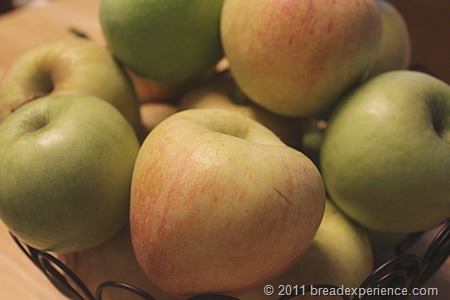
After tasting several varieties and consulting with the orchard guides, I settled on a combination of Granny Smith and Jonagold to create my apple sourdough starter.
The guides recommended these two for canning, so I thought I might make apple butter as well. The apples were so good, I mostly just ate them.
About the Apples
The hazy coating on an apple skin is wild yeast, which is exactly what makes this starter work. Look for hazy apples at a local farm stand, or if possible, pick them straight from a tree. If organic apples are not available, clean the skins with boiling water before using.
Building the Apple Sourdough Starter
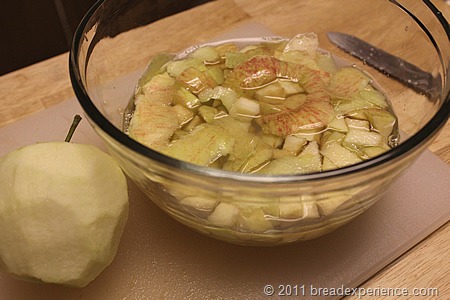
The process, adapted from William Alexander’s 52 Loaves, begins a few days before you mix the starter itself, with what the original recipe calls apple water. It sounds fancier than it is.
Here is a look at how the whole process comes together.
You might also enjoy some of these sourdough starters
- Developing a Sourdough Rye Starter
- Drying a Sourdough Starter
- Einkorn Sourdough Starter
- Grape Sourdough Starter
- Restarting a Dried Sourdough Culture
- Rye Sourdough Starter
- Sourdough Starter – Bread Machine method
- Spelt Levain (Starter)
- Sourdough Starter using Wholegrain Flour – from Sourdough School
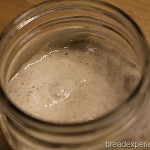
Apple Sourdough Starter
- Yield: 1 Starter 1x
Description
A wild yeast sourdough starter made from hazy apples picked fresh from an orchard. This apple sourdough starter has a naturally sweet, complex flavor and smells like apple cider while it ferments. Worth every day of the process.
Ingredients
- 2 hazy apples
- 1 quart (4 cups / 950ml) tap water
- 50g (about 1/3 cup) whole wheat flour, preferably organic
- 350g (2 1/2 cups) unbleached bread flour or all-purpose flour
Instructions
Prepare the Apple Water
-
Let 1 quart of tap water sit out overnight to remove any chlorine.
-
Cut one apple into 1-inch chunks and place in a container along with the peel of the second apple. Add 1 cup of the prepared water, cover, and reserve the remaining water for later.
-
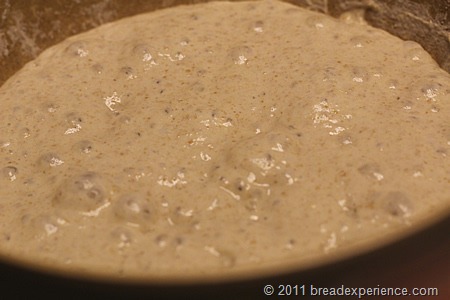
Let the apple and water mixture sit covered at room temperature for 3 days, stirring daily. By the third day, it should be foaming slightly and smell like apple cider.
Build the Sourdough Starter
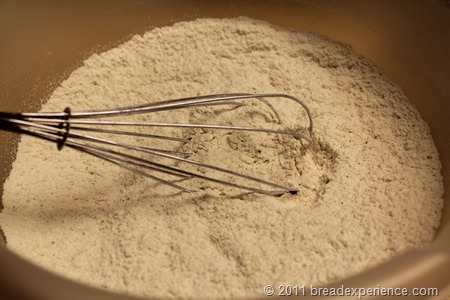
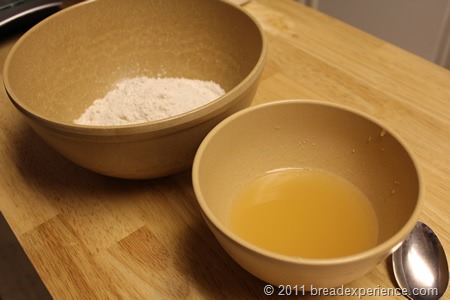
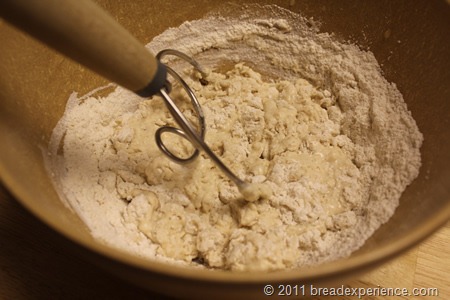
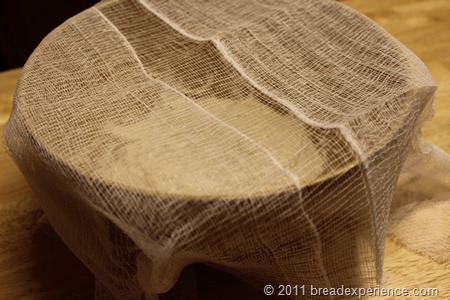
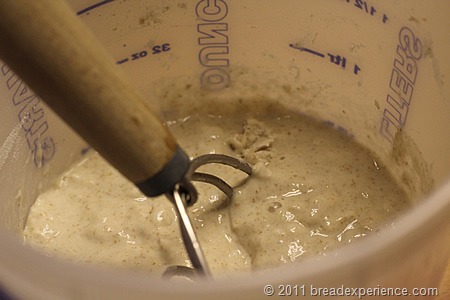
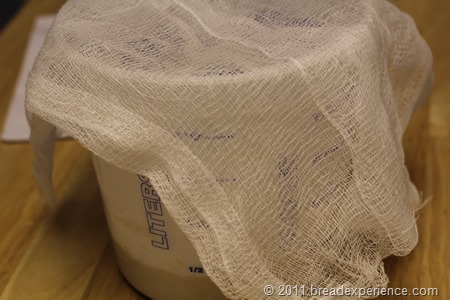
Day 1. Combine the whole wheat flour and bread flour. Measure out 150g of the apple water through a fine strainer and add it to 150g of the flour mixture. Whip vigorously and scrape down the sides. Cover with a frying pan spatter screen or a piece of cheesecloth. Leave at room temperature, whipping every few hours to incorporate air. Keeping the starter aerated during the first few days is important.
Day 2. Add 75g of the reserved tap water and 75g of flour. Whip and leave at room temperature, covered as before, for another 24 hours, whipping occasionally. Bubbles should begin to form, and the mixture should increase in volume.
Day 3. Transfer the levain to a clean 2-quart container, leaving behind any dried bits from the sides of the old container. Add 75g each of bread flour and reserved tap water. Whip and cover as before. If at any point the levain smells funky, discard half, replenish with flour and water, and whip more frequently. If it is not rising and bubbling, increase the frequency of feedings.
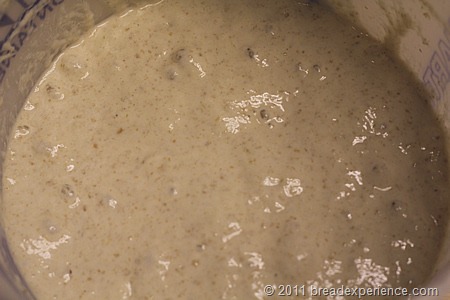
Day 4. Feed once more with the remaining 100g of flour and 100g of water. Let it sit at room temperature for 2 to 3 hours. The levain should be ready to use, though it will continue to develop flavor over the next few weeks. Cover with an airtight lid and store in the refrigerator.
Follow the care and feeding guide below.
Notes
If you cannot find organic apples or pick them straight from a tree, clean the skins with boiling water before using. The hazy coating on the skin is wild yeast and is essential to this starter. I used one whole Jonagold apple and the peel of a second one.
This starter is part of my Apple Series. Once it is active and ready, use it to make Peasant Bread or try it in Tomato Bread Soup.
Once your apple sourdough starter is active and stored in the refrigerator, the real relationship begins. A good starter only gets better with time and consistent care.
Here is everything you need to know to keep it healthy for years.
Care and feeding of your sourdough starter:
A sourdough starter gets easier to care for with age. Consistency matters more than precision, and once the starter is established, the process becomes second nature.
Storage. Keep the starter in a covered container in the refrigerator at all times when not in use.
Stage 1: The first few weeks. Feed the starter twice a week. Each time, stir thoroughly and discard all but about 50 grams. Feed the reserved starter with 50 grams of water and 50 grams of unbleached bread or all-purpose flour, maintaining a 100% hydration ratio. Whip until smooth, leave the lid slightly ajar so gases can escape, and let it sit at room temperature for 2 to 4 hours before covering tightly and returning it to the refrigerator.
Stage 2: Once established. After four to six weeks of consistent feeding, your starter should rise and fall predictably after each feeding. At that point, you can simplify the routine. Keep 25 to 30 grams of starter and discard the rest, or save the discard for use in other recipes. Feed with 60 to 65 grams of water and 60 to 65 grams of flour. Whip until smooth and return to the refrigerator after the same 2 to 4 hour rest at room temperature. A weekly feeding is sufficient at this stage.
If you bake regularly. Feeding becomes part of your bread preparation routine, and no separate feeding is necessary. Feed the starter several hours or the night before baking, replenishing with the amount the recipe calls for. That way, you always have a fresh, active supply on hand.
Container maintenance. Occasionally, clean your container with hot water only. Never use soap, as it can damage the starter culture.
For a more sour flavor. Leave the starter out overnight once in a while and feed it with smaller amounts. The longer it sits at room temperature, the more sour it becomes.
If liquid forms on top. This is a natural byproduct of fermentation called hooch. You can simply stir it back in. If you prefer to remove it, place the container on a kitchen scale and zero it out. Pour off the liquid, return the starter to the scale, and replenish with fresh water and flour in roughly a 1 to 1 ratio until you return to your usual amount. Then feed as usual.
If the starter smells off. Discard it and start over. A healthy starter should be light tan in color, bubbly, and have a sweet and sour aroma.
For more tips on creating and maintaining a sourdough starter, visit my Creating a Sourdough Starter page.
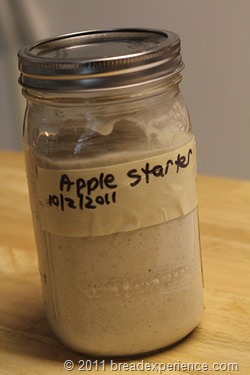
The adventure continues!
On a later trip to Mercier Orchards, my youngest son joined me. It was fun to watch a college-age kid running through the orchard on a mission to find the perfect apple. He found it, a huge Pink Lady, and was very pleased with himself.
This starter has been with me ever since, and it remains one of my favorites. I hope yours becomes just as much a part of your kitchen.
Continue the Apple Series
This starter is Part 1 of a three-part series.
Part 2: Peasant Bread made using the apple sourdough starter.
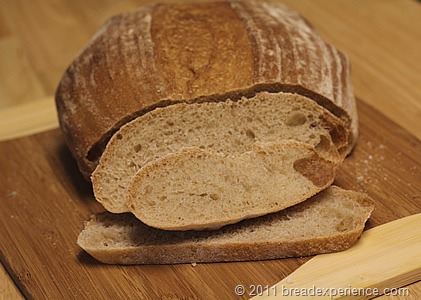
Part 3: Tomato Bread Soup using bread cubes from the Peasant Bread and fresh tomatoes from the garden.

Happy Baking!
Cathy
Leave a Reply