
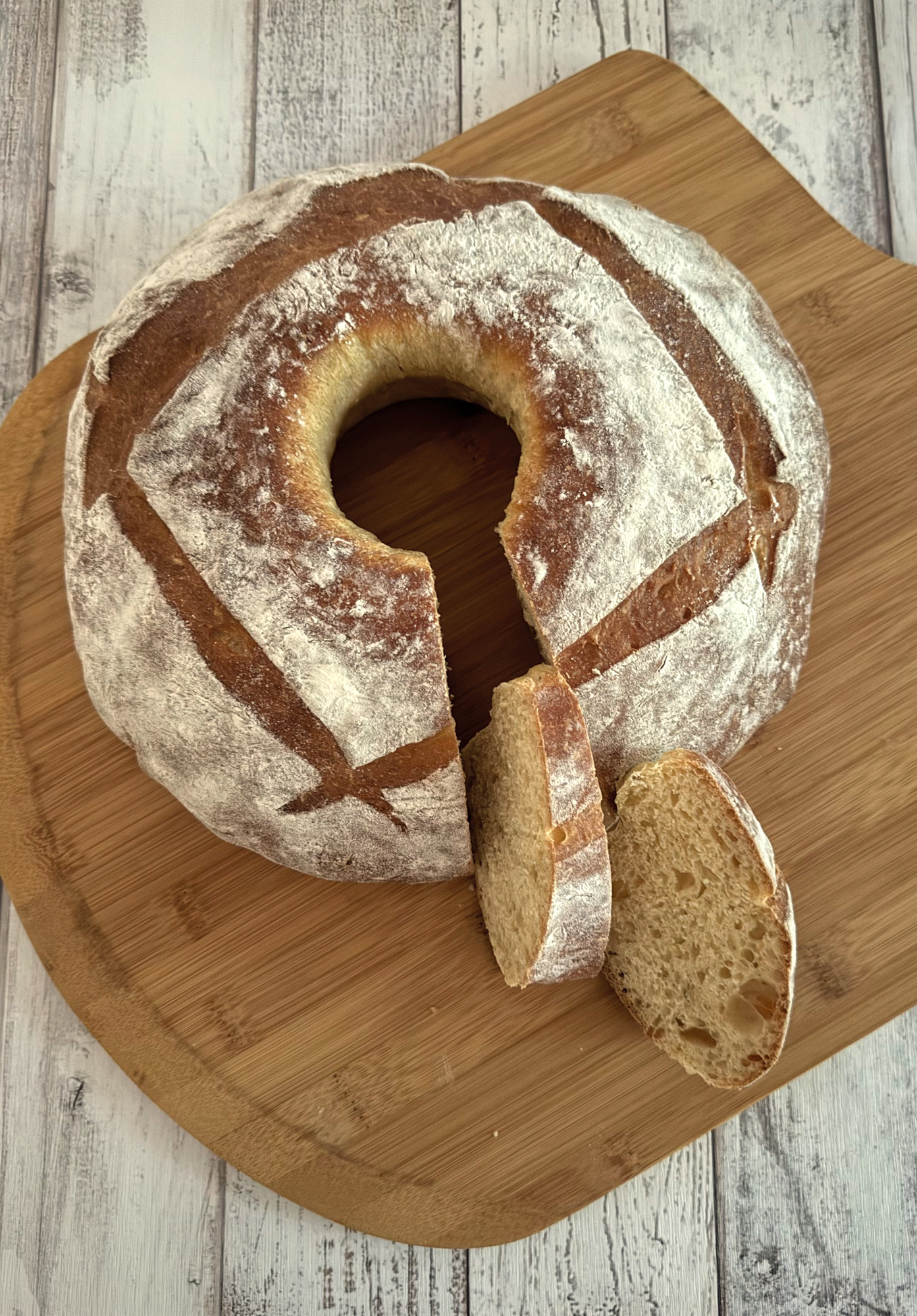
This month the Bread Baking Babes are baking Pompe à l’huile, a Provençal olive oil brioche traditionally served at Christmas.
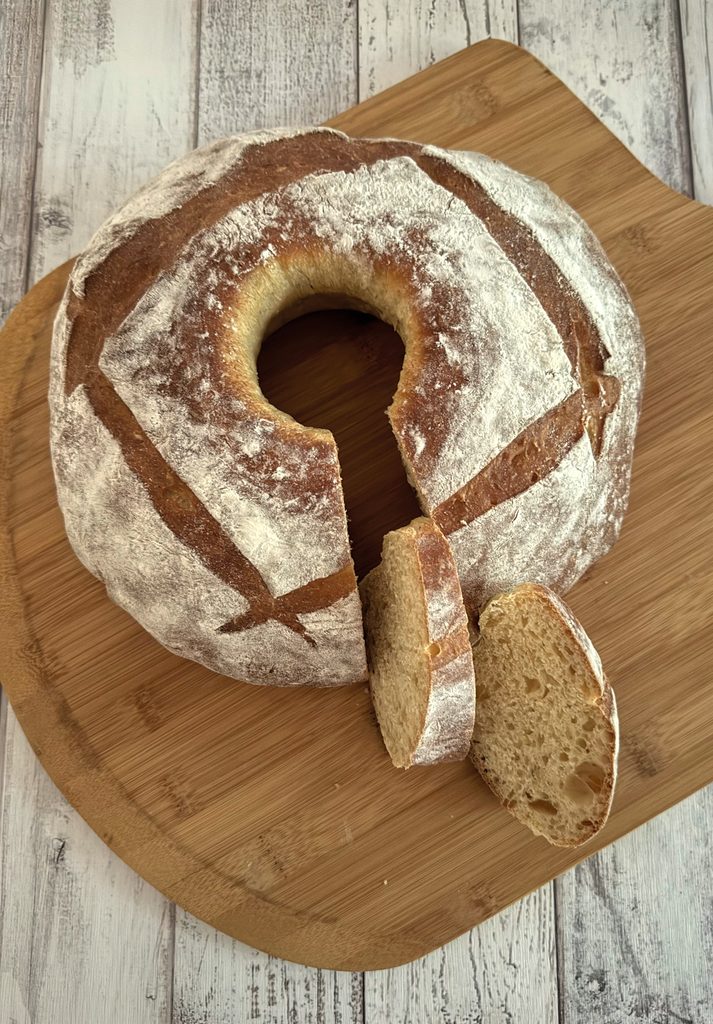
Patricia Wells’ version in At Home in Provence is a yeasted bread. Our host, Elizabeth, converted it to sourdough.
In true BBB fashion, I tinkered with it further. Since Pompe à l’huile is a sweet bread, I thought a sweet stiff levain might work better than her wild leavener. It didn’t.
Three bakes later, I ended up back at yeast, but not the straight yeast of the original. I used an overnight poolish with a pinch of yeast and a same-day dough. As Elizabeth likes to say, bread just wants to be bread. This one told me what it wanted.
How I got here
Bake one: I used a sweet, stiff levain in place of Elizabeth’s wild leavener, with an overnight cold bulk ferment, baked at 425°F. The ring had great oven spring, but it was dry, too crusty, and a little bitter. The peppery olive oil I’d been using in other herb-forward loaves was part of the bitterness.
Bake two: added more sugar, a fruity olive oil, and the same sweet stiff levain and cold bulk. This time it was too sour. I was juggling other baking projects, and the dough kept overproofing. The sourness covered the citrus and fennel, the crust stayed pale, and the crumb was a bit gummy.
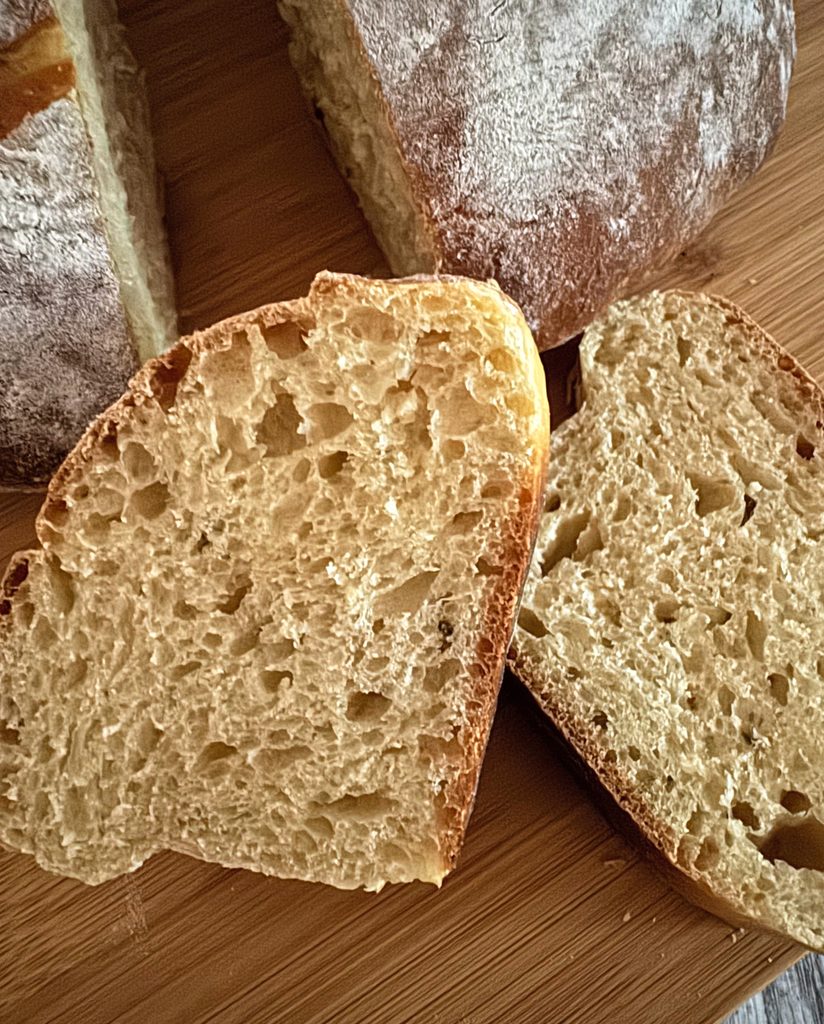
Bake three: switched to an overnight poolish and a same-day dough with no cold ferment. It was my favorite by far: mild and lightly sweet, with a little crust and a tender crumb.
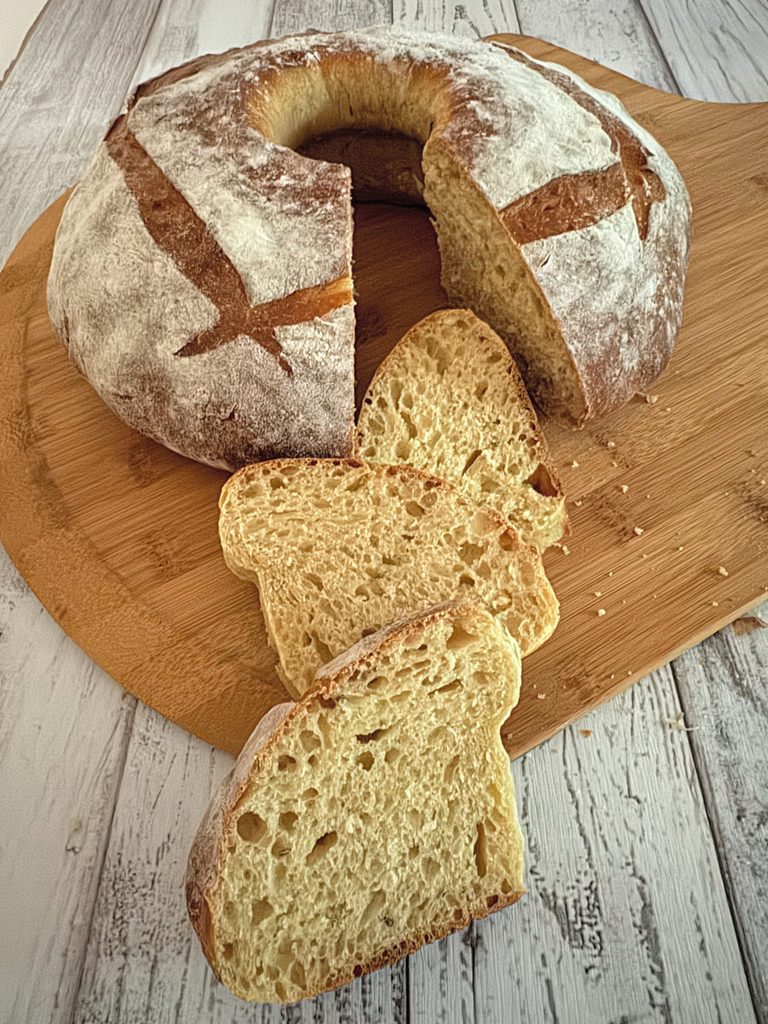
Why poolish worked better here
A poolish adds flavor and keeping quality that a straight yeast dough doesn’t have, without the acidity of sourdough. In a delicate, lightly sweet bread with orange and fennel, that matters. The timing is also predictable, which helps when you have other things in the oven.
I’ve done this before with my Sourdough Finnish Pulla Braid, where I skipped the overnight cold ferment because the bread didn’t need it. Sometimes the best method is the one that suits the bread.
What I changed from the host recipe
• Overnight poolish instead of the wild leavener.
• White whole wheat in place of the wheat germ. It adds whole grain without competing with the citrus.
• More sugar. It’s still only lightly sweet.
• Eggs at the start of mixing. The dough stays workable instead of turning stiff.
• Olive oil added last, drizzled in after the gluten has developed, like butter in a classic brioche.
• Fennel seed and dried orange peel, a traditional Provençal pairing.
• 400°F the whole bake, with a floured, slashed top instead of an egg glaze.
Tips for making Pompe à l’huile Olive Oil Brioche
• Use a mild, fruity olive oil. A robust, peppery one can turn bitter when baked.
• If the dough is sticky, a 30-minute chill during the bulk ferment firms it up and makes it much easier to handle. I needed three sets of stretch and folds for this dough.
• Coil folds would work well here too. They’re gentler on a sticky, enriched dough, and chilling between sets is already part of that method. I’d started with stretch and folds, so I kept going with them, but I’d try coil folds next time. The coil fold method worked well with these Sourdough Pane de Cristal loaves.
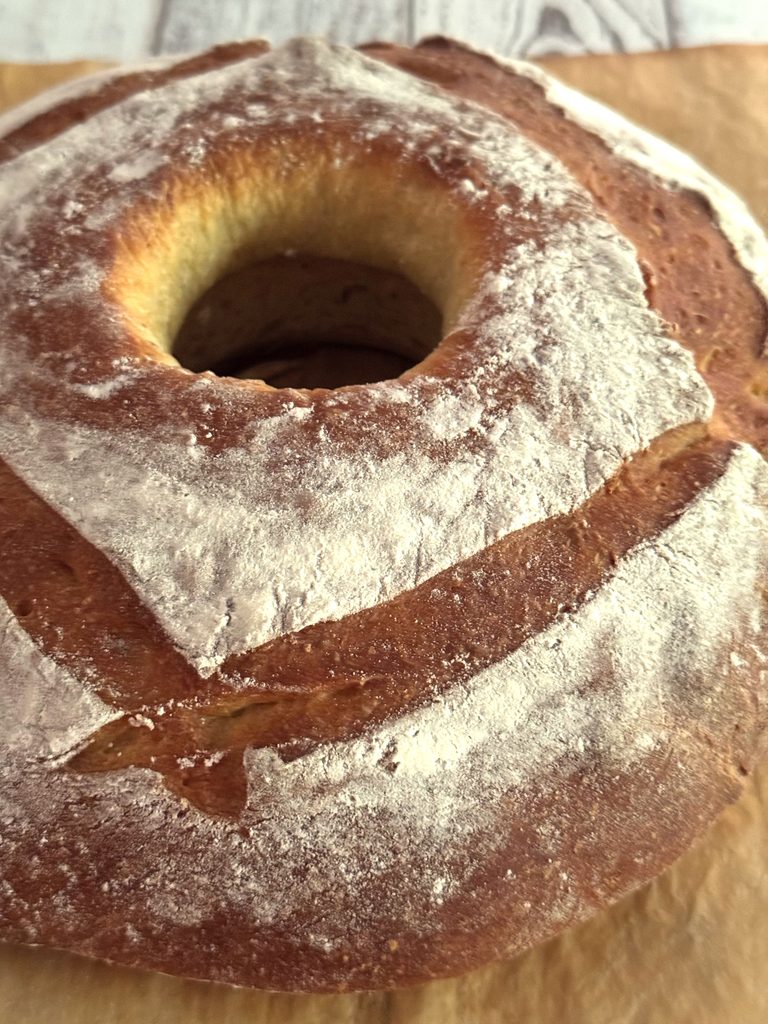
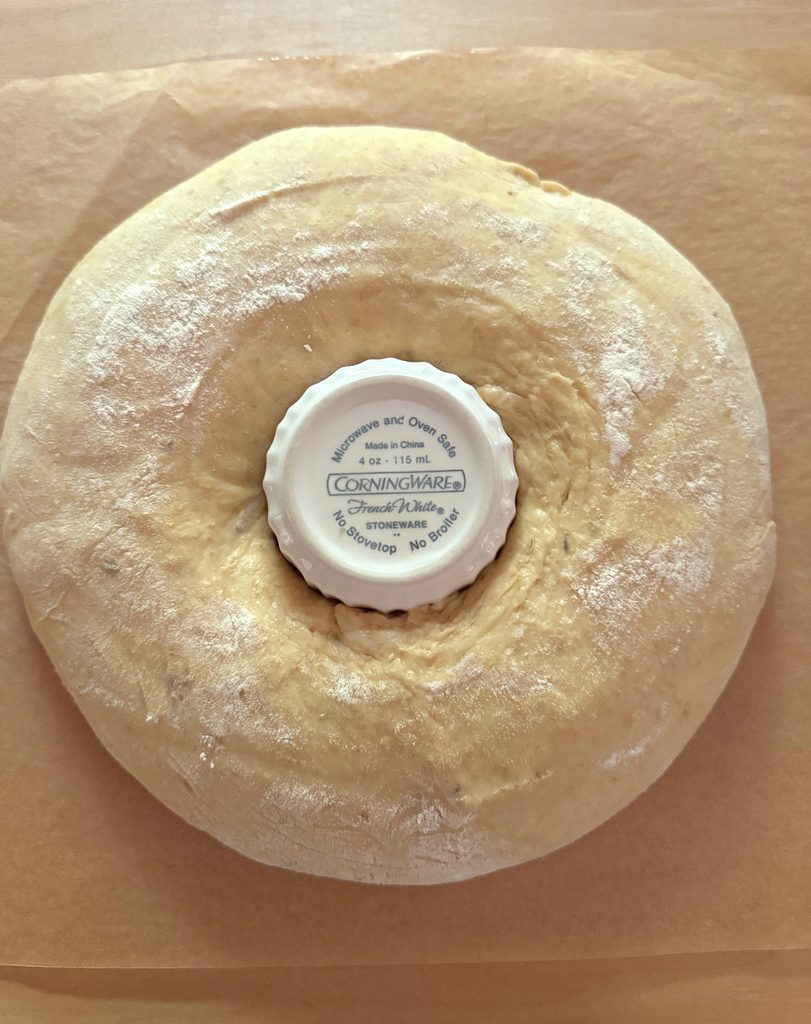
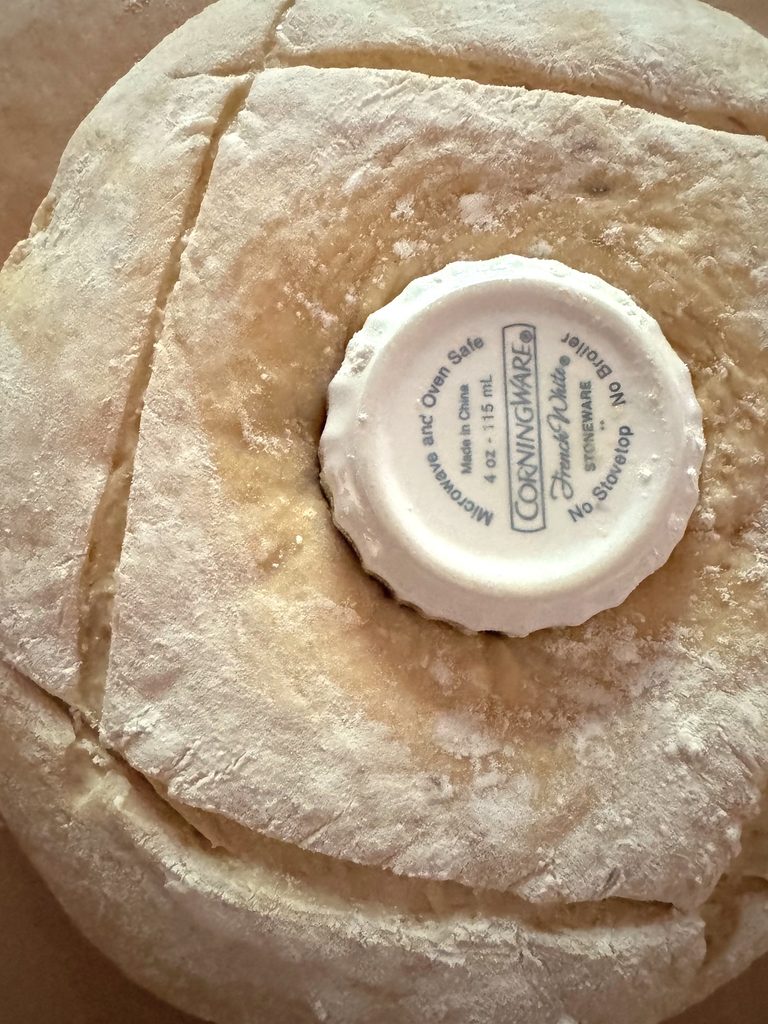
• Keep the center open. Set an oiled, oven-safe ramekin in the hole before baking, and remove it once the loaf has cooled.
• For more citrus, use fresh orange and lemon zest, or increase the dried orange peel. Mine could have used a little more flavor.
Prefer sourdough?
Elizabeth’s post is a good place to start.
If you’d like to use my Pompe à l’huile recipe with sourdough, build an overnight leavener with the same flour and water as the poolish:
• 50g white whole wheat flour
• 75g all-purpose flour
• 125g water
• 15–20g active starter
Mix it the night before and use it in the morning in place of the poolish, when it’s bubbly and at its peak. The rest of the recipe stays the same. Keep everything on the same day, with no overnight cold ferment, and keep the ½ to ¾ teaspoon of instant yeast so the dough rises before it turns sour. Expect a mild tang. I preferred the poolish version, but this is how I’d make it with sourdough.
Rustic Pompe à l’huile (Olive Oil Brioche with Poolish)
- Total Time: 17 hours
- Yield: 1 large ring (about 925g dough) 1x
Description
A rustic olive oil brioche ring flavored with orange peel and fennel, made with an overnight poolish and a same-day dough. Adapted from Patricia Wells’ At Home in Provence via the Bread Baking Babes.
Equipment needed: Stand mixer, 11-inch couronne proofing basket, oven-safe ramekin, baking sheet, baking steel, lame, instant-read thermometer.
Sample schedule: poolish at 9:30 pm, mix at 9:00 am, bake around 2:00 pm.
Ingredients
Poolish
50g white whole wheat flour (about 6 Tbsp)
75g unbleached all-purpose flour (about 1/2 cup + 2 Tbsp)
125g water (1/2 cup + 1 1/2 tsp)
Pinch of instant yeast (about 1/16 tsp)
Dough
All of the poolish
375g unbleached all-purpose flour (about 3 cups)
30g sugar (2 1/2 Tbsp)
Grated zest (orange peel) of one orange, preferably organic (I used 1 1/2 tsp dried orange peel)
Grated zest (lemon peel) of one lemon, preferably organic
1/2–1 tsp whole fennel seed, toasted and crushed
100g water (about 1/3 cup + 1 1/2 Tbsp)
2 large eggs
1/2 to 3/4 tsp instant yeast
48g mild, fruity extra-virgin olive oil (3 1/2 Tbsp)
10g fine sea salt (about 1 3/4 tsp) + 10g water (2 tsp)
Instructions
Make the poolish: The night before, mix the flours, water, and yeast. Cover and leave at room temperature for 11 to 14 hours, until bubbly and just starting to sink.
Mix: In the bowl of a stand mixer, whisk the water, eggs, sugar, orange peel, fennel, and poolish. Add the flour and yeast and mix on low with the dough hook until no dry flour remains. Cover and rest 30 minutes.
Add salt: Sprinkle the salt and 10g water over the dough. Mix on medium speed until smooth and starting to pull from the sides of the bowl.
Add oil: With the mixer on low, drizzle in the olive oil a little at a time. Mix until the dough is glossy and smooth.
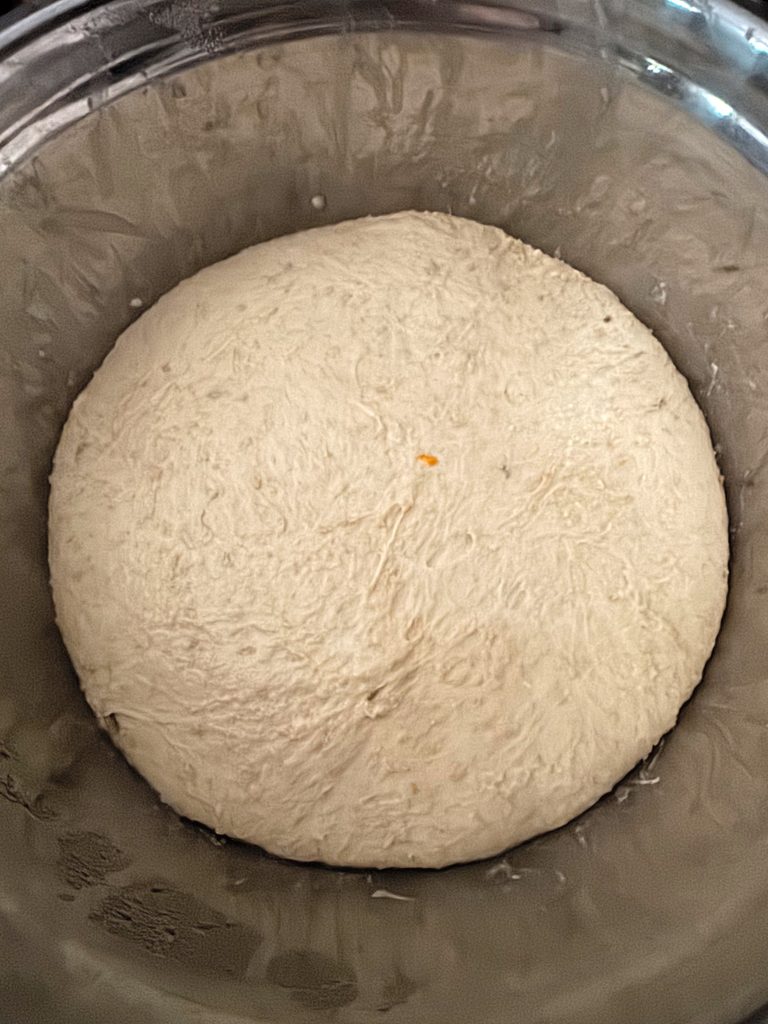
Bulk ferment: Transfer the dough to a lightly oiled bowl. After 30 minutes, do a set of stretch and folds, and do a second set 30 minutes later. The dough will be sticky at first, and it gets smoother with each set. Refrigerate the dough for 30 minutes, then do a third set of stretch and folds. Let it rest at room temperature for about 30 more minutes, until puffy. Total bulk time is about 2½ hours.
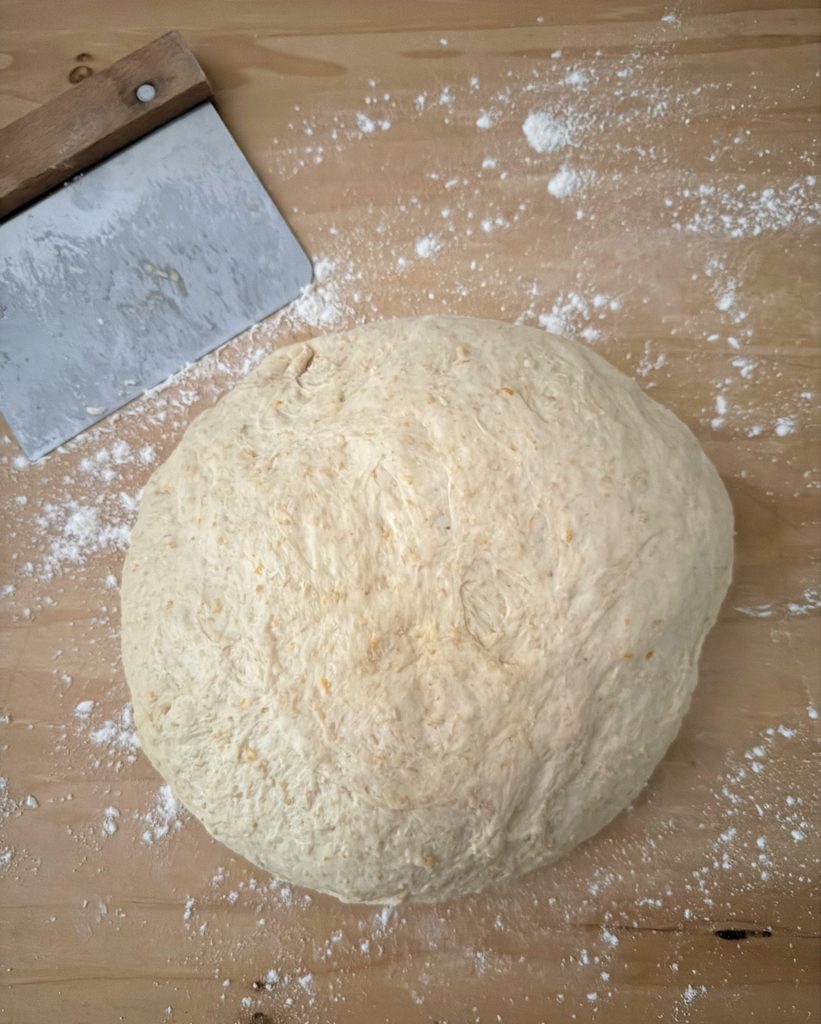
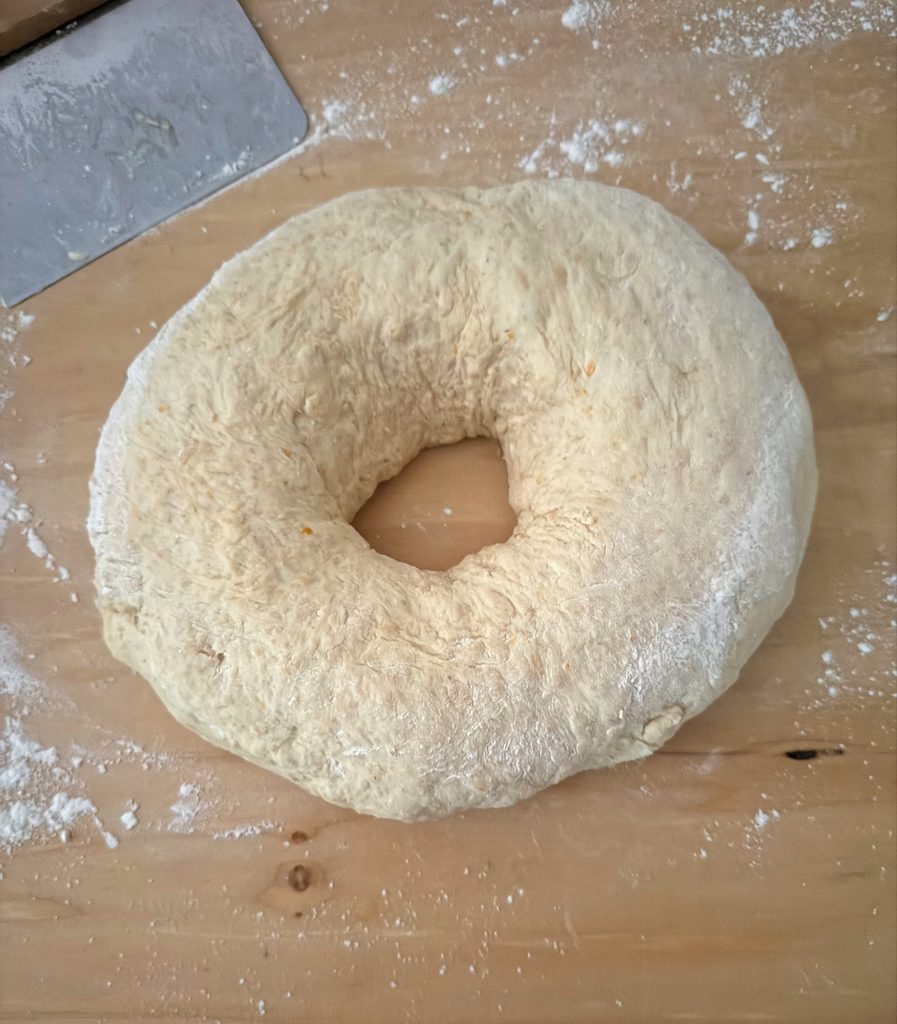
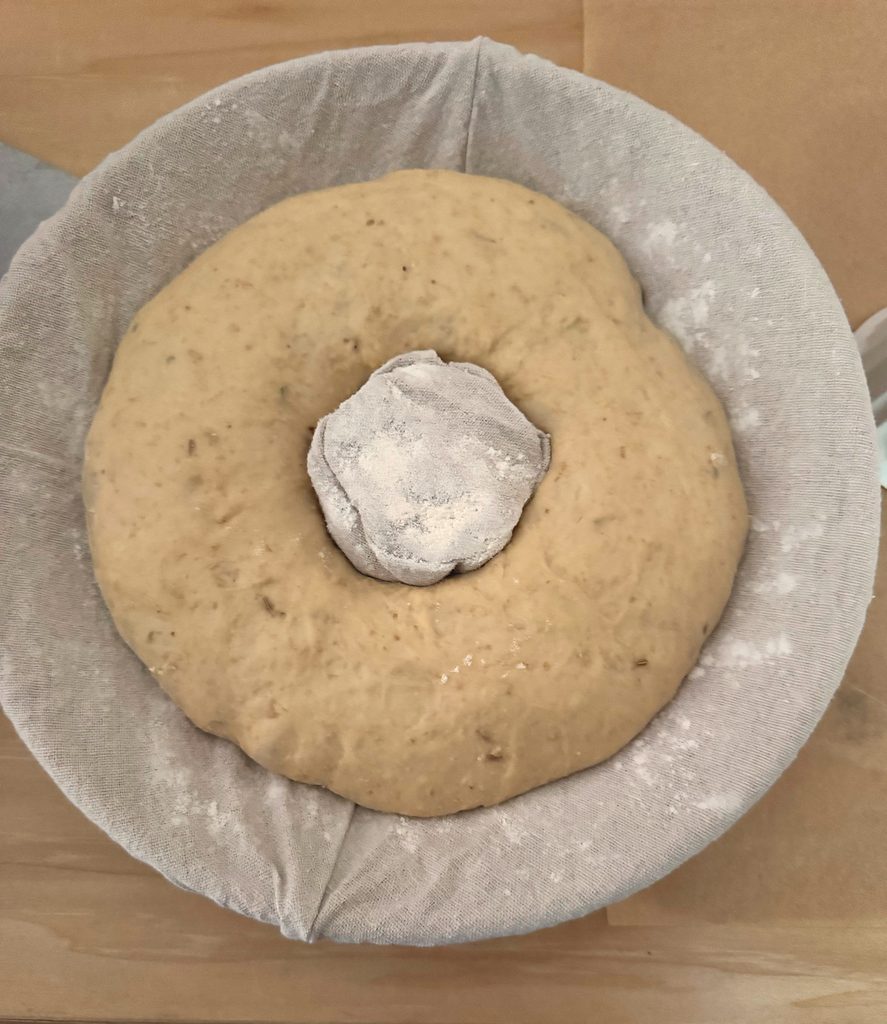
Preshape and shape: Shape the dough into a round and rest it 10 minutes. Make a hole in the center and gently widen it into a ring. Place it seam side up in a well-floured 11-inch couronne proofing basket.
Proof: Cover and proof about 1¼ to 1½ hours, until puffy and springing back slowly when pressed. About 30 minutes into the proof, preheat the oven to 400°F with a baking steel on the center rack.
Score: Turn the ring out onto a parchment-lined baking sheet. Place an oiled, oven-safe ramekin in the center. Dust with flour and make four long slashes, evenly spaced, with a straight-blade lame.
Bake: Set the baking sheet on the preheated steel. Bake 15 minutes, rotate, and bake about 10 more minutes, until nicely browned and the internal temperature reaches about 208°F.
Cool: Let the ring cool completely on a rack, uncovered. Remove the ramekin once it’s cool.
Notes
Use ¾ tsp yeast for a shorter proof and ½ tsp for a longer, more relaxed schedule.
Coil folds work well in place of the stretch and folds. They’re gentler on this sticky, enriched dough.
For more fennel flavor, lightly toast the seeds in a dry skillet and crush them before adding.
A mild, fruity olive oil gives the best flavor. Peppery oils can taste bitter in this bread.
To make it with sourdough, replace the poolish with an overnight leavener of 50g white whole wheat flour, 75g all-purpose flour, 125g water, and 15–20g active starter. Use it at its peak, keep the instant yeast, and skip any cold ferment.
- Prep Time: 45 minutes (hands-on mixing, folding and shaping)
- Poolish | Rise Time: 12 hours | 4 hours (bulk ferment plus final proof)
- Cook Time: 25 minutes
- Category: Holiday Bread
- Method: Poolish
- Cuisine: Provençal
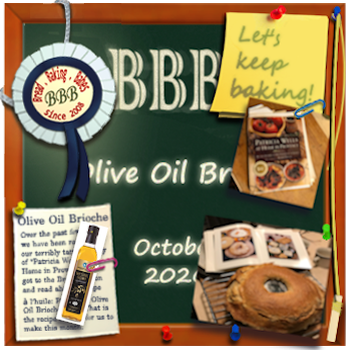
Who are the Bread Baking Babes?
We are a group of breadbakers who get together every month and bake bread! We have a Facebook group if you’d like to bake along. New recipes are posted every month on the 16th.
Elizabeth of blog from OUR kitchen, is the host kitchen this month. If you want to bake along with us and receive your Buddy Badge, please refer to her post for instructions.
Check out the different variations for this month’s bake:
blog from OUR kitchen – Elizabeth (Host Kitchen)
A Messy Kitchen – Kelly
Karen’s Kitchen Stories – Karen
Judy’s Gross Eats – Judy
My Kitchen in Half Cups – Tanna
My Diverse Kitchen – Aparna
Bread Experience – Cathy
Happy Baking!
Cathy
Leave a Reply